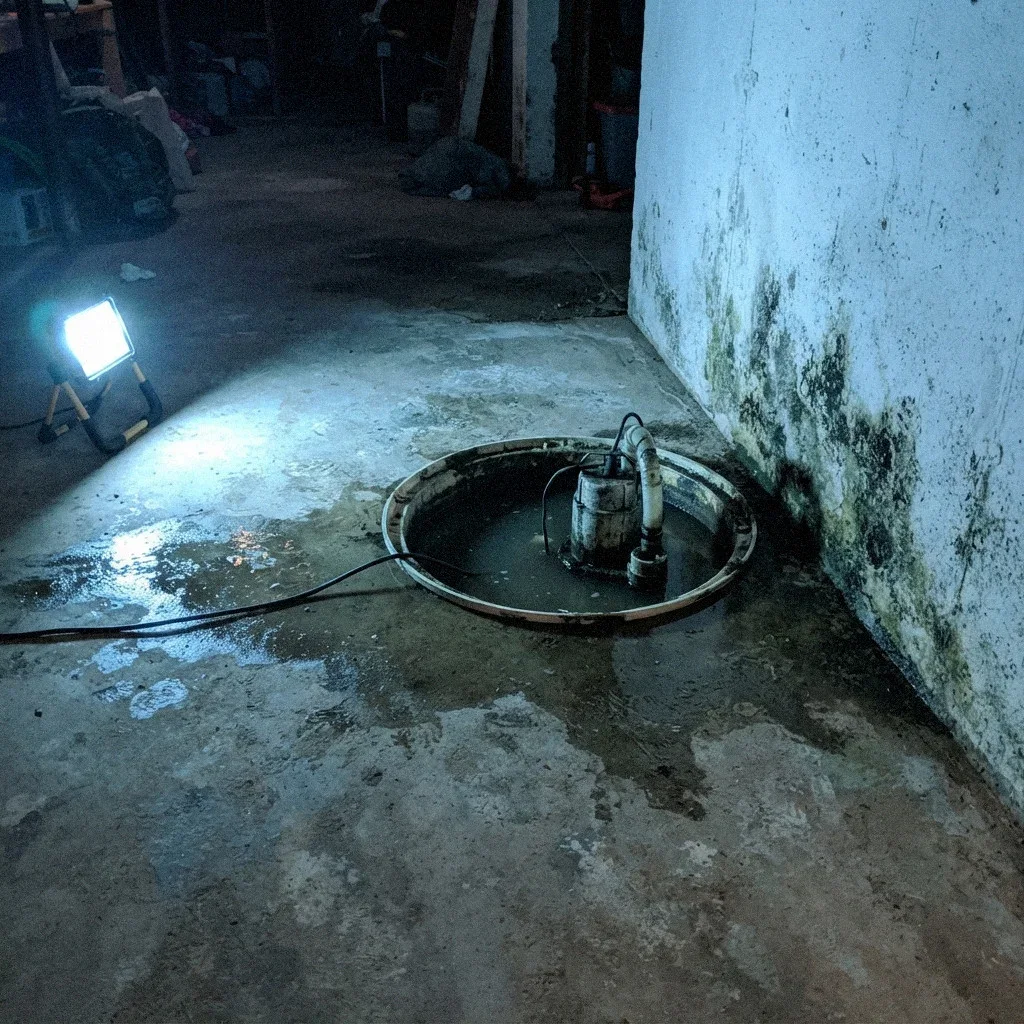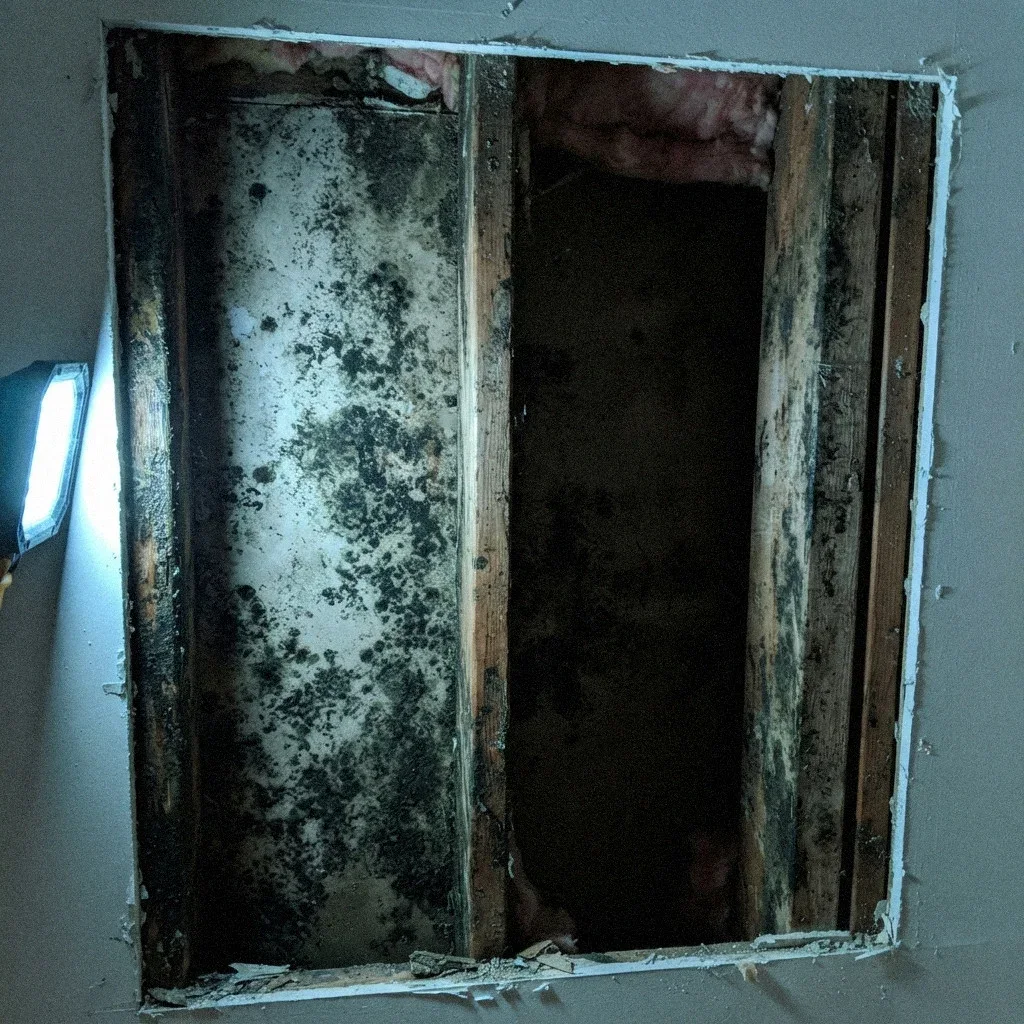
Somebody in Clairemont or Normal Heights finds a dark patch behind a dresser and the search results go straight to the scariest word available. Black mold gets treated like a diagnosis instead of a color. It is worth slowing down on what that patch actually tells you, and what it does not, before deciding how worried to be about a house near the San Diego River or anywhere else in the city.
The Stachybotrys Myth
Type the phrase "is black mold dangerous" into a search bar and the results skew toward toxic mold headlines, not toward what a homeowner in San Diego can actually verify by looking at a wall. The honest answer sits between the panic and the shrug: some health effects are genuinely established, some are exaggerated past what the research supports, and almost none of it depends on the color you are staring at in a bathroom off Adams Avenue or a rental near El Cajon Boulevard.
What Mycotoxins Actually Are
Mycotoxin is the word that does the scaring. Some mold species can produce mycotoxins under certain conditions, and Stachybotrys is one of them. That is a real biological fact. It is not the same as saying every dark patch in a University Heights kitchen is producing them, or that touching a mycotoxin causes immediate harm. The mechanism is narrower than the headlines suggest.
What Is Genuinely Established
The recognized health associations with indoor mold are respiratory irritation and allergic reaction, more pronounced in people already sensitized, with effects like asthma symptoms or hay fever showing up more often. That is the honest, established range. It applies to common indoor molds broadly, not to one feared species, and it is not a promise of any particular outcome for any particular household in Golden Hill or elsewhere.
No Legal Exposure Limit Exists
Stachybotrys is the species behind the black mold myth, and it does produce mycotoxins under the right conditions, but mycotoxins are not unique to it. Several common indoor molds make them, and a lab test measuring spore count will not tell a homeowner near Kensington or Talmadge which one, if any, is producing them, or whether the amount matters. Species identification changes very little about the response: wet material gets removed, the moisture source gets fixed, regardless of what is living in it.
Why Testing Is Rarely Needed
Testing sounds rigorous, but for visible mold it rarely tells a San Diego homeowner anything the eyes and nose have not already established. Air quality testing produces a spore count, not a verdict on danger, since no permissible exposure limit exists for anyone to compare it against. Species identification matters even less than people assume: two households with identical visible growth get the same advice, remove it and fix the moisture, regardless of what species a lab reports back weeks later.
The Toxic Mold Protection Act
California's Toxic Mold Protection Act of 2001 is the actual legal framework here, and it is why the word toxic shows up in state paperwork at all. For renters, the California Department of Public Health points to Health and Safety Code section 26148 on a landlord's duty to disclose known mold to a tenant. That is a disclosure rule, not a health verdict on any one household.
Bleach Treats Color, Not Growth
A common response to a dark patch is a spray bottle of bleach, which is worth naming as a myth on its own. Bleach can lighten the color on a painted surface without killing what has grown into the material underneath, especially drywall or wood. It treats how the spot looks, not the moisture source that let it grow in a Point Loma or Linda Vista home in the first place.
Marine Humidity, Not Rainfall
Color tells a homeowner almost nothing on its own. Black growth on a windowsill in Bay Park is frequently a common species with no particular toxicity, while a pale patch behind a fridge in North Park can be something that matters more. Air quality testing exists and gets sold aggressively, but for growth you can already see and point to, the guides on this site walk through why testing rarely changes what happens next.
Two Common Local Sources
Two patterns show up again and again in older homes near Balboa Park and North Park. A blocked air conditioning condensate line backs water into the cabinet, the drain pan, and eventually the ceiling or wall below it, unnoticed until a stain appears. The other is a slow leak through a flat or low-slope roof, common on mid-century houses across Clairemont and Kearny Mesa, where ponded water finds a seam and shows up as a ceiling spot long before anyone climbs up to look.
Sensitivity Varies By Person
None of this means mold is nothing. Sensitivity to mold varies a great deal person to person, and someone with asthma or existing allergies in a Serra Mesa household will react differently than a healthy adult in the same room. That variation is part of why no single color, species or spore count can hand out a universal verdict on how serious a given patch is.
Where the Long Answer Lives
This page is the short version on purpose. The full breakdown on Stachybotrys identification, mycotoxin research and what the health literature actually supports lives in the black mold guide and the health guide, both worth reading before deciding a patch in a Talmadge or Allied Gardens home needs a lab test rather than a straightforward moisture fix.
Dealing with this in your home?
Mold in San Diego rarely starts with a storm. Marine air off the coast meets a cool interior surface, or an air conditioner drips quietly behind drywall, and growth begins without a drop of rain. A 1950s tract house near Clairemont Mesa Boulevard and a Craftsman near South Park fail the same way: moisture first, staining second. Bleach handles the color. It does not handle the source.