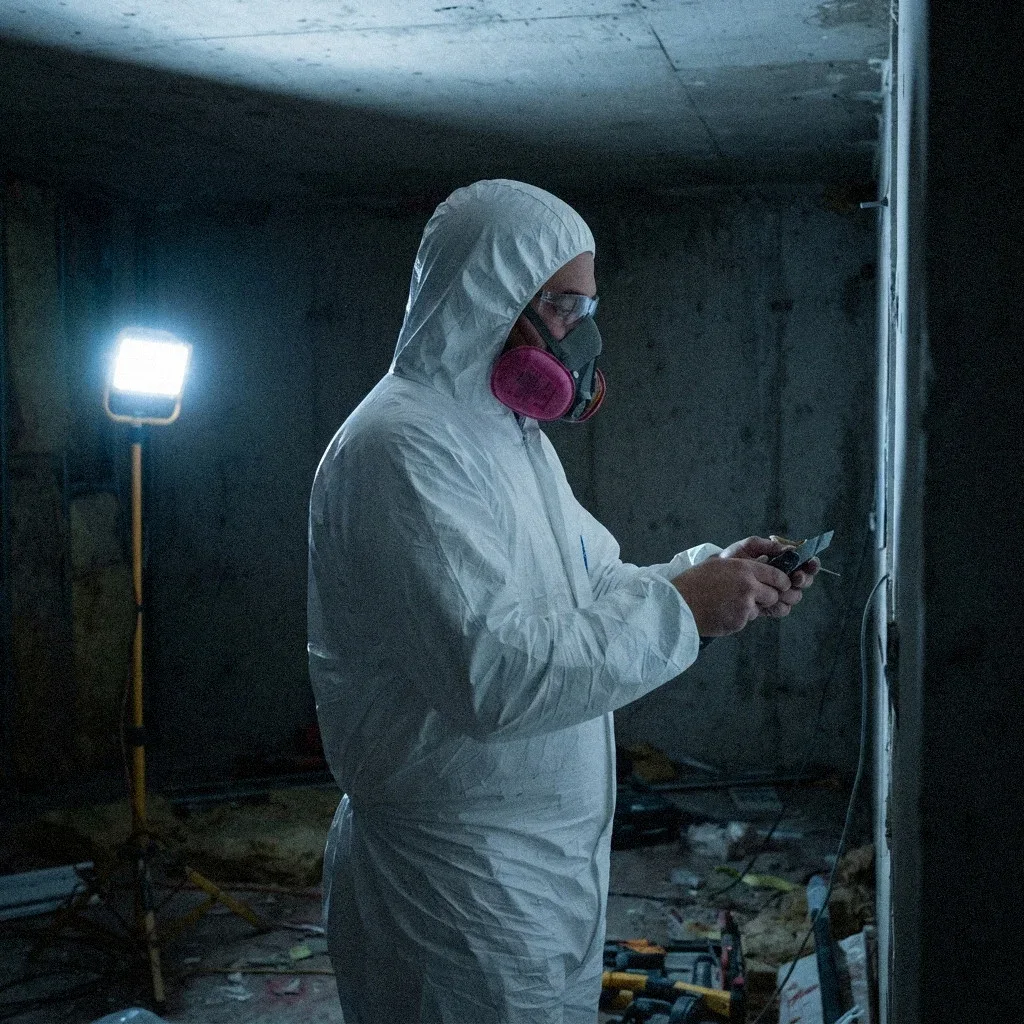
What IICRC S520 Means for Work Done in a San Diego Home
A voluntary industry standard, not a law, shapes how remediation in San Diego homes should be scoped.
IICRC S520 is the voluntary industry standard for mold remediation. It sets out containment, when to remove porous material, and how work should be verified as complete. It is not law, and no state agency enforces it in San Diego.
What S520 Actually Is
San Diego homes grow mold without a single day of hard rain, because the trigger is not precipitation but moisture held against a surface long enough for it to take hold. A single-glazed aluminum window in Clairemont or Linda Vista sweats every marine-layer morning, and that daily film of condensation can feed growth on the sill and the drywall below it for months. When someone finally calls about a stain or a smell, the useful question is not how much it will cost to clean but where that water has been coming from the whole time.
That is where IICRC S520 comes in. It is the industry's own reference for how mold remediation should be planned and carried out, covering things like containment barriers, negative air pressure, and when porous material such as drywall or carpet padding should be removed rather than cleaned. It was written by the Institute of Inspection, Cleaning and Restoration Certification, the same body behind the water damage standard, S500, which is a different document for a different problem and does not govern mold work.
The distinction matters because S520 is a voluntary consensus standard, not a law. No San Diego ordinance requires a contractor to follow it, and nothing in city or county code cites it by name. It functions the way a lot of trade standards do: written by practitioners, adopted because it reflects reasonable practice, and used by insurers and courts as a benchmark for what competent work looks like. A contractor can ignore it entirely and still be operating legally.
The Three Conditions It Defines
S520 describes containment as a way to stop a contained problem from becoming an uncontained one. The document sets out different levels depending on the size of the affected area, ranging from simple isolation with plastic sheeting to full negative-pressure enclosures with HEPA filtration at the exhaust. The point of containment is not cosmetic. Airborne spores and fragments travel through a house on ordinary air currents, through gaps around a door in a Kensington bungalow or a return-air grille in a North Park rental, and containment is what keeps a bathroom job from seeding a hallway.
On porous material, the standard is fairly direct: once a porous or semi-porous item has been colonized past a certain point, cleaning it is treating the surface rather than the growth underneath. Drywall paper, carpet, and unsealed wood framing all fall into this category, and S520 generally favors removal and replacement over attempts to sanitize them in place. That guidance is a working principle for how the trade approaches a job, not a pass/fail inspection code that a San Diego property has to meet.
- S520 groups jobs into conditions based on visible growth and moisture, not spore counts. Condition 1 is normal fungal presence. Condition 2 is visible growth with an identifiable source. Condition 3 involves heavier growth, often with amplification across a larger area.
- The standard describes containment as isolating the work area with plastic sheeting and negative air pressure so spores disturbed during removal do not spread into the rest of a Kensington bungalow or a Talmadge duplex while work is underway.
- Porous materials that have absorbed moisture and grown mold, drywall, insulation, some carpet backing, are generally removed rather than cleaned. S520 treats cleaning porous material as unreliable once growth has established inside it.
- Non-porous and semi-porous materials, framing lumber, tile, some finished wood, can often be cleaned and remain in place if the moisture source is corrected first. The standard leaves that judgment to the assessor on site.
- S520 calls for identifying and correcting the moisture source before remediation is called complete. Removing growth without fixing a leaking roof vent or a failed bathroom fan in a Normal Heights home invites the same problem back.
- Post-remediation verification, sometimes a visual check, sometimes clearance testing, confirms the work area matches conditions outside it before containment comes down. S520 describes this step without mandating a specific test method.
Containment and Porous Material
Because S520 is voluntary, the real leverage a homeowner has is the questions asked before work starts. Worth asking directly: which parts of S520's containment guidance will be used for this specific job, whether porous material is being removed or just cleaned and why, and how the moisture source itself is being addressed rather than only the visible growth. A contractor who can answer specifically, room by room, is treating the standard as a working method. One who answers in general reassurances is treating it as a marketing word.
It is also worth asking who is licensed to do the work at all. California has no mold-specific contractor license the way some states do. Remediation is performed by contractors licensed by the Contractors State License Board under the classifications that already cover general building and specialty trades, not under a separate mold credential. Anyone claiming a dedicated state mold license is describing a rule that does not exist here, whatever it might mean in another state.
- Ask which classification of California contractor license they hold and confirm the number against the Contractors State License Board, since no separate mold license exists to check instead.
- Ask whether they identified a moisture source, and what it was. A quote that only prices removal, with no mention of a leak, a fan, or condensation, is pricing half the job.
- Ask how they plan to contain the work area and what happens to material that gets removed. In a rowhouse near University Avenue or a slab home in Serra Mesa, containment protects rooms the crew is not working in.
- Ask what happens after the visible growth is gone; whether that is the end of the job or whether there is a check afterward. S520 treats that step as part of the work, not an extra.
Reading the Standard at a Glance
The mechanism behind most of this is simpler than the standard's language makes it sound. Mold needs organic material to feed on, and a house is full of it — paper facing on drywall, wood framing, dust, the glue in carpet backing. That material is essentially always present, so it is not the limiting factor for whether growth happens. Moisture is. Wherever a surface stays damp long enough, on a wall, a windowsill, or behind a baseboard, that is where growth starts, regardless of what the material underneath is.
This is why San Diego's dry reputation is misleading. The city gets very little rainfall over the course of a year, but the marine layer that rolls in off the Pacific Ocean most mornings carries enough humidity to keep a poorly ventilated bathroom or an unvented attic damp on a near-daily cycle. A house in Pacific Beach or Ocean Beach, close to the coast and exposed to that daily moisture, does not need a storm to have a mold problem. It needs a window that sweats and is never wiped down, or a fan that was never installed.
| Question | What It Tells You | Why It Matters |
|---|---|---|
| Condition 1 | Normal fungal ecology, no visible growth | Routine cleaning, no remediation plan needed |
| Condition 2 | Settled spores, no active growth yet | Source control, cleaning, monitoring |
| Condition 3 | Visible or actively growing colonies | Containment, removal, moisture correction |
| Removal scope disputes | Physical barrier around Condition 3 areas | Keeps spores from spreading during removal |
| Porous materials | Drywall, insulation, some carpet | Usually removed rather than cleaned |
What It Does Not Require
A lot of San Diego's older housing stock, the 1940s through 1970s construction common in neighborhoods like North Park, Golden Hill, and City Heights, was built without a bathroom exhaust fan at all, or with one that vents into the attic space rather than out through the roof. That single detail explains a large share of the bathroom and attic mold jobs in this climate. Every shower adds moisture to the air, and without a fan pulling it outside, it settles onto the coldest nearby surface and stays there.
Behind a wall, the pattern is usually slower and less visible until a stain or a smell forces the issue. A slow leak around a shower pan, a poorly flashed window, or condensation running down the inside of an exterior wall can sit against framing and drywall backing for weeks before anyone notices, because the surface facing the room can look dry while the cavity behind it is not. This is part of why S520 treats a visible patch as a symptom of a moisture event rather than the event itself.
Questions Worth Asking a Contractor
A contractor working to S520 should be able to explain their containment plan before they explain their price. That usually means sealing the work area with plastic sheeting, running negative air pressure so spores do not travel into the rest of a San Diego home, and setting a clearance point before anything is called finished. Ask what happens to a moisture source found mid-job, and whether porous material like drywall or insulation gets replaced rather than treated. A contractor who skips straight to a number without asking where the water came from is pricing half the job.
What actually changes an outcome is the same thing S520 keeps returning to: finding and stopping the moisture source before the growth is addressed, not instead of it. Bleach might lighten the color on a bathroom wall in Talmadge or University Heights, but it does not reach whatever is feeding the growth behind the surface, and the color returns. A contractor worth hiring in San Diego should be able to point to the moisture source in the room before quoting a number to clean anything.
What S520 Actually Covers
- S520 is published by the IICRC. It is a voluntary consensus standard, meaning industry professionals agreed on it; it carries no legal force in San Diego or elsewhere in California.
- S520 is the mold remediation standard. S500 is a separate standard for water damage restoration. The two get confused often because the numbers are one digit apart.
- California has no mold-specific contractor license. Remediation work is done under existing Contractors State License Board classifications, unlike states such as Florida that license mold assessors and remediators separately.
- S520 sorts jobs by condition, based on visible growth and its source, not by a spore count or species. No test result changes which condition applies.
- Porous material that has grown mold is generally removed under S520, not cleaned, because cleaning does not reliably reach growth that has spread through the material.
- S520 covers containment and safe removal of porous material, not building layout. Homes across San Diego without exterior duct runs for kitchen or laundry moisture often push damp air into wall cavities instead, feeding the same growth the standard tells a contractor how to remove.
Frequently Asked Questions
Is IICRC S520 a law I can enforce?
California has no separate license just for mold work. Contractors doing remediation in San Diego neighborhoods from Clairemont to North Park carry a Contractors State License Board classification that covers the trade involved, such as general building. Ask to see the license number and look it up on the CSLB site yourself. Also ask whether they follow S520 procedures for containment and clearance, since that standard is voluntary and not every contractor treats it as a floor.
Does S520 say when to remove drywall?
S520 is a voluntary consensus standard written by the IICRC, an industry body, not a government agency. No San Diego ordinance requires a contractor to follow it. It functions as a reference for good practice, which is why asking a contractor whether they follow it is a useful question rather than a legal checkbox.
What is containment and do I need it?
No. S500 covers water damage restoration, drying timelines and water categories. S520 is the separate standard for mold remediation. A contractor who cites S500 for mold work in a Clairemont or North Park home is citing the wrong document, one digit off from the one that actually applies.
Does S520 require a specific license?
California has no state license specific to mold remediation. Contractors doing this work in San Diego hold a Contractors State License Board license under an existing classification. Ask which classification, and ask to see the license number rather than assuming a mold-specific credential exists, because it does not.
What should I ask a contractor about S520?
S520 does not set a numeric limit, because none exists. It instead describes conditions: visible growth, moisture source, and material type. A bathroom in Golden Hill with a warped baseboard and a musty smell meets that description regardless of any number a lab report might show.
Want a Second Opinion on a Bid?
Ask a licensed pro how they scope work against S520 before signing anything. Call (619) 833-1053.
Call (619) 833-1053