Mold Under the House in San Diego
Mold on joists, subfloor and the vapor barrier below your floor.
Floors that feel cool underfoot and a smell that arrives well before anything is visible are how mold under the house usually announces itself in the older parts of San Diego. Bungalows through North Park, South Park and Golden Hill sit on raised wood floors over bare soil, and that ground gives up moisture all year in a city where the air is rarely dry enough to carry it away. None of it depends on rain, which is exactly why it catches people out.
A pro checks the vapor barrier first, since a torn or missing one is usually why the joists above it are dark. Access panels around the foundation near Mission Valley and Linda Vista homes are often small, so time goes into getting tools and lighting through before any cutting starts. Price tracks square footage under the house and how much subfloor has to come out, not just the joists. Sealing and re-lining the ground beats adding vents, since venting only pulls in more of the marine air this city already has plenty of.
Across San Diego County, whether you're in Ocean Beach, Pacific Beach, La Jolla, or elsewhere around San Diego, crawl space mold removal is worth arranging with somebody who works on this housing stock rather than a generic plan. Foundation type, soil and building age all change what has to happen first.
This is most often a home job — residential mold removal sets out what that involves, or see commercial mold removal if the property is a business or a rental.
Signs You May Need Crawl Space Mold Removal
Bare Soil Under the Floor
A musty smell coming up through the floor, stronger in one room than others, is usually the first sign. It often shows up near a bathroom or kitchen where plumbing runs through the crawl space, or along an exterior wall closest to bare soil. Homeowners in North Park and Golden Hill often notice it more in the early morning, when marine layer humidity is highest and the house has not warmed up yet.
Why Sealing Beats Venting Here
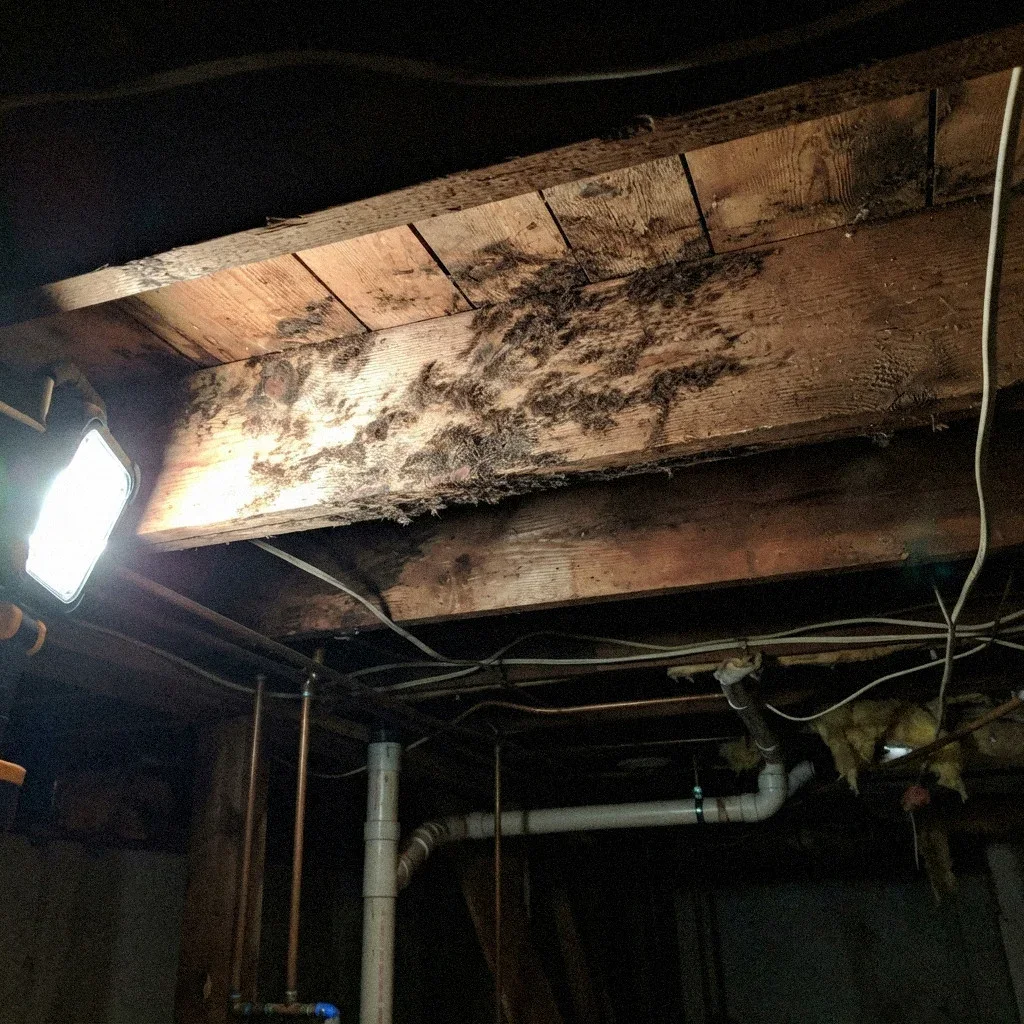
Dark staining or a fuzzy gray-white growth on the underside of the subfloor, visible from the crawl space access panel with a flashlight, is a direct sign. It tends to follow the joists in lines rather than covering the wood evenly, since moisture travels along the grain. Insulation hanging below the subfloor, if the house has any, is often stained or sagging where it has absorbed ground moisture over time.
The Vapor Barrier Gets Replaced
Wood that has gone soft or spongy underfoot near an exterior wall, or a joist that gives slightly when pressed with a screwdriver, points to sustained dampness rather than a passing spill. Fungal growth feeding on cellulose over months hollows the fiber out from inside, so the surface can still look sound while the structure underneath is failing. A pest inspector or a licensed pro can tell decay from cosmetic staining without opening up the floor.
Our Crawl Space Mold Removal Process
Crawl Space Inspection in San Diego
Entry through the crawl space access point to inspect joists, subfloor, the vapor barrier and any plumbing runs, checking how far the growth extends and whether ground moisture is the source.
Containment Setup San Diego Homes
Containment set up at the access point to keep spores from moving into the living space above while work is underway underneath the house.
Removal Under San Diego Floors
Mold removed from joists and subfloor surfaces, and the old vapor barrier removed if it has failed or is contributing to the moisture.
New Vapor Barrier, San Diego Crawl Space
A new vapor barrier installed across the crawl space floor, sealing ground moisture away from the wood framing above it going forward.
Why this matters
Raised-floor construction near Golden Hill and South Park puts framing a few feet above bare dirt, and that dirt gives off moisture whether or not it has rained. Without a sealed liner underneath, joists and subfloor stay damp long after any storm has passed, since the source is the ground itself. Once fungus takes hold on wood down there, it can work upward into the living space above it.
Code-Compliant Crawl Space Mold Removal in California
Raised Floors in Older Neighborhoods
Golden Hill and South Park still have plenty of raised floors from before slab-on-grade became standard, and crawl space mold removal there usually starts the same way: bare soil under the house releasing moisture with no barrier to stop it. Parts of Point Loma and Ocean Beach share the same framing. The licensed pros we connect you with check the vapor barrier condition before quoting, because a crawl space job that skips it is only removing the mold, not the reason it grew back.
No Basements, Different Problem
California has never set a permissible exposure limit for mold in air, so no inspection of a San Diego crawl space can tell you the air is within a legal limit, because none exists. This is also why testing before removal is usually skipped: visible growth on joists or the vapor barrier is treated as growth to remove, not a sample to send to a lab first.
How Much Does Crawl Space Mold Removal Cost in San Diego?
These are the figures we quote most often for crawl space mold removal. Size of the property and how far the problem has spread move the number.
| Best Suited For | What It Finds | What It Misses |
|---|---|---|
| A house near the coast can go all summer without a drop of rain and still grow mold on a closet wall, because the trigger here is marine air condensing on a cool surface, not storm water. Inland toward El Cajon Boulevard the air runs drier, so the same house behaves differently a few miles apart. | Drying for a limited, easy-to-reach area | an estimated $1020–$6300 |
| Houses built in different decades fail in different ways. Older bungalows with single-pane windows condense differently than a 1960s tract house on a mesa, and a 1980s build with central air has its own condensate paths. Housing era predicts the moisture problem more than the neighborhood does. | HEPA cleaning for one affected room | an estimated $1200–$9000 |
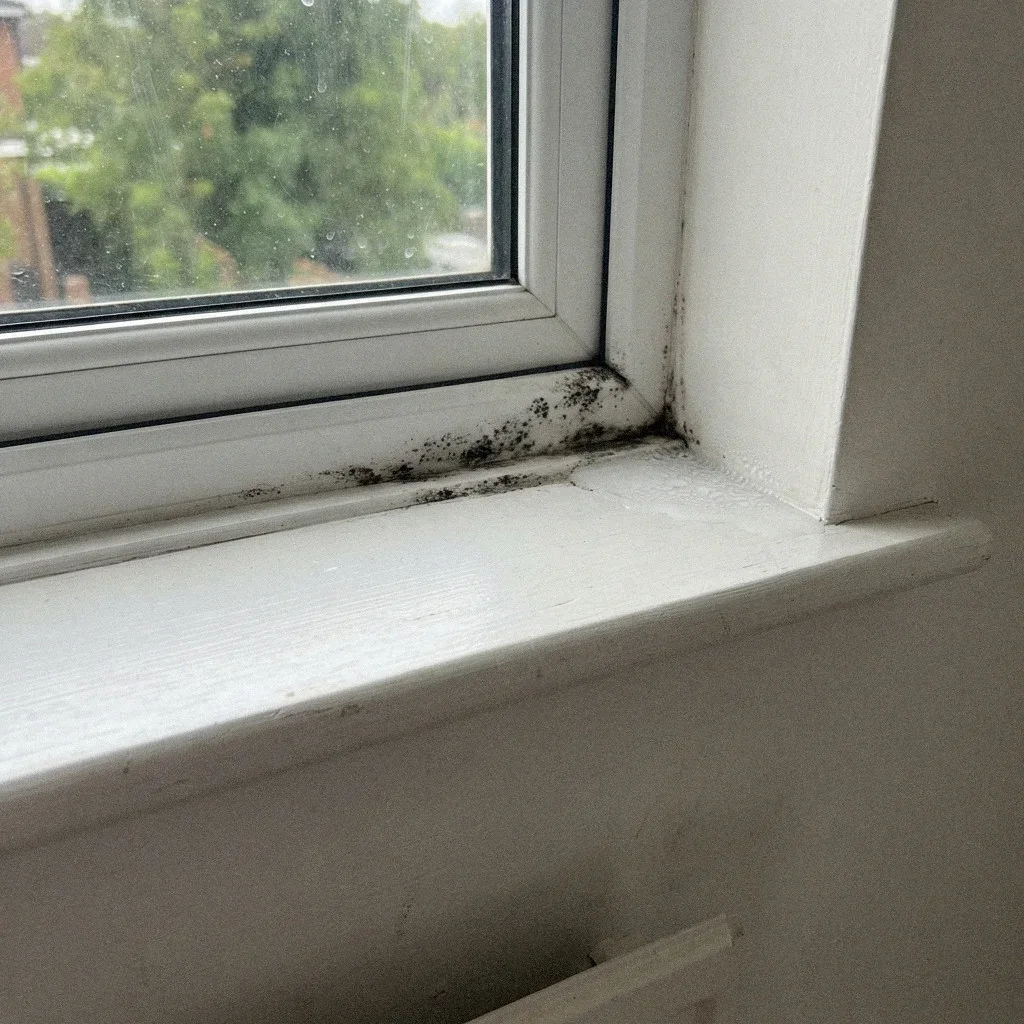
| The marine layer that cools San Diego mornings in summer is the same humidity that condenses on a cold window or an air conditioning line. Locally this is May Gray and June Gloom, and it is a mold driver most homeowners never connect to their own patch of growth. | Several rooms or a hard-to-reach cavity | an estimated $1800–$14400 |
| A dry climate does not mean a dry house. Slab foundations and crawl spaces trap moisture differently than the wet-season markets most mold advice is written for, so guidance built for a rainy climate does not transfer cleanly to a city where the mold driver is humid air, not rainfall. | Multiple containment zones and extensive removal | an estimated $2880–$24000 |
Price ranges are wide because mold jobs are not standard units. A closet with poor airflow, a wall with condensation behind drywall, and a ceiling under a slow roof leak all get treated differently. What drives the number is the moisture behind the surface, which is why an estimate should start with a look at the source.
Frequently Asked Questions
Why does my crawl space grow mold with no rain?
It's rarely the recent storm. Soil under a raised floor gives off water vapor continuously because nothing separates it from the air above, and that supply doesn't slow down between rains the way surface puddles do. Add a low spot where irrigation or a slab leak drains toward the foundation and the crawl space can stay wet through a dry San Diego summer with no obvious source anyone would notice from inside the house.
Will the vapor barrier need to be replaced?
In most cases yes. An existing barrier that has let mold grow on the wood above it has usually failed, torn, or gaps at the seams, and reusing it does not address why the crawl space is damp. Replacing it along with removing mold from joists and subfloor is standard practice, not an upsell.
Is my house too old to fix this properly?
No. Houses in South Park, Golden Hill and similar pre-1950s neighborhoods are exactly the housing stock this work is routine for. The joists and subfloor can almost always be cleaned and treated rather than replaced, unless the wood has softened from long-term structural rot rather than surface mold.
Does my crawl space need mold removal if there's no visible growth?
In a humid coastal climate like San Diego, sealing and lining the crawl space with a vapor barrier generally outperforms venting. Vents let in the same marine layer humidity that is causing the problem, while a sealed, lined crawl space keeps ground moisture from reaching the wood above it in the first place.
Will you replace the vapor barrier down there?
You can look with a flashlight through the access panel without going in fully. Look for staining or fuzzy growth along the joists and the underside of the subfloor. Color alone does not tell you what species it is, and that is not something a service visit needs to answer to remove it safely.
Is crawl space mold as serious as attic mold?
Get a specific answer before assuming. A licensed pro can look at the joists, the subfloor and the vapor barrier condition and quote the crawl space on its own footprint rather than a whole-house rate. Homes near Ocean Beach or Point Loma with tighter access or older framing sometimes run higher because of the extra time getting equipment in and out, so ask for a walk-through instead of a phone estimate.
How much does crawl space mold removal cost in San Diego?
Testing gets asked for a lot, and it is usually the wrong first step. If you can see the patch and smell the musty air, spending money to confirm what you already know skips the harder question: where is the moisture coming from. Fix that source first, then decide whether cleanup needs a professional at all.
Related Services & Areas
Talk through this specific job
This is one piece of a larger job, and it rarely stands alone. A leak that stains a ceiling in Kensington or a condensation line in a Pacific Beach bathroom usually needs both the moisture stopped and the growth removed, in that order. The licensed pros we connect you with in San Diego can tell you on the call whether this service covers what you're dealing with or whether the source needs attention first. Call Now: (619) 833-1053 and describe what you're looking at.
Call (619) 833-1053