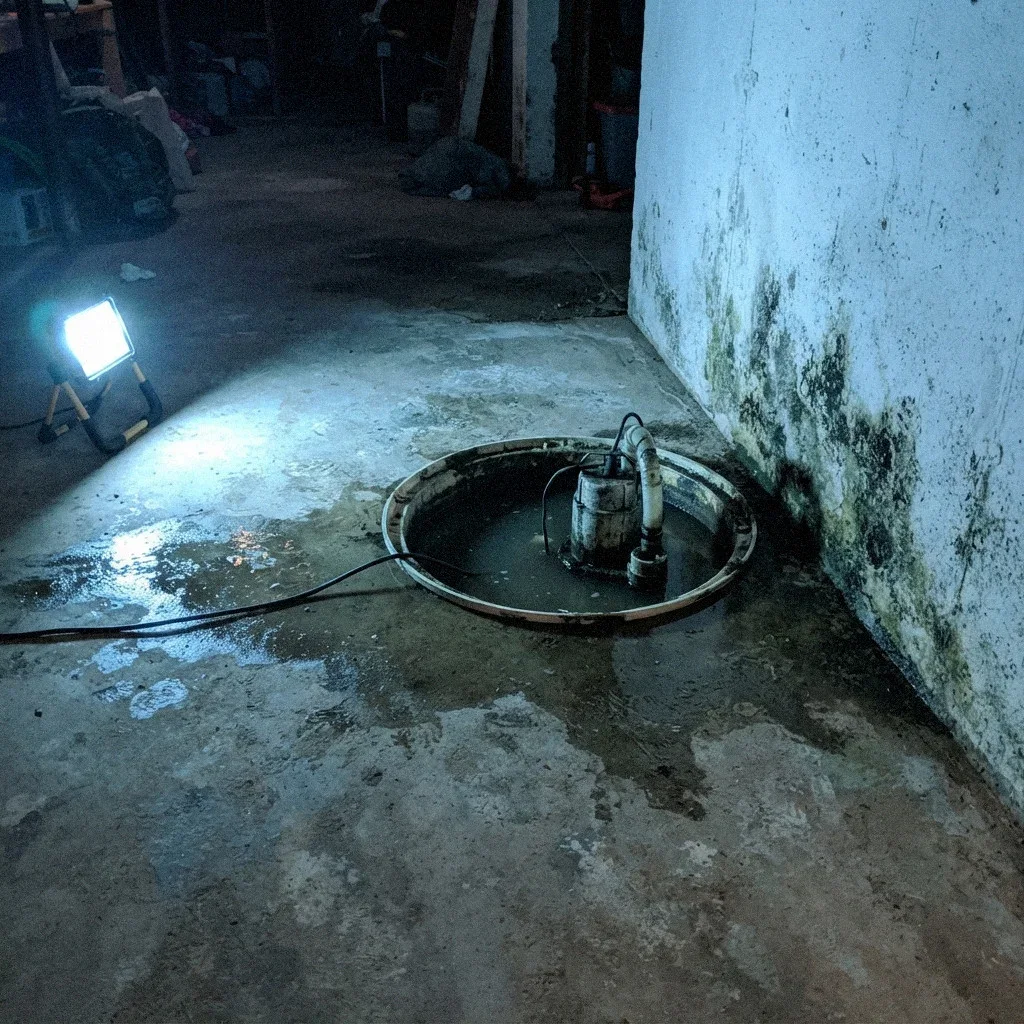
A musty odor is the smell of organic growth, not the smell of dirt. Mold and mildew give off gases as they digest wood, paper, or dust, and that smell reaches a room long before any patch is visible. In a San Diego house near Mission Valley or Clairemont, that smell often shows up on a foggy morning, when relative humidity indoors is highest and the air has nowhere to go.
Ordinary damp versus hidden mold
A musty smell means something damp is producing organic growth faster than air can carry the byproduct away. In San Diego it often starts small: a towel left folded on a shelf, carpet padding near a leaky slider, drywall behind a bathroom that never got a fan. The material can look dry on top while the layer underneath holds enough water to keep the smell going. If the odor returns after airing out the room, the moisture source is still there.
Where the smell starts
Must tends to concentrate near a single source rather than spreading evenly through a house. A bathroom with no extractor fan, a closet against an exterior wall in Normal Heights, or a hallway near a laundry area are common starting points. Following the smell room to room, and noting where it gets stronger, does more to locate the problem than any amount of guessing from a doorway.
Why humidity matters here
San Diego's rain is light, but relative humidity indoors does not depend on rainfall. Marine air moving through neighborhoods like Ocean Beach or Pacific Beach carries moisture that condenses on cool surfaces indoors, especially before the day warms up. A house does not need a storm to run humid. It just needs air that came off the Pacific Ocean and a surface cold enough to hold onto that moisture.
Windows and condensation
Single-glazed aluminum windows, common in houses built before 1980 across neighborhoods like City Heights, run wet on cool mornings. That water sits on the sill, soaks into the surrounding drywall, and wicks into curtains, and none of it needs a leak to happen. A sill that is damp most mornings is a moisture source in its own right, and a mildew smell near a window usually starts there.
The hvac system's part in this
Where a house has an hvac system, the air handler and its condensate line are worth checking before anything else. A blocked line lets water collect in the cabinet or the pan beneath it, and that standing water grows a smell fast in a closed closet. Coastal houses in places like Point Loma often skip air conditioning altogether, which removes that risk but leaves humid air with no mechanical drying.
Carpet and poor ventilation
A damp carpet holds a mildew smell longer than almost any other surface, because moisture sinks into the pad and has no way to evaporate on its own. Rooms with poor ventilation, like an interior bedroom in a College Area rental with one small window, are the likeliest place for this to happen. Lifting a corner of the carpet after a musty smell has lingered for days is a reasonable check.
Crawl spaces and raised floors
Older houses around Kensington and Talmadge often lack a bathroom extractor fan, or have one that dumps warm, wet air into the attic instead of outside. That single detail explains a lot of hidden mold in this city's pre-1970s housing stock. A contractor who checks the attic access panel and the duct routing before quoting anything is doing the job properly; one who only looks at the visible patch on the ceiling is guessing.
What a dehumidifier actually fixes
A dehumidifier lowers relative humidity in the room it sits in, which can slow new growth and make a mildew smell fade faster. It does not dry out a soaked carpet pad, a wet wall cavity, or a leaking condensate line, and it does not remove growth that has already started. It buys time and comfort while the actual moisture source still needs to be found and closed off.
When the smell means real growth
A musty odor without any visible staining can still mean organic growth is present, since mold can develop behind drywall, under flooring, or inside a wall cavity before it ever reaches the surface. Color is not a reliable guide to what species is growing, and there is no reason to wait for a stain to appear before treating a persistent smell as a sign that moisture is sitting somewhere unseen.
Testing versus just looking
Testing indoor air for mold is rarely the useful first step, because no published number defines a safe level to compare a result against. A smell that persists after a house has aired out is already a reliable enough signal on its own. Finding the moisture source and confirming growth by sight or touch tells a homeowner more than a lab result that cannot be judged against any standard.
What to do about the smell
A musty odor is worth treating as information rather than something to mask. Opening windows when the fog clears, running a bathroom fan that actually vents outside, and checking under carpets or behind furniture near an exterior wall will usually point to the moisture source. If the smell survives all of that, growth is likely already established somewhere the eye has not reached yet, and it is worth a closer look before it spreads.
Dealing with this in your home?
Mold in San Diego rarely starts with a storm. Marine air off the coast meets a cool interior surface, or an air conditioner drips quietly behind drywall, and growth begins without a drop of rain. A 1950s tract house near Clairemont Mesa Boulevard and a Craftsman near South Park fail the same way: moisture first, staining second. Bleach handles the color. It does not handle the source.