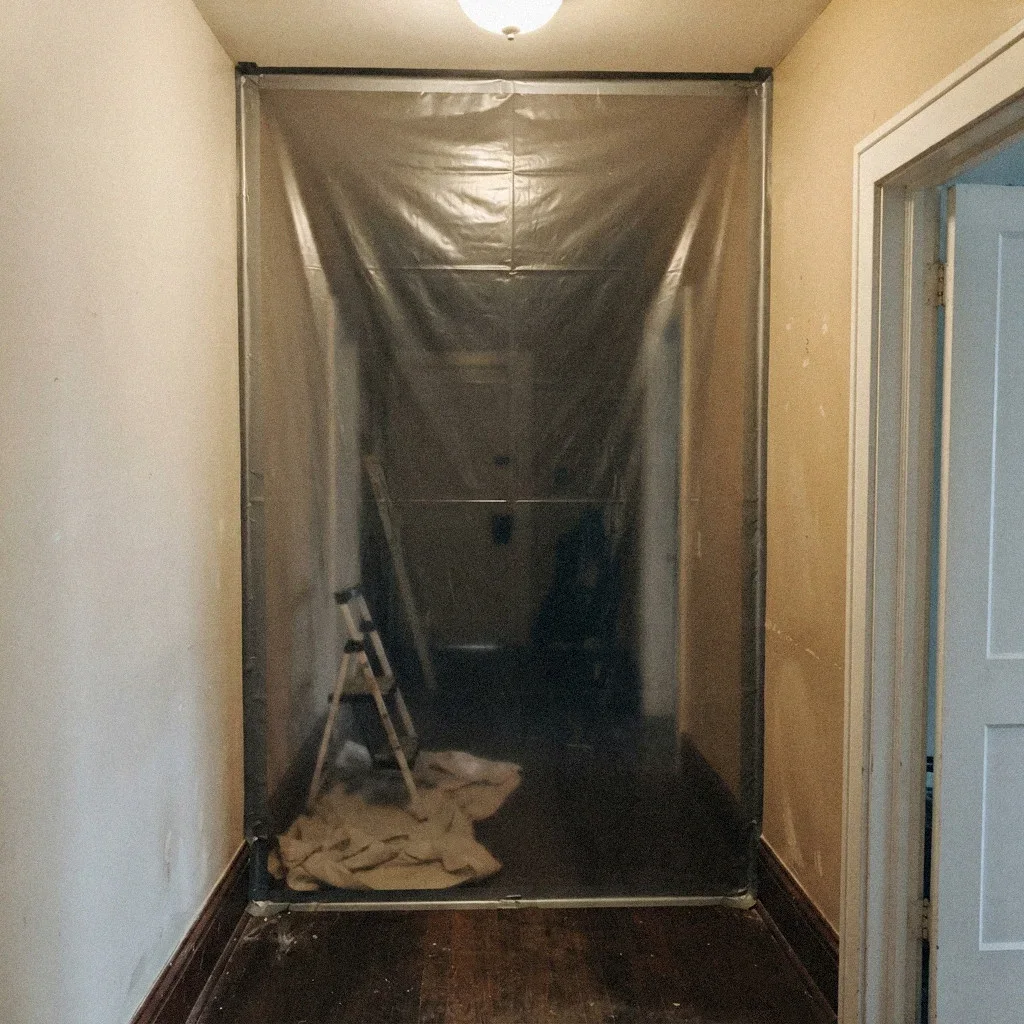
Mold Remediation
Containment, removal, and HEPA cleaning done in the right order.
Learn about Mold RemediationCanyon-rim lots near Lake Murray hold shade and moisture longer than flatter Del Cerro streets.
Del Cerro is not low-lying and carries none of the coastal flood exposure that shapes mold risk in bayfront San Diego neighborhoods. The concern here is closer to home: slab-on-grade construction, mature landscaping run on automatic irrigation, and air conditioning units whose condensate lines back up unnoticed behind drywall.
Any estimate that skips the moisture check only prices half the work, leaving the actual cause untouched.
Stucco is the default exterior across Del Cerro, and it behaves less like a raincoat than people expect. It takes up moisture and releases it slowly, so a wall that stays shaded holds damp against the sheathing behind it for days. Where that meets a window seal gone hard, water finds a path in without anything looking wrong from outside.
Homes near Lake Murray sit in moving air that carries moisture most of the year. That matters more than any storm total, because growth needs a surface that stays wet rather than a downpour. Shaded exterior walls and rooms with little airflow are where it shows first, and where a moisture meter reading says far more than a look around ever will.
Del Cerro sits on mesa and canyon terrain east of the San Diego River corridor, high enough that coastal fog burns off earlier than at the beaches. That elevation does not stop humid marine air from settling into shaded canyon-facing rooms overnight, especially in homes without air conditioning to cycle the air. Color is not a reliable clue to what is growing or how serious it is, and no season changes that fact. What matters is whether moisture is still arriving and where it is coming from. A patch that reappears after cleaning almost always means the water source was never found, whatever time of year the cleaning happened.
Most Del Cerro jobs land inside these ranges. The inspection is free and the exact figure comes in writing before anything starts.
| Service | Estimated cost |
|---|---|
| Mold Remediation | an estimated $1100–$3900 |
| Mold Inspection & Testing | an estimated $295–$895 |
| Drywall & Wall Cavity Mold Removal | an estimated $900–$3800 |
| Whole-Home Mold Remediation | an estimated $4500–$18000 |
Homes closest to Lake Murray get more ambient humidity off the water, which matters for windows and exterior walls, but the lake sits in a basin well below the mesa, so it is not a source of runoff onto nearby lots. sits in a basin below the Del Cerro mesa, so it is not a runoff source, but homes closest to the water pick up more ambient humidity off the lake surface. That shows on north-facing windows and exterior walls, where condensation and slow-drying paint are more common than on Del Cerro streets set back from the shoreline.
The mountain's bulk means Del Cerro sits in its own microclimate, often drier and warmer than the coast, which is exactly why homeowners here assume mold is not their problem until a closed bedroom or a leaking AC line proves otherwise. the highest point in the city, with its main trailhead reached from the San Carlos side near Del Cerro
The park's canyons and undeveloped land back up to some Del Cerro properties, and homes on that edge get less airflow and more shade than those facing the street, a small difference that changes how fast a damp patch dries.
Containment, removal, and HEPA cleaning done in the right order.
Learn about Mold Remediation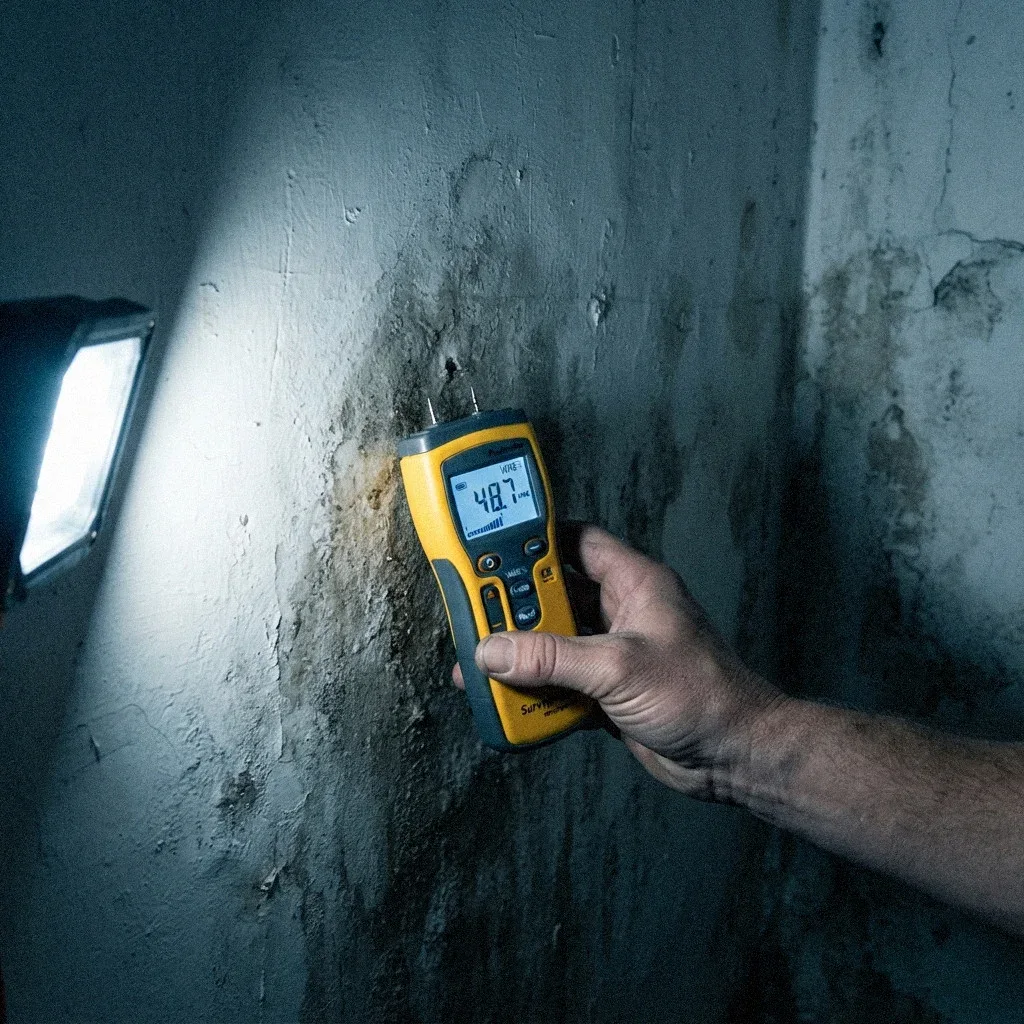
A documented inspection with lab testing, when you actually need proof.
Learn about Mold Inspection & Testing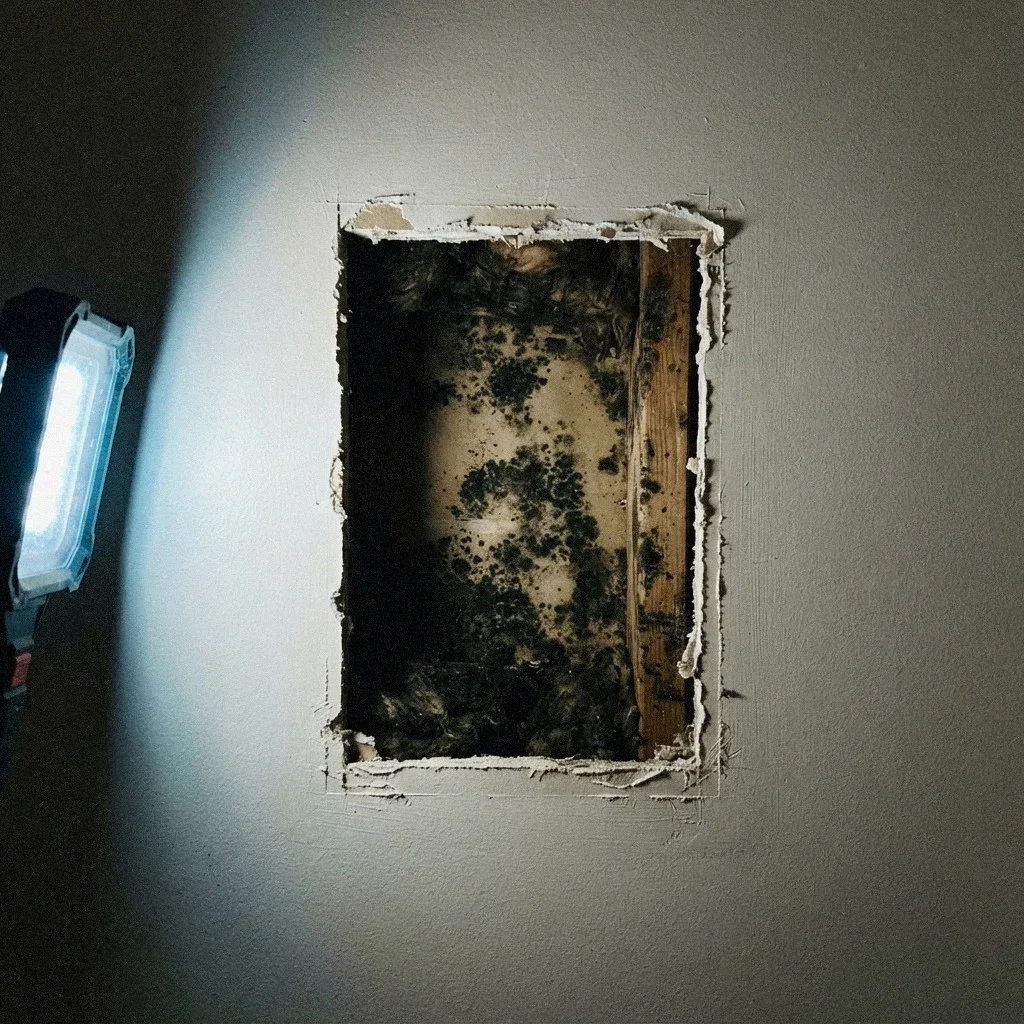
Mold cut from behind drywall and wall cavities, not painted over.
Learn about Drywall & Wall Cavity Mold Removal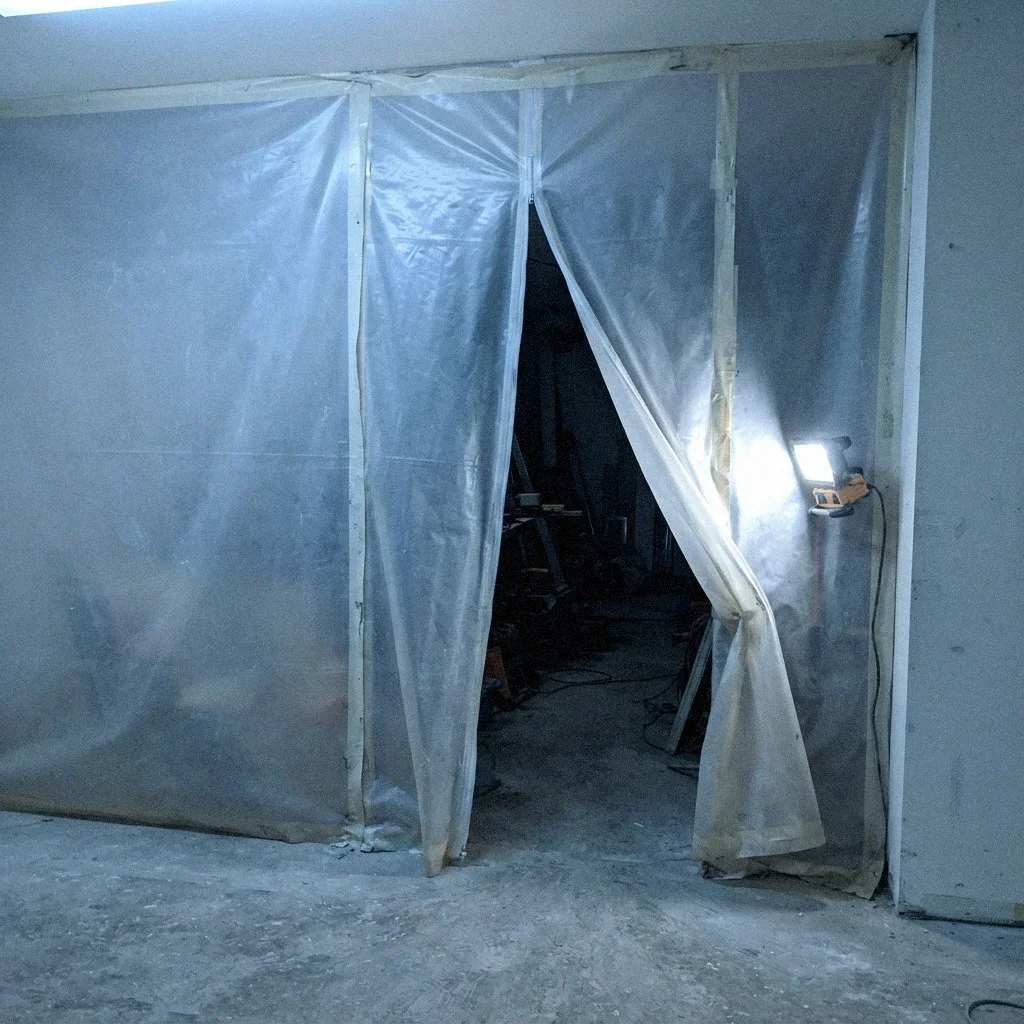
Multi-room mold, staged containment, one coordinated job.
Learn about Whole-Home Mold RemediationDel Cerro's mold risk has little to do with rain. It comes from irrigation soaking foundation-adjacent soil, air conditioning condensate lines that clog and back up into a wall or ceiling, and closed-up rooms with no airflow. The neighborhood's mesa elevation keeps it away from coastal moisture, but a slab foundation and a leaking AC unit can still grow mold just as reliably as a beach house.
No. Del Cerro is not in a flood zone and sits well above the San Diego River valley below it, so an elevation certificate or base flood elevation has no bearing on mold risk here. The relevant water sources are indoor: plumbing leaks, condensate lines, and irrigation running against a foundation wall.
Most Del Cerro homes are slab-on-grade, built in the postwar decades when that was the standard method on this mesa. A slab does not eliminate mold risk, it changes where it shows up: at the base of drywall, under flooring, and around plumbing penetrations rather than in a crawl space underneath.
Color says nothing about the species growing, and no visible mold in a Del Cerro home needs to be sent out for testing just to confirm it is mold. What matters is the water source behind it, whether that is a slow leak, a blocked AC condensate line, or moisture from irrigation near the slab.
There is no safe exposure limit for indoor mold, so the standard isn't a number, it's whether it is visible or the material behind a wall has stayed wet. In a Del Cerro house with a slab foundation, the more useful question is almost always where the water came from, not how much mold is present.
Evenings, weekends, and public holidays are all covered for Del Cerro. Routine bookings here typically go out within a day or two, helped by the fact you are a short drive from San Diego. Describe what you are seeing and smelling on the phone, and we will say straight whether after-hours is genuinely warranted.
Not every San Diego neighborhood grows mold the same way. A crawl-space cottage near Adams Avenue holds ground moisture differently than a slab house off Clairemont Mesa Boulevard, and the fix has to match the building, not just the address. The licensed pros we connect you with can tell on the phone which pattern applies to a house like yours before anyone drives out to look. Call Now: (619) 833-1053 and say where you are and what you're seeing.
Call (619) 833-1053