What Actually Happens During Mold Remediation in San Diego, CA
The sequence a remediation job actually follows, from the first walk-through to the final clearance check.
Remediation follows a fixed sequence: inspect, find and stop the moisture, contain the area, remove porous material that has mold in it, HEPA-clean what stays, dry the structure, then confirm clearance. Skipping the moisture step means the mold returns.
Why the Sequence Matters
A remediation job follows a fixed order, and knowing that order is most of what a homeowner needs before hiring anyone in San Diego. It starts with assessment, not a spray bottle. A tech looks at the pattern of growth, asks what it sits near, and treats every job as a moisture problem wearing a mold problem's clothes. Skip that step and you get a clean-looking wall with the same leak behind it, feeding the same growth six months later.
The assessment visit is short, usually under an hour, and mostly quiet. Somebody walks the affected room, checks the ceiling if it is a flat-roof house, checks the bathroom fan if there is one, and looks at where the light hits the wall for staining. No air sampling happens by default, because testing is usually unnecessary once mold is visible. The output is a plan: what gets removed, what gets cleaned, and where the water is actually coming from.
Finding the moisture source is the part that gets skipped by anyone quoting over the phone. In a mid-century San Diego house that means checking the low-slope roof for ponding, the crawl space vents, and any bathroom fan that dead-ends into the attic instead of running outside. A moisture meter reads the wall or subfloor at several points. Until that number comes back dry, nothing downstream of it, cleaning, painting, drywall, is a fix. It is a delay.
Finding the Moisture First
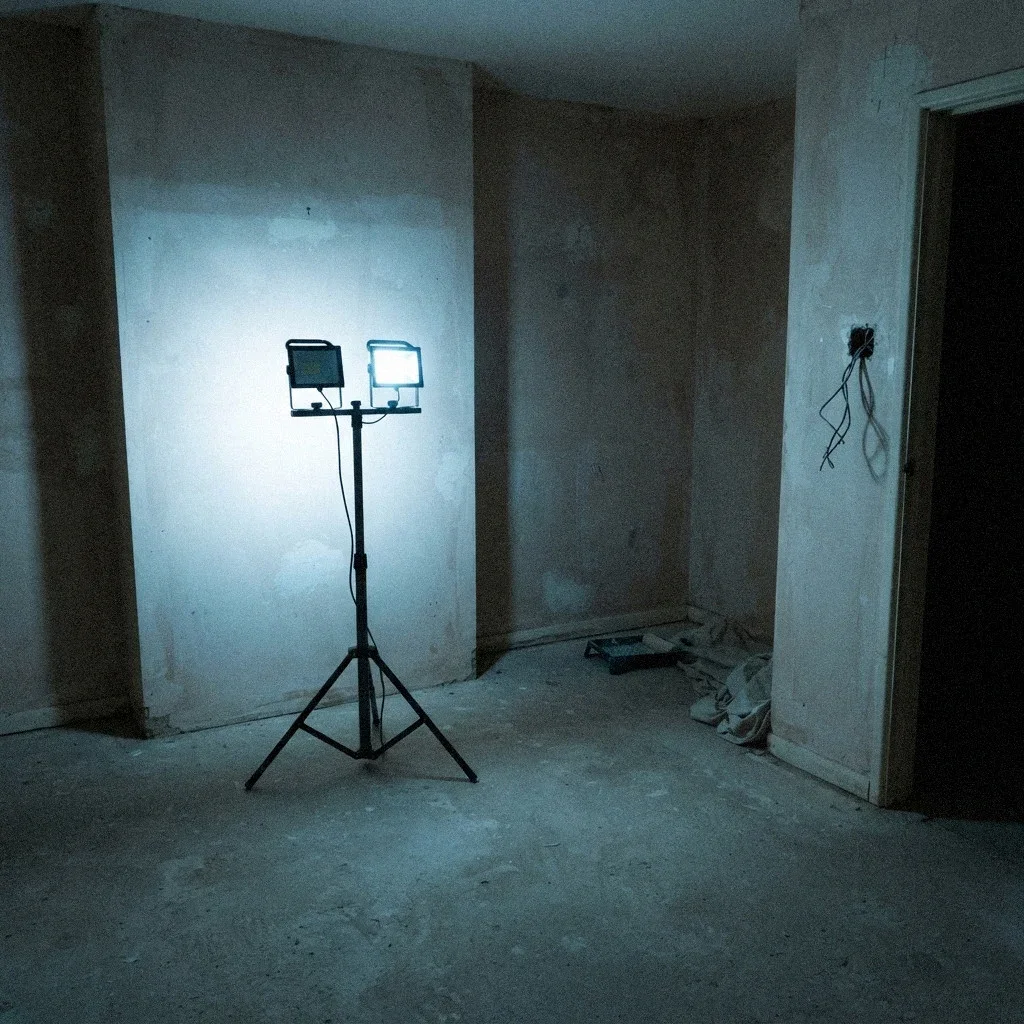
Containment goes up before anything is disturbed. Plastic sheeting seals the work area off from the rest of the house, and a negative air machine pulls air out through a filtered exhaust so spores move toward the outside, not down the hall. In a Kensington bungalow or a North Park duplex this is often one room and takes under an hour to build. The homeowner hears a steady fan hum starting on day one and sees plastic taped across a doorway that stays there until the job is cleared.
Negative air matters more than most homeowners expect walking in. Without it, cutting into moldy drywall pushes a burst of spores into open air, and that air moves through a house on its own schedule, not the crew's. With containment running, the work area is under slightly lower pressure than the rest of the home, so air leaks in rather than out. It is not dramatic to watch. It is the difference between a contained mess and a spread one.
- A walk-through starts with a visual inspection of the affected room and any adjoining space, looking for the pattern of growth, staining, and the material it sits on before anything is touched or moved.
- A moisture meter finds the wet material behind the visible mold, whether that is a plaster wall in a Golden Hill bungalow or drywall near a leaking flat roof in Clairemont, so removal doesn't stop short.
- Photos are taken before work begins. This documents the extent of the growth and the moisture source, and gives the homeowner a record of the starting condition against the finished job.
- The moisture source itself gets identified, not just noted, whether it's a roof leak, a bathroom fan venting into the attic, or plumbing behind a wall near University Heights or North Park.
- Containment goes up before demolition starts: plastic sheeting sealing the work area from the rest of the house, so spores disturbed during removal don't spread into hallways or bedrooms.
- A negative air machine runs inside the containment, pulling air through a HEPA filter and exhausting it outside, so the pressure inside the sealed area stays lower than the rest of the house.
Containment and Negative Air
Porous material that has grown mold does not get cleaned, it gets removed. Drywall, insulation, carpet, some baseboard, anything with a cell structure that mold can grow through rather than just sit on. This is the loudest, dustiest day of the job, and it is the day a homeowner in a South Park or Golden Hill house should expect drywall going into sealed bags before it leaves the work area, not carried loose through the living room.
The removal cut line is usually set past the visible stain, not at its edge, because moisture travels inside a wall further than it shows on the painted face. A tech checks the stud bay behind the cut with the same moisture meter used earlier. If the framing reads dry, the cut stops there. If it does not, the cut moves further, because a repair built on damp framing is a repair that fails again inside a year.
- Porous material with mold growth in it - drywall, insulation, carpet, some wood - gets cut out and bagged inside the containment. Porous material does not clean up; it gets replaced.
- Studs, framing, and other material that stays get HEPA-vacuumed and wiped down. This is cleaning the surface that remains, not treating a stain, and it happens before drying equipment goes in.
- Air scrubbers and dehumidifiers run for a period of days, not hours, bringing the moisture content of the remaining wood and framing down to a dry baseline before anything gets closed back up.
- A clearance check, often a visual reinspection and sometimes air or surface samples from an independent party, confirms the space is dry and clean before containment comes down and rebuild starts.
The Job Day by Day
What stays gets HEPA cleaned rather than removed, framing lumber, subfloor, non-porous surfaces, anything solid enough that mold sits on it rather than in it. A HEPA vacuum pulls loose spore material off the surface first, then a wipe-down with an appropriate cleaning agent goes over everything the vacuum touched. This step is close, unglamorous work, done by hand along studs and joists, and it takes longer than the demolition day usually did.
It is worth saying plainly what this step is not: it is not bleach sprayed on a wall. Bleach treats the color on a surface, not the growth underneath it, and on porous material it does nothing to what is growing inside. HEPA cleaning plus removal of what cannot be cleaned is the actual mechanism. A homeowner near El Cajon Boulevard or Adams Avenue who was told bleach would handle a wall cavity was told something that does not hold up.
| Step | What Happens | What You Notice |
|---|---|---|
| Assessment visit | Walk-through, moisture meter readings | Half a day |
| Containment setup | Plastic sheeting, negative air machine | Half a day |
| Containment setup | Porous material cut out, bagged | One to three days |
| HEPA cleaning | Vacuuming and wiping remaining surfaces | One day |
| Drying and clearance | Moisture readings confirm dry, visual check | One to two days |
Removal and HEPA Cleaning
Drying comes after cleaning, not instead of it, and it runs on air movers and often a dehumidifier left running in the sealed work area for one to several days. This is the quiet stretch of the job. Nothing visibly changes day to day, but the moisture meter readings are being logged, and the equipment does not come out until the framing and subfloor read dry, not just dry to the touch.
San Diego's climate makes this step less predictable than it sounds. The air itself carries marine humidity most of the year even without rain, so a house near the coast in a place like Ocean Beach or Pacific Beach can take longer to dry than the same job would inland near Santee or El Cajon. Nobody can promise a drying timeline before the equipment is running and the first day's readings come back.
Drying and Final Clearance
Once porous material is out and the rest is HEPA-cleaned, drying equipment stays in place until moisture readings inside the wall or subfloor match the readings in unaffected areas of the San Diego house, not just until the surfaces feel dry to the touch. Clearance is a visual check for missed material, sometimes paired with a moisture meter, confirming the space is dry and the source found. There is no legal exposure limit an inspection can measure against, so clearance means a dry, cleaned space, not a numeric pass.
Containment comes down last, after clearance, so the rest of the house was never exposed to the work area's air while cutting and cleaning were underway. What a homeowner is left with is a room that has been opened up, dried out, and closed back up again, plus a documented reason for why the mold grew there in the first place. That last part, the reason, is the piece worth keeping, because it is what stops the same wall from doing this again.
What Clearance Testing Confirms
- There is no California permissible exposure limit for indoor mold, so no report can tell a homeowner their air is within a legal number. Clearance is judged by visible cleanliness and dry moisture readings.
- California has no separate mold contractor license. Remediation work is done under existing Contractors State License Board classifications, not a mold-specific credential like some other states require.
- IICRC S520 is the voluntary industry standard most remediation sequences follow. It is not law, and following it is a choice a contractor makes, not a legal requirement.
- Moisture is the limiting factor for mold growth indoors. Organic material for it to feed on is already present in nearly every building, so the water is what decides whether mold appears.
- A flat or low-slope roof, common on mid-century homes across Bay Park and Kensington, can pond water and leak slowly for months before a ceiling stain ever appears.
- A bathroom fan that vents into the attic instead of outside is a frequent, overlooked source of attic and ceiling mold in older San Diego housing stock.
Frequently Asked Questions
How long does mold remediation actually take?
Most jobs in San Diego run three to seven days from containment going up to clearance, depending on how much material has to be removed and how long drying takes. A single bathroom fan issue in a Talmadge or Clairemont house dries faster than a flat-roof leak that has been running into a ceiling near Mission Valley for months. The moisture readings decide the timeline, not the calendar.
Do I have to leave the house during the work?
Most residential jobs run three to seven days from containment to clearance, longer if drying takes several days or if mold has spread into wall cavities in an older Talmadge or South Park home. A same-day job is rare once material has to come out.
What is negative air pressure and why does it matter?
No. IICRC S520 is a voluntary industry standard the licensed pros we connect you with can follow, but California has no state mold-specific contractor license, so nobody is a legally licensed mold remediator here. Contractors work under existing Contractors State License Board classifications, and California has never set permissible exposure limits for indoor mold to certify against.
Will they cut open my walls to find the mold?
Clearance means the containment comes down and the space passes a visual and often a moisture check, not that the air hits some legal limit, because none exists in California. The licensed pros we connect you with confirm surfaces are dry and visibly clean, moisture readings are back to normal, and there is no lingering odor before removing plastic sheeting and negative air machines.
How do they know when the job is actually done?
Usually not on its own. Bleach can lighten the color on a hard, nonporous surface, but it does not reach the growth inside drywall, framing, or insulation, and CDPH guidance treats moisture as the limiting factor, not the cleaner used. Removing the wet, colonized material and fixing the moisture source is what actually stops it from returning.
Ready to See the Process Start?
Read the process, then call (619) 833-1053 to have the licensed pros we connect you with walk your own house through it.
Call (619) 833-1053