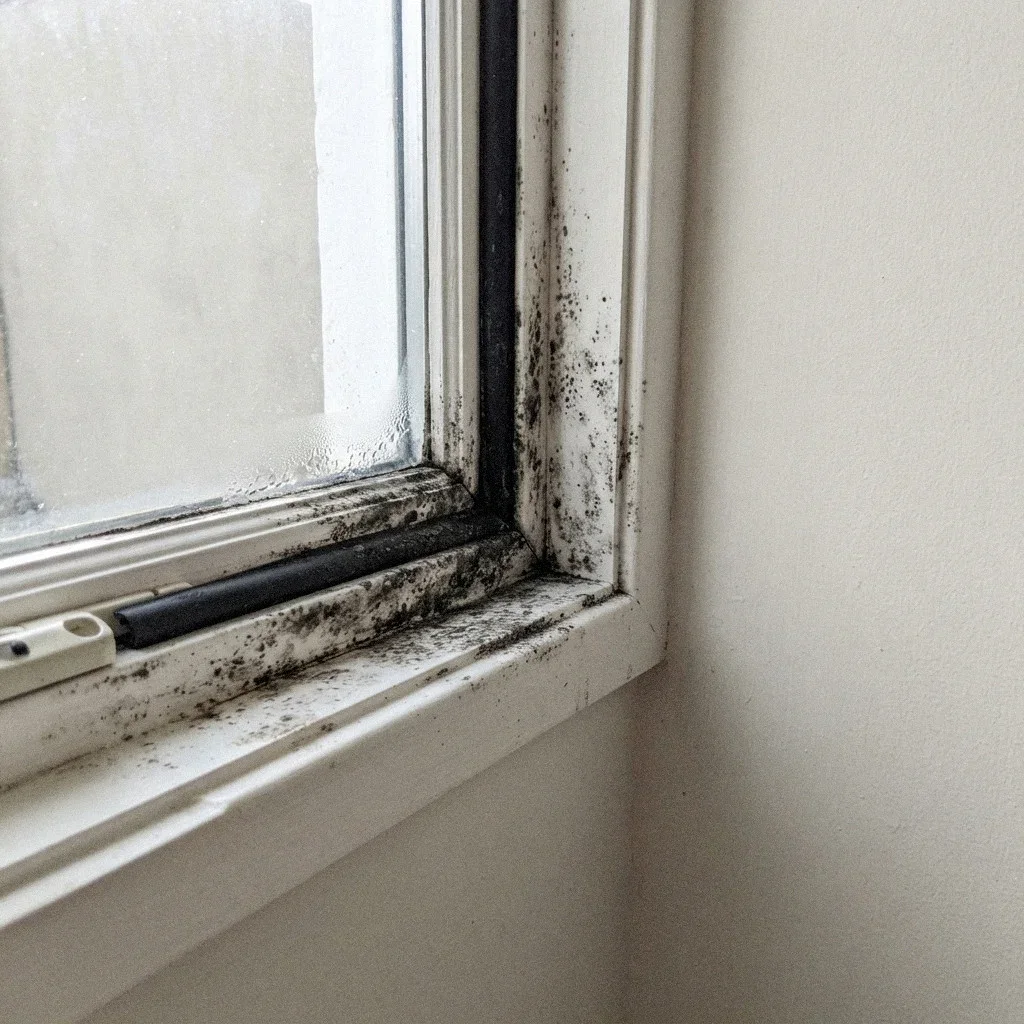
Black Mold and Stachybotrys: What Is True and What Is Not
What Stachybotrys actually needs to grow, and why color alone never identifies it in a San Diego home.
Stachybotrys is one species among many molds that can appear dark or black. Color never identifies it; only lab analysis does. San Diego's marine humidity and older, poorly ventilated bathrooms give any mold species enough sustained moisture to establish, regardless of which one it turns out to be.
What Stachybotrys Actually Needs
Stachybotrys chartarum, the species behind the term black mold, needs the same thing every mold in a San Diego house needs: water that has been sitting for days, not hours. It favors paper-faced drywall, wet cardboard, and untreated wood, the cellulose-rich materials common behind a bathroom wall or under a Clairemont kitchen sink. It does not need a flood. A slow leak under a cabinet in Bay Ho or a roof stain in Talmadge that never quite dries gives it exactly the sustained dampness it requires.
What limits mold growth generally is moisture, not the organic material it feeds on, since drywall, wood, and dust are present in every San Diego home already. Stachybotrys is slower to establish than the common Aspergillus and Penicillium molds found in Golden Hill or North Park attics, which is why it usually shows up after moisture has been present longer, not because the house is unusually dirty or old.
It is not the only dark-colored mold, and it is not the only one worth removing. A patch on a Normal Heights ceiling that looks black could be several different species, and the growth conditions overlap enough that guessing by sight tells a homeowner little about what is actually growing or how serious the underlying leak might be.
Why Color Identifies Nothing
Color is the least reliable way to identify a mold species. Stachybotrys is often described as black or dark greenish, but so are common Cladosporium and Alternaria growths that turn up in a Serra Mesa closet or a Kearny Mesa garage. Lighting, the material it is growing on, and how wet it currently is all change the shade a person sees, sometimes within the same patch.
Positively identifying Stachybotrys requires lab analysis of a sample, not a visual check from across a room in a University Heights bedroom. Most homeowners never need that identification, because the remediation approach does not change based on species. The practical question is whether the material can be cleaned or has to be removed, not which mold is sitting on it.
- Sustained moisture, not warmth or dust, decides whether Stachybotrys or any other mold colonizes a surface. San Diego's marine air keeps indoor humidity elevated for long stretches even without rain, which is why growth shows up in homes that have never flooded.
- Cellulose materials - drywall paper, wood framing, wallpaper paste - feed Stachybotrys more readily than tile or metal. A bathroom wall in an older Normal Heights or City Heights house carries exactly that combination when ventilation is missing.
- A bathroom fan that vents into the attic rather than outside is common in older San Diego housing and quietly supplies both spaces with the steady dampness mold needs, month after month, without a single storm involved.
- Stachybotrys grows slowly compared to some common molds, so its presence usually signals moisture that has been constant for weeks, not a single spill. That timeline matters more than the species name.
- Poor airflow behind furniture, inside closets on exterior walls, or under sinks in a Golden Hill or South Park kitchen creates the same still, humid pocket that any cellulose-loving mold can use, Stachybotrys included.
- Once the moisture source is fixed - a fan rerouted, a leak stopped, a window reglazed - the mold stops advancing regardless of which species was growing. Removal without that fix is temporary no matter the name on the lab report.
What the Evidence Actually Supports
A lab report on an air or surface sample gives a spore count and, sometimes, a genus or species name. What it does not give is a safety verdict. There is no safe exposure limit for mold spores recognized by any health authority, so a report cannot say a level is fine or a level is dangerous. It is a snapshot of what was airborne or present on a surface at the moment the sample was taken, nothing more.
For visible mold, testing is usually unnecessary. If a patch is visible on a wall in a Point Loma bathroom or a City Heights hallway ceiling, the useful next step is finding and fixing the moisture source, then removing the growth, not paying for a lab to confirm what is already visible. Testing earns its cost mainly when growth is suspected but not seen, or when a sale requires documentation.
- A lab report identifies genus and sometimes species, and may note spore concentration relative to outdoor air. It does not measure a health risk or set a safe threshold, because none exists for any mold species.
- Two labs analyzing the same sample can report slightly different genus breakdowns, since identification depends on culturing conditions and the analyst's judgment on partially degraded spores.
- A report naming Stachybotrys does not change the remediation method. IICRC S520 governs containment, removal and drying the same way whether the report comes back with that name or a more common genus like Cladosporium.
- For visible mold on a wall or ceiling in a Rancho Bernardo or Tierrasanta home, testing mainly adds cost and delay. State guidance treats visible growth itself as sufficient reason to remove it without waiting on species confirmation.
How Common Indoor Molds Compare
Stachybotrys is one of several molds found in San Diego homes, alongside Aspergillus, Penicillium, and Cladosporium. None can be told apart by color or smell. What separates them in practice is where they turn up: Cladosporium favors cool surfaces like closet walls, Aspergillus and Penicillium colonize dust and paper, and Stachybotrys needs sustained wetness, not just humidity, so it tracks to a leak or a bathroom fan venting into the attic rather than to weather. The remediation response does not change based on which one is present.
That distinction matters because Stachybotrys carries a reputation, built partly on media coverage from the 1990s, that outran the evidence behind it. The honest position is narrower and less dramatic: mold of any kind growing indoors is undesirable, sensitized individuals react to it, and none of that depends on whether the species happens to be the one with the frightening nickname.
| Question | Common Claim | What Holds Up |
|---|---|---|
| Water source | Dark, slimy when wet | Needs sustained saturation |
| Surface texture | Olive to dark brown | Grows on cooler, damp surfaces |
| Drying time | Yellow-green to gray | Common on household dust and drywall |
| Material affected | Blue-green, powdery | Spreads fast on water-damaged material |
| Removal method | Same across all four | Identity does not change the S520 process |
Why Testing Rarely Changes Anything
The fix does not change once you know what is growing. A bathroom in a Kensington or Talmadge house with no extractor fan, or a fan ducted into the roof space rather than pushed outdoors, keeps that room wetter than it should be after every shower. Reduce the moisture and the growth stops returning; treat only the surface and it comes back within weeks. The colony gets removed by a licensed pro, not identified by a lab first, because removal does not depend on the species name.
That single ventilation fault, common in housing built before extractor fans were standard, is behind a large share of bathroom and attic mold across the city, from Linda Vista to Mira Mesa. The moisture accumulates gradually with every shower, with no storm or leak to point to, which is why homeowners are often surprised to find growth in a house that has never flooded.
Why Removal Doesn't Depend on Species
Removal follows the same method regardless of which species is growing, Stachybotrys included. IICRC S520, the voluntary industry standard for mold remediation, sets out containment, removal of material that cannot be cleaned, and drying the space so growth cannot return. It does not branch by species, because the growth is a symptom and the moisture is the cause.
California has no state mold-specific contractor license; the work is done by contractors licensed under existing Contractors State License Board classifications. Bleach is not part of that standard process. It can lighten the color on a nonporous surface, but it does not reach growth inside drywall or wood, and it treats the color a homeowner sees rather than the material underneath it.
What Actually Determines Mold Growth
- Stachybotrys chartarum is the species usually meant by the term 'black mold,' but it is not the only species that looks black, and looking black does not mean it is present.
- Stachybotrys needs sustained moisture, not just humidity, so it typically appears after a slow leak or chronic condensation rather than after a single humid week in San Diego.
- Moisture, not the species itself, is the limiting factor for whether any mold grows in a building, since organic material for it to feed on is essentially always present.
- IICRC S520 is the voluntary consensus standard for mold remediation procedure. It is not a law, and it does not vary by species identified.
- No air-quality standard sets a safe exposure limit for mold spores, which is one reason testing rarely changes the removal method once growth is already visible.
- Recognized health associations with mold exposure are respiratory and allergic - irritation and asthma-related symptoms - not a named disease, and not something removal can promise to resolve.
Frequently Asked Questions
Is black mold more dangerous than other mold?
No. Color alone cannot tell a homeowner in Bankers Hill, Clairemont, or anywhere else in San Diego which mold species is growing. Several common species, including Stachybotrys, Cladosporium, and Alternaria, can all appear dark or black depending on the surface and how wet it is. Species identification requires a lab sample, and for visible growth it rarely changes what needs to happen next: find the moisture source and remove the material.
Can I tell if it's Stachybotrys by looking at it?
No. Color tells you nothing about species. Stachybotrys, Cladosporium, Aspergillus and several others can all appear dark, greenish-black or nearly black depending on the surface and moisture level. The only way to know what is growing on a wall in a Kensington bungalow or a North Park bathroom is a lab sample, and even then it rarely changes what removal involves.
Do I need to test before removal?
No exposure limit exists for any mold, including Stachybotrys. Recognized effects are respiratory and allergic - irritation, hay fever symptoms, worse asthma in people already sensitized. It does not diagnose or cause a specific disease, and nobody can promise a health outcome from removing it. Moisture control matters regardless of species.
Does black mold smell different from other mold types?
Rarely, and mainly to confirm extent, not species. If mold is visible in a Talmadge or Clairemont home, the state's own guidance treats visible growth as reason enough to remove it. Testing adds cost without changing the remediation method, which follows IICRC S520 procedures whether the sample comes back Stachybotrys or something else entirely.
What conditions let Stachybotrys grow indoors?
The same as any other mold: contain the area, remove the affected material, dry the space fully, and fix whatever kept it wet. IICRC S520 does not have a separate protocol for one species. A home near the San Diego River in Mission Valley gets the same process as one in Serra Mesa.
Ready to Get an Inspection Instead?
Visible growth is visible growth regardless of the species underneath it. Call (619) 833-1053 to get it removed correctly.
Call (619) 833-1053