Health & Safety
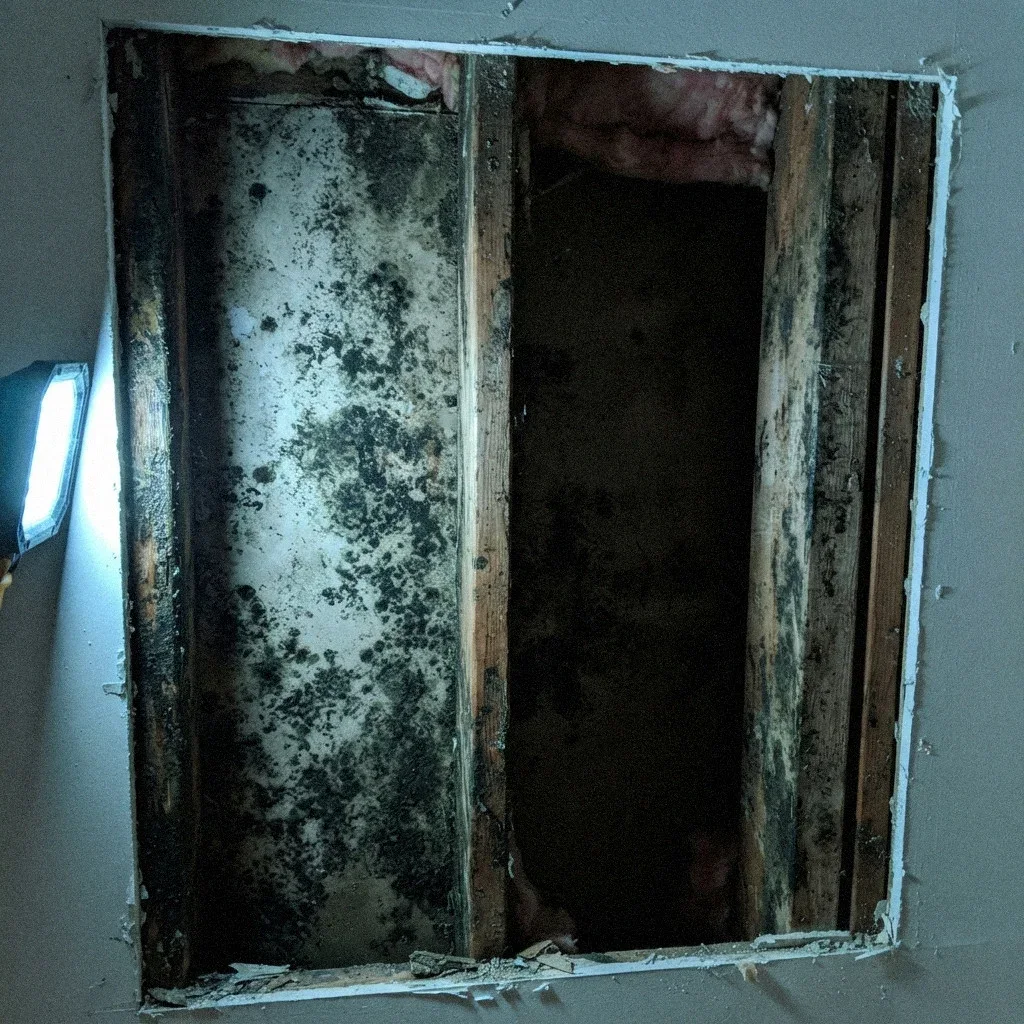
Is Black Mold Dangerous in San Diego?
Black mold sounds like a diagnosis. It is a color, not a species and not a health verdict. Here is what is genuinely established, and what is just internet noise.
Read article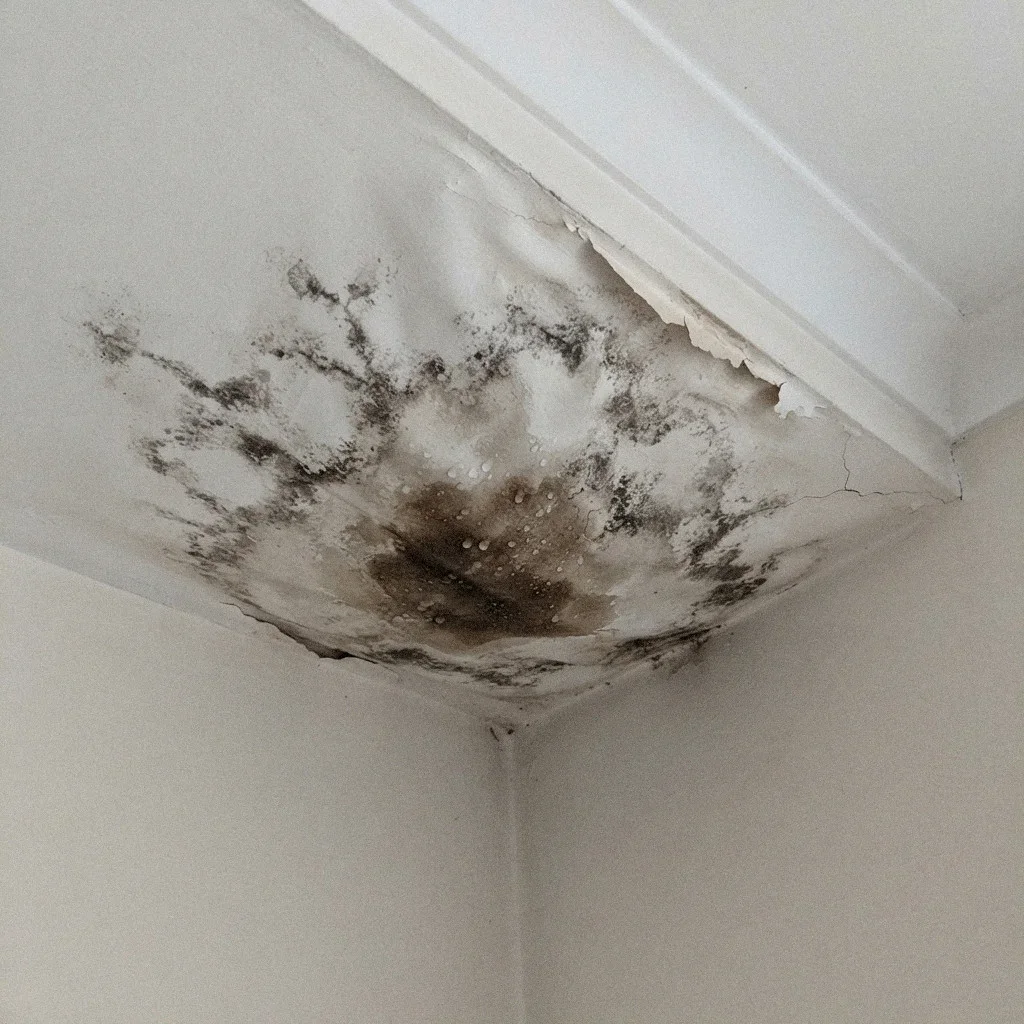
A ceiling stain means water above it, not below it.
A brown ring spreading across a bedroom ceiling in Kensington or a bathroom ceiling gone soft in Normal Heights reads the same way to most homeowners: something is wrong up there. It usually is. Ceiling mold means water above the surface, not below it, and the stain is only the part that made it through the drywall. Flat-roofed houses near Clairemont and Bay Park pond water after even a light marine drizzle, and a slow leak through that roof can feed a ceiling patch for months before anyone notices the smell.
Tracing the source above a stained ceiling comes before anything gets opened. A pro checks the roof plane over the stain first, then the bathroom or unit directly above it, then the condensate line if there's an air handler in that attic void, ruling each out in that order rather than cutting drywall on a guess. Access matters here more than in most rooms: a two-story house in Talmadge or a condo under a unit in Mission Valley may need the leak confirmed from above before anyone opens the ceiling below, which adds a visit and changes the price. A ceiling stain that's been painted over is not a repair — it's a leak someone decided to hide rather than trace, and painted-over layers usually mean the mold underneath has had more time, not less.
Across San Diego County, whether you're in Talmadge, University Heights, City Heights, or elsewhere around San Diego, ceiling mold removal is worth arranging with somebody who works on this housing stock rather than a generic plan. Foundation type, soil and building age all change what has to happen first.
For a private home, residential mold removal sets out what a visit involves. For a shop, office, or tenanted building, commercial mold removal is the right starting point.
A yellow-brown ring on drywall, especially one that grows after the ceiling was already painted once, means water has passed through more than once. Paint does not stop the source; it just hides the next round until the ring reappears, often larger, in Clairemont bungalows and North Park craftsmans alike where the original roofing has been recoated rather than replaced.
A musty smell with no visible stain often means the moisture is sitting inside the ceiling cavity rather than on its face, feeding growth on the back of the drywall or on framing that nobody sees until a patch is cut. This is common under flat and low-slope roofs, which pond water on mid-century homes across Bay Park and Kensington rather than draining it off quickly.
Bubbling or sagging drywall, or a soft spot when pressed gently, means the material has absorbed enough water to lose structural integrity, not just color. That is past the point of a wipe-down or a repaint. It usually points to a leak that has been running for some time, whether from a roof over Talmadge or a second-floor bathroom above a Golden Hill dining room.
The area above the stain is inspected first — bathroom fixtures, AC condensate lines, or roof flashing and penetrations — using moisture meters to narrow down where the water is actually entering before any drywall is touched.
Once the source is confirmed, it gets addressed or referred out, whether that means a roofing repair, a condensate line fix, or a plumbing correction. Opening the ceiling before the source is fixed just creates the same stain again later.
Affected drywall, insulation, and any framing showing softening or growth are removed. How much comes out depends on how far the moisture traveled and how long it sat before anyone noticed.
The cavity is dried and treated, then new drywall, texture, and paint bring the ceiling back to match, with the corrected water source meaning there is nothing left to feed a repeat.
San Diego's mid-century houses lean on flat or low-slope roofs and stucco walls that trap moisture rather than shed it. A ceiling stain rarely means the ceiling itself is wet by rain — it means a roof drain, a bathroom above, or a condensate line has been leaking quietly, sometimes through a whole dry summer, before the drywall finally shows it.
Ceiling mold removal in San Diego almost always starts above the ceiling, not at it. A stain over a Kearny Mesa kitchen or a University City bathroom usually traces to a roof leak, a unit upstairs, or a condensate line, and the ceiling drywall is just where the water finally showed. Cutting out the stained board without finding that source means the same ceiling mold removal job again within a year. IICRC S520 covers containment and removal method; it does not cover chasing the leak, which is a separate and necessary step first.
Flat and low-slope roofs are common on mid-century homes across North Park and Clairemont and on most commercial buildings near Convoy Street, and they pond water that finds a seam slowly rather than all at once. A ceiling under one of these roofs can stain months after the leak starts. Ceiling mold removal on a slab-built ranch house near Mission Valley or a low-slope commercial unit off Balboa Avenue should include a look at the roof membrane above, not just the drywall below it.
Here is roughly what ceiling mold removal runs locally. Treat it as a guide — the property itself decides where inside the range you land.
| Best Suited For | What It Finds | What It Misses |
|---|---|---|
| A licensed pro walks in looking for water, not color. Where a surface is wet, why it stayed wet, and what is feeding that moisture over time. Skip that question and any quote is a guess dressed up as a number, because the same patch comes back once the visit ends. | Drying for a limited, easy-to-reach area | an estimated $765–$3990 |
| Anyone can spray a chemical on a stain and call it remediation. A licensed pro checks moisture readings, traces the source, and only then decides what gets removed versus cleaned. That sequence is the entire difference between a fix and a repeat visit six months later. | HEPA cleaning for one affected room | an estimated $900–$5700 |
| A quote that skips the moisture question is a price on half a job. The licensed pros we connect you with start by finding where the water is coming from, because removing growth without stopping its source just buys the same house a second remediation later. | Several rooms or a hard-to-reach cavity | an estimated $1350–$9120 |
| Sealing off the work area matters because disturbed growth releases particles into air that was clean a minute earlier. A tented, negative-pressure section keeps that particle load from settling in a hallway near Lake Murray or drifting through the return vents into a bedroom three rooms away. | Multiple containment zones and extensive removal | an estimated $2160–$15200 |
A remediation bid built on square footage alone leaves out the part that decides whether the work holds: what is still feeding water into that wall or crawl space. Fix the growth without fixing the source and a homeowner pays twice, once for cleanup and again in a year or two when the same patch returns.
Marine humidity condensing on a cool ceiling surface, an AC condensate line backing up into a cabinet above, or a slow leak from a flat roof can all leave mold with no dripping water ever seen from below. The moisture shows up as a stain or smell long after the actual event, which is why source tracing matters more than the stain itself.
Painting over the stain hides it for a while but does nothing about the water still getting in above it. The stain almost always comes back, often larger, because the paint has no effect on whatever is leaking through the roof, a bathroom above, or a condensate line. Treat a repainted stain as a warning sign, not evidence the problem was handled.
No. A roof or a pooling low-slope roof deck is common on mid-century San Diego homes, but a bathroom on the floor above, a blocked AC condensate line draining into the ceiling cavity, or a plumbing line in the void above can all produce the same stain. The location of the stain gives a general area, not the specific source.
The licensed pros we connect you with typically check the area directly above the stain first — a bathroom fixture, an AC air handler or condensate pan, or roof penetrations and flashing — before cutting into the ceiling. Moisture meters and sometimes a small inspection opening confirm the path before any larger repair begins.
Not always. A contained, recently discovered stain may only need the affected section of drywall removed and the moisture source corrected. A ceiling that has been wet repeatedly, or where the drywall has softened or sagged, usually needs a larger section replaced because the material itself has lost integrity, not just its color.
Paint over a ceiling stain hides the color but does not remove the mold or dry out the drywall and insulation above it, so growth continues underneath. In a San Diego house near the coast, where marine humidity keeps materials damp even without rain, a painted-over stain in Ocean Beach or Pacific Beach usually resurfaces within a season. Ceiling mold removal has to include finding and stopping the water source above the ceiling, then removing the affected material, before repainting means anything.
Marine air carries moisture year round here, and a cool interior surface is enough to turn it into growth, no storm required. Single-glazed windows, closet walls behind furniture, and cold supply ducts all condense quietly. The pattern is mechanical, not seasonal, which is why a home can develop a mold problem in the driest month on the calendar.
Black mold sounds like a diagnosis. It is a color, not a species and not a health verdict. Here is what is genuinely established, and what is just internet noise.
Read article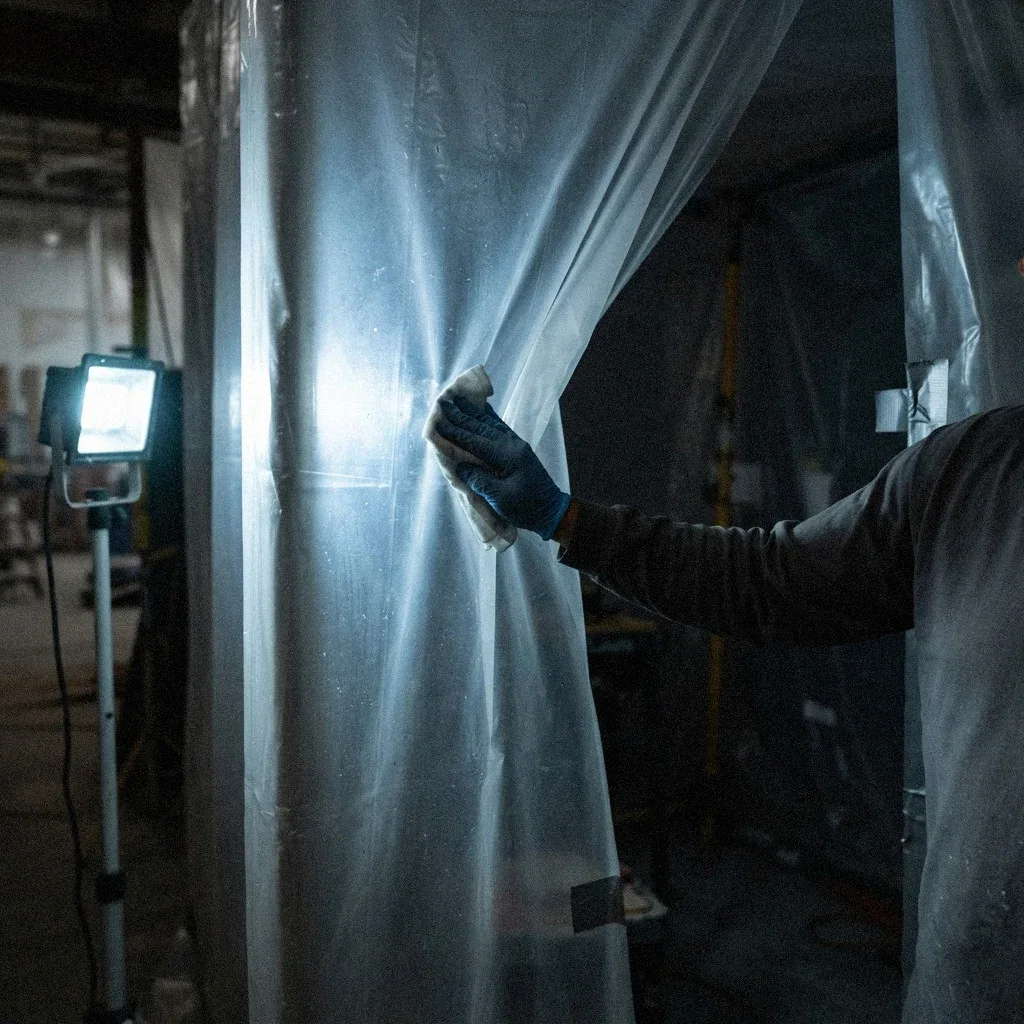
Wiping visible mold off a wall in San Diego rarely ends the problem, because the growth was never the actual issue. The moisture behind it was, and surface cleaning does not touch that.
Read article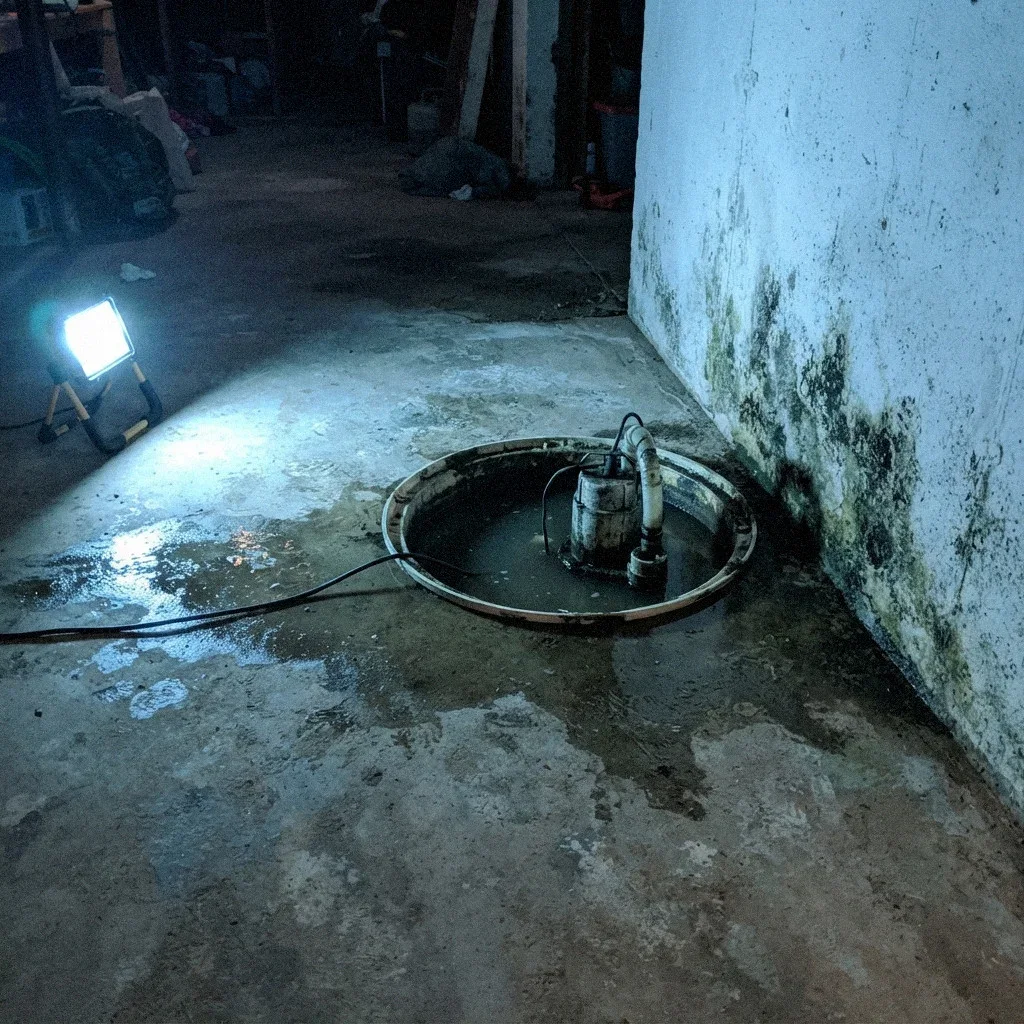
A musty odor in a San Diego house is usually moisture, not dirt. Here is how to tell ordinary dampness from a mildew smell that points to hidden mold, and what to check first.
Read articleThis is one piece of a larger job, and it rarely stands alone. A leak that stains a ceiling in Kensington or a condensation line in a Pacific Beach bathroom usually needs both the moisture stopped and the growth removed, in that order. The licensed pros we connect you with in San Diego can tell you on the call whether this service covers what you're dealing with or whether the source needs attention first. Call Now: (619) 833-1053 and describe what you're looking at.
Call (619) 833-1053