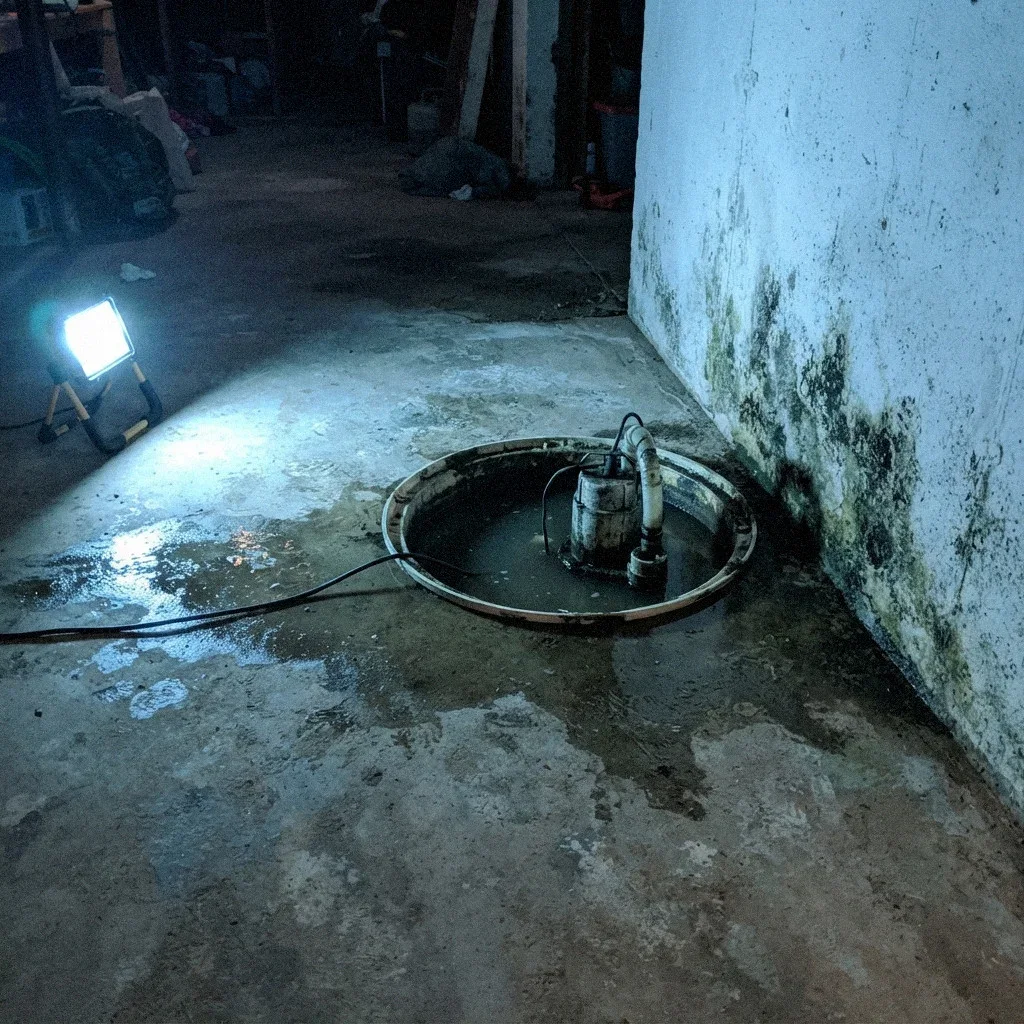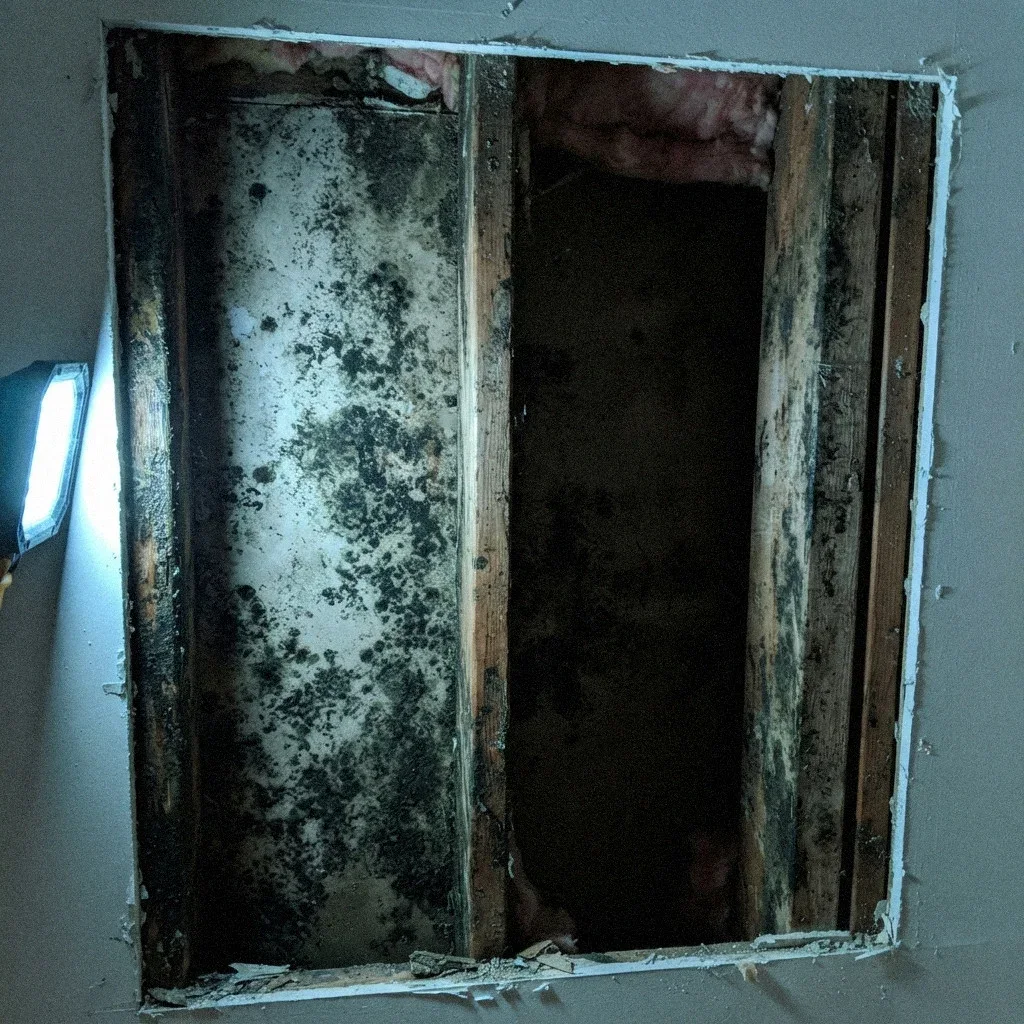
A stain does not announce its own cause. In San Diego, where marine air carries real humidity even on a dry summer day, a wet patch can come from a supply line inside a wall or from nothing more than warm air meeting a cold surface. The two look similar at first glance and behave very differently over the following week, which is where the real tells show up.
Where Each One Shows Up
Condensation favors cold surfaces: a single-glazed aluminum window frame, a metal supply line, an exterior wall corner with little insulation behind the stucco. A leak follows plumbing and roofing, not temperature. Look near a bathroom above, along a kitchen wall backing a supply line, under a roof flashing detail, or below a drip pan and condensate line if the house has central air conditioning.
Does It Track or Spread
Condensation spreads evenly across a surface, a soft halo with no clear point of origin. A leak, even a slow one, tends to track: it starts at a single point and runs downward, leaving a stain pattern with a defined edge or a drip line. If you can trace the mark back to one spot on the ceiling or wall, that points toward water arriving from somewhere, not air giving up moisture.
Timing Against The Weather
Condensation tracks the marine layer and the daily temperature swing. It shows up on cool, foggy mornings in San Diego and eases once the sun burns off the cloud. A leak does not care what the sky is doing. If the wet spot appears regardless of morning fog or a dry afternoon, and instead follows whether the shower ran or the irrigation cycled, the source is plumbing, not humid air.
The Puddle Versus The Film
A leak often leaves a puddle, however small, at a low point: the base of a cabinet, a baseboard, the floor under a supply line. Condensation rarely puddles unless it has been running down a window for a long time. A thin film of moisture on glass or metal, with no water actually collecting anywhere, is closer to air giving up moisture than to a source that keeps supplying water.
Constant Drip Or Intermittent Leak
Pay attention to rhythm. A constant drip that shows up at the same time every day, tied to the air conditioner running or a shower being used, behaves differently from a recurring drip that shows up only sometimes. An intermittent leak, one that appears after the AC has run for hours or after a specific plumbing fixture is used, is still a leak. It is just harder to catch mid-drip.
The Condensate Line Clue
An air conditioning unit that drains poorly points the same way. Check the pan under the air handler and the condensate line itself for a clog before assuming a roof or plumbing source. Where the drip pan sits under a Clairemont or Kearny Mesa attic unit, a stopped line overflows quietly, and the stain below often looks identical to a slow roof leak until someone traces the line back to the unit.
Humidity Level Inside The Room
A simple gut check: does the room generally feel damp, or does it feel dry except for the one spot. A high ambient humidity level, a window that fogs most mornings, a bathroom mirror that never fully clears, points toward condensation as the pattern for the whole room. A single wet area in an otherwise dry room points more toward a localized leak than a broad humidity problem.
Roof And Flashing Signs
Stucco holds moisture against the sheathing behind it once roof flashing or window flashing has failed, and that moisture can travel sideways before it shows up as a stain well below the actual entry point. If the mark is near a roof-to-wall junction or below a window, and it grows after any period of damp weather, roof flashing or window flashing is a more likely source than the air in the room.
When The Pattern Is Mixed
Some rooms have both problems at once: a slow leak feeding a damp wall, and that dampness raising the local humidity level enough to fog a nearby window. In that case the tells overlap, and the surest way to separate them is to dry the surface completely and watch what comes back first, and where, over the next day or two.
Why This Distinction Matters
Mold does not care which mechanism supplied the water. Given a damp surface and organic material, which every San Diego house has plenty of, growth can start either way. But the fix is different. Drying out a room and improving airflow addresses condensation. A supply line, a condensate line, or a roof flashing gap needs to be found and closed, not just dried, or the growth returns.
Where To Go From Here
Once you have sorted condensation from a leak, the next step depends on which one you are looking at. If water is arriving from somewhere, the moisture source guide covers how that gets traced and closed. If it is condensation, the fix is usually about airflow and surface temperature rather than plumbing, and that is a separate conversation from removal itself.
Dealing with this in your home?
Mold in San Diego rarely starts with a storm. Marine air off the coast meets a cool interior surface, or an air conditioner drips quietly behind drywall, and growth begins without a drop of rain. A 1950s tract house near Clairemont Mesa Boulevard and a Craftsman near South Park fail the same way: moisture first, staining second. Bleach handles the color. It does not handle the source.