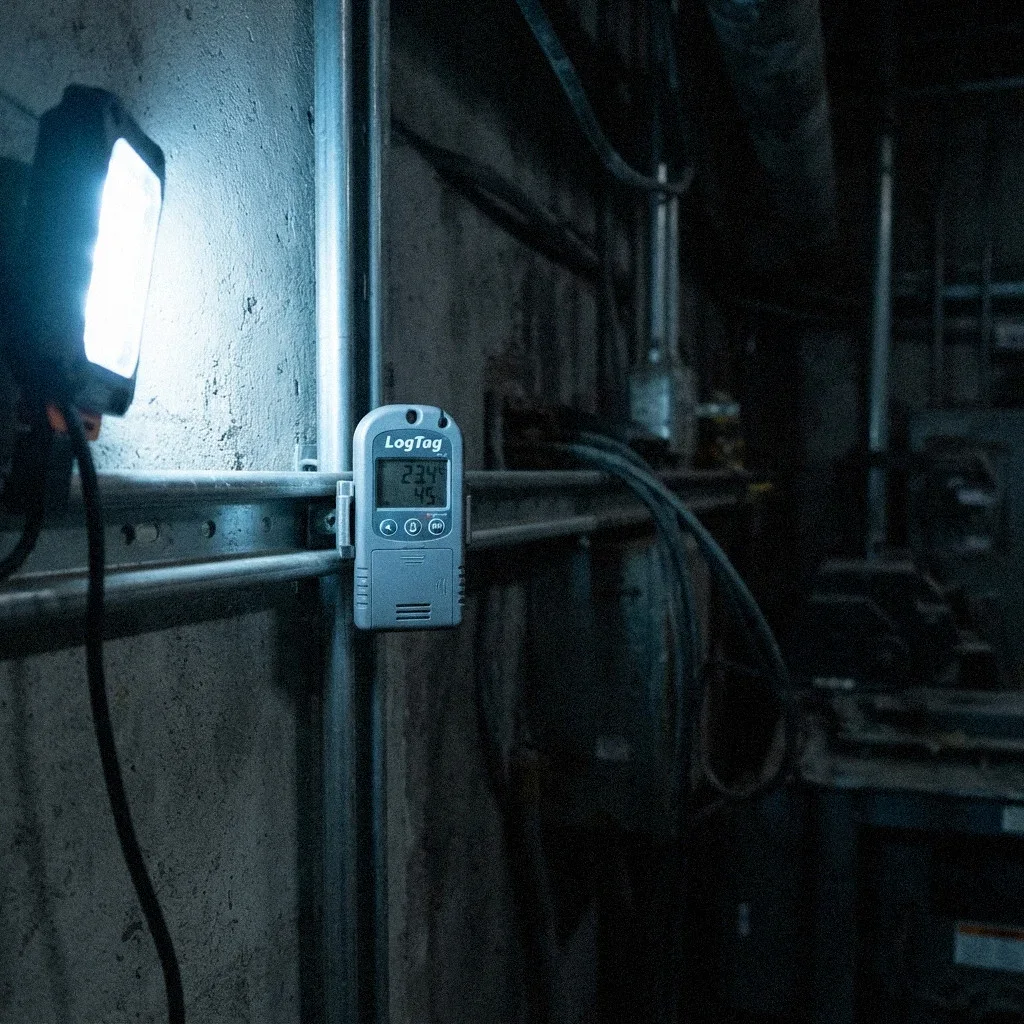
Controlling Indoor Humidity and Condensation in San Diego, CA
Why cold surfaces sweat, what humidity level is safe, and how a fan or an air conditioner changes the outcome.
Mold grows where warm, humid air meets a cold surface and condenses. Keeping indoor relative humidity near 45 to 55 percent, venting bathroom fans outside rather than into the attic, and ventilating rooms that run cooler than the rest of the house controls most condensation-driven mold in San Diego homes.
Relative Humidity and Dew Point
Mold needs water, not heat. In San Diego the marine layer keeps outdoor air heavy with moisture even on a dry, sunny week, and that moisture finds the coolest surface in a room and condenses there. Relative humidity is how full the air is compared to what it could hold at that temperature. Dew point is the temperature at which the air is already full. A wall, a window, or a duct that drops below the dew point turns invisible vapor into liquid water, and that water is what mold actually uses.
This is why a house near the coast in Ocean Beach or Pacific Beach can grow mold in a week when a house of the same age inland barely does. The air itself carries more water. Nothing about San Diego's climate needs rain for this to happen; the marine layer and morning fog do the work that a wetter city gets from storms. A room can look completely dry and still be feeding mold through the air alone, which is the part most people researching this online never get told plainly.
The practical target most building science guidance settles on is keeping indoor relative humidity somewhere in the 30 to 50 percent range, measured with a cheap hygrometer rather than guessed. Above 60 percent for sustained periods, condensation risk climbs sharply on any cool surface in the house. This is not a precise threshold mold obeys exactly, but it is a reasonable line to manage toward, and it costs nothing to check with a $15 meter from a hardware store.
Why Cold Surfaces Sweat First
Warm air holds more water vapor than cool air, and when it touches a cooler surface it gives that vapor up as liquid. In a Point Loma bungalow with single-glazed aluminum windows, the glass and frame sit well below room temperature, so they collect moisture first while the wall beside them stays dry. The same thing happens on an exterior wall behind furniture, or at a thermal bridge in the framing. Track down the coolest surfaces in a room and you have found where condensation, and eventually mold, will start.
The same mechanism plays out on exterior walls where insulation is thin or missing, on ductwork running through an unconditioned attic, and on tile flooring over a crawl space in the older neighborhoods around North Park or Golden Hill. Anywhere a surface temperature dips below the dew point of the air touching it, water forms whether or not anyone in the house would call the day humid. The fix is almost never about the room air alone; it is about raising that surface temperature or lowering the humidity that meets it.
- Warm air holds more water vapor than cold air. When that air touches a colder surface, the surface can no longer hold onto the same amount of vapor, and the extra water comes out as liquid. That is condensation, and it is the seed for most indoor mold that has nothing to do with a leak.
- A cold surface in a warm room is the classic setup: a single-glazed aluminum window frame, an exterior wall corner with little insulation, or ductwork running through an unconditioned attic. Each stays a few degrees colder than the surrounding air and becomes the first place moisture lands.
- Relative humidity is not a fixed number of grams of water. It is a ratio, and it changes as temperature changes even if no water is added or removed. A room that reads comfortable at 68 degrees can read damp at 62, without anyone opening a window or running a shower.
- San Diego's marine layer brings humid air onshore most mornings, especially near the coast from Ocean Beach up through Pacific Beach and La Jolla. That humidity gets indoors through open windows and normal air exchange, so a coastal house can have a condensation problem with no rain involved at all.
- Cooking, showering and even breathing add water vapor to indoor air faster than most people expect. A single shower can push bathroom humidity past 90 percent for twenty minutes, long enough to condense on a mirror, a window and a cold tile grout line.
- In Linda Vista or Kensington homes with add-on laundry rooms, dryers sometimes exhaust into a garage or crawl space rather than through an exterior wall. That warm, wet air has nowhere to go except into nearby framing and drywall.
A Sensible Indoor Humidity Target
Extractor fans exist to remove humid air at its source before it spreads and condenses elsewhere, but a fan only does that job if it vents outside. Trade experience in older San Diego housing turns up bathroom fans that duct into the attic space instead of through the roof or a wall cap, which means every shower simply relocates the moisture rather than removing it. That single wiring or ducting fault is behind a large share of the attic and bathroom mold seen in houses from the 1940s through the 1970s, and it is worth checking before assuming a fan is doing its job at all.
A correctly vented fan run during and for a while after a shower pulls the humid air out of the house entirely, which drops the dew point in that room and gives condensation nothing to form on. Kitchens benefit from the same logic with a range hood vented outside rather than a recirculating filter. The fan does not need to run constantly, just long enough after cooking or bathing that the mirror and window have stopped fogging, which is a reasonable rule of thumb for when the air has actually cleared.
- A target of 45 to 55 percent relative humidity indoors is a workable range for most San Diego houses. Below that, surfaces rarely stay wet long enough for mold to take hold. Above 60 percent for extended periods, condensation risk on cold surfaces climbs sharply.
- Bathroom extractor fans need to vent to the outside air, not into an attic or roof space. A fan that terminates above the ceiling just relocates the moisture, and in older housing stock around City Heights or Golden Hill that is a common, invisible fault.
- Kitchen range hoods deserve the same rule. A hood that recirculates air through a charcoal filter instead of ducting outside removes grease and odor but does nothing for the water vapor a stovetop produces, which then settles on nearby cold surfaces.
- Air conditioning pulls double duty: it cools the air and, as a side effect, wrings some moisture out of it, which is genuinely useful in a humid house near the bay. The tradeoff is a condensate line that must drain freely, since a clogged one creates a small, steady water source of its own.
Where Condensation Actually Shows Up
Air conditioning helps with humidity almost as a side effect of its main job, because cooling air below its dew point is exactly how the unit wrings moisture out before that air returns to the room. A well-sized system running through a hot afternoon in Mission Valley or Kearny Mesa is quietly dehumidifying the house at the same time it cools it, which is one reason central San Diego homes with working air conditioning tend to have fewer condensation problems than similar homes without it.
The risk shows up at the equipment itself rather than the room. Every air conditioner removes that condensed water somewhere, usually through a drain line or a condensate pan, and a clogged line or a cracked pan leaks steadily into a closet, an attic space, or a wall cavity behind the unit. That leak is slow, often silent, and produces exactly the standing moisture mold needs, which is why a musty smell near an air handler is worth checking even when the rest of the house feels dry.
| Surface | Risk | Fix |
|---|---|---|
| Single-glazed aluminum window | Frame conducts cold straight through | Secondary glazing or a moisture-tolerant sill |
| Bathroom ceiling after showers | Fan missing or vents into attic | Duct fan to the outside, not the roof space |
| Closet on an exterior wall | Still air against a cold surface | Gap the wall from furniture, add airflow |
| Air conditioning supply register | Warm humid air meets cold ductwork | Insulate ducts, check the condensate line |
| Crawl space framing | Ground moisture with no vapor barrier | Ground cover and passive venting |
Extractor Fans and Where They Vent
Stucco, the dominant exterior finish across San Diego from Clairemont to Rancho Bernardo, is not itself the problem; failed flashing around a window or roofline is. Stucco is somewhat absorbent by design and is meant to dry out between wettings, but a gap or crack at a flashing detail lets water track behind the stucco layer where it cannot dry the same way. That trapped moisture sits against sheathing and framing, often for months, well out of sight of anyone standing in the room on the other side of the wall.
Flat and low-slope roofs, common on the mid-century houses scattered through neighborhoods like Clairemont and parts of Linda Vista, carry a related risk because they rely entirely on membrane integrity and drainage rather than pitch to shed water. A small membrane failure does not show up as an obvious leak; it shows up months later as a stain or a smell, by which time the water has already been moving through insulation and framing behind the ceiling for a while.
What Air Conditioning Changes
None of this means every damp reading calls for testing. Visible mold on a surface can usually be treated by addressing the moisture source and removing the growth, without a lab report telling you which species it is. Color is not a reliable way to identify what is growing either; a black stain and a green one can be the same organism under different lighting and substrate conditions, and neither tells you anything about how dangerous it is, because no recognized safe exposure limit exists for mold spores in a home.
Testing earns its cost in narrower situations: a pre-purchase inspection, a dispute over a landlord's remediation, or a case where symptoms persist and no visible growth explains them. IICRC S520 is the consensus standard the remediation trade works from, though it is voluntary guidance rather than law, and it treats the moisture source as the actual scope of work. Bleach, by contrast, mainly lightens the stain on a nonporous surface; it does not reliably reach growth inside porous drywall or wood.
The Numbers That Matter Most
- Relative humidity is a ratio between how much water vapor air is holding and how much it could hold at that temperature, not a fixed quantity of water.
- Dew point is the specific temperature at which air becomes saturated and water starts condensing out onto whatever surface it touches.
- A cold surface condenses moisture before the surrounding air itself feels damp, which is why windows and exterior corners are usually the first sign of a humidity problem.
- San Diego's marine layer adds humidity to indoor air on most mornings near the coast, independent of rainfall, which is rare here.
- A kitchen range hood matters too: one that vents outside removes cooking steam directly, while a unit with no outside duct just spreads that moisture into the rest of the house, adding to whatever a bathroom fan is failing to clear.
- Air conditioning lowers indoor humidity as it cools, but a clogged condensate line turns the same system into a water source.
Frequently Asked Questions
What indoor humidity level stops mold from growing?
No. San Diego's marine layer keeps outdoor humidity high through summer even without rain, and that humid air condenses on cold surfaces like single-glazed aluminum windows or thin exterior walls year-round. Houses near the coast in areas like Ocean Beach or La Jolla often see more condensation in a dry August than an inland house sees in the wetter winter months, because the moisture comes from the air itself, not from rainfall soaking into the building.
Why does my window drip water in the morning?
Fifty percent is a reasonable year-round target for a San Diego home. Below 60 percent, most surfaces stay dry enough that mold cannot establish. A cheap hygrometer from a hardware store on Clairemont Mesa Boulevard or anywhere else reads this directly. Marine layer mornings push outdoor humidity higher, but indoor air with normal ventilation should not track it.
Does my bathroom fan actually need to vent outside?
Dew point is the temperature at which air can no longer hold its moisture and water condenses out. A single-glazed aluminum window in a house near Mission Bay often sits colder than the room's dew point on a humid morning, so water beads on the glass first, before it shows anywhere else in the room.
Can air conditioning make mold worse instead of better?
Yes, though a hygrometer is more direct. Condensation on single-glazed aluminum windows or a musty smell in a closed closet both point to indoor air holding more moisture than the surfaces can tolerate. In Point Loma and Ocean Beach, homes closer to the coast see this more often because outdoor humidity stays high overnight even without rain.
Why does the marine layer cause indoor condensation?
Air conditioning lowers humidity as a side effect of cooling, which helps. The risk is the condensate line: if it drains slowly or clogs, water sits near the unit or backs up into a closet or attic space, which is exactly the damp, dark condition mold needs, regardless of how dry the rest of the house feels.
Wondering If Your Humidity Is Too High?
Curious whether a reading in your own house is normal or a warning sign? Call (619) 833-1053 and describe what the meter shows.
Call (619) 833-1053