Now taking calls — fast callback for urgent mold problems · (619) 833-1053
Commercial Mold Removal in San Diego, CA
San Diego, CA

Commercial Mold Removal San Diego, CA

After-hours scheduling, containment that keeps tenants in place, and written records for property managers and insurers. Call (619) 833-1053.

Commercial mold removal San Diego, CA properties need is scheduled around tenants, contained to one suite or bay, and documented in writing.

Flat commercial roofs pond quietly, and a slow leak above a stockroom or a suite can spread for months before anyone sees a stain. Don't wait: call (619) 833-1053 and we'll connect you with a local licensed pro.

Professional Mold Removal for Commercial Properties

Professional mold removal for a commercial property means licensed pros isolate the affected bay or suite with containment while the rest of the building stays occupied.

The licensed pros we connect you with remove and dispose of affected material following IICRC S520 practices, and they put the scope in writing before work starts.

Commercial Mold Damage Repair and Restoration

Commercial mold damage repair starts with finding the moisture source, because growth keeps coming back if the leak keeps running.

Common sources are ponding on a flat roof, a membrane seam or roof penetration around an HVAC curb, and a backed-up condensate line above a drop ceiling.

Commercial Mold Cleaning Around Your Business Hours

Commercial mold cleaning can usually be scheduled after close or before open, so your business never has to shut down.

Containment isolates one bay or one suite, and equipment can run on a schedule that avoids customer hours.

Cost follows the square footage affected and whether HVAC ductwork carries spores between units, which is common in shared commercial buildings.

Mold Cleanup for Offices in San Diego, CA

Mold cleanup for offices starts with a walk-through of the affected area, a check on whether HVAC is involved, and a written scope sent to the property manager.

Afterward, ask for written completion notes, photos and a clearance summary for the building file, because an insurer or landlord will ask for them later.
Warning Signs

Signs You May Need Commercial Mold Removal

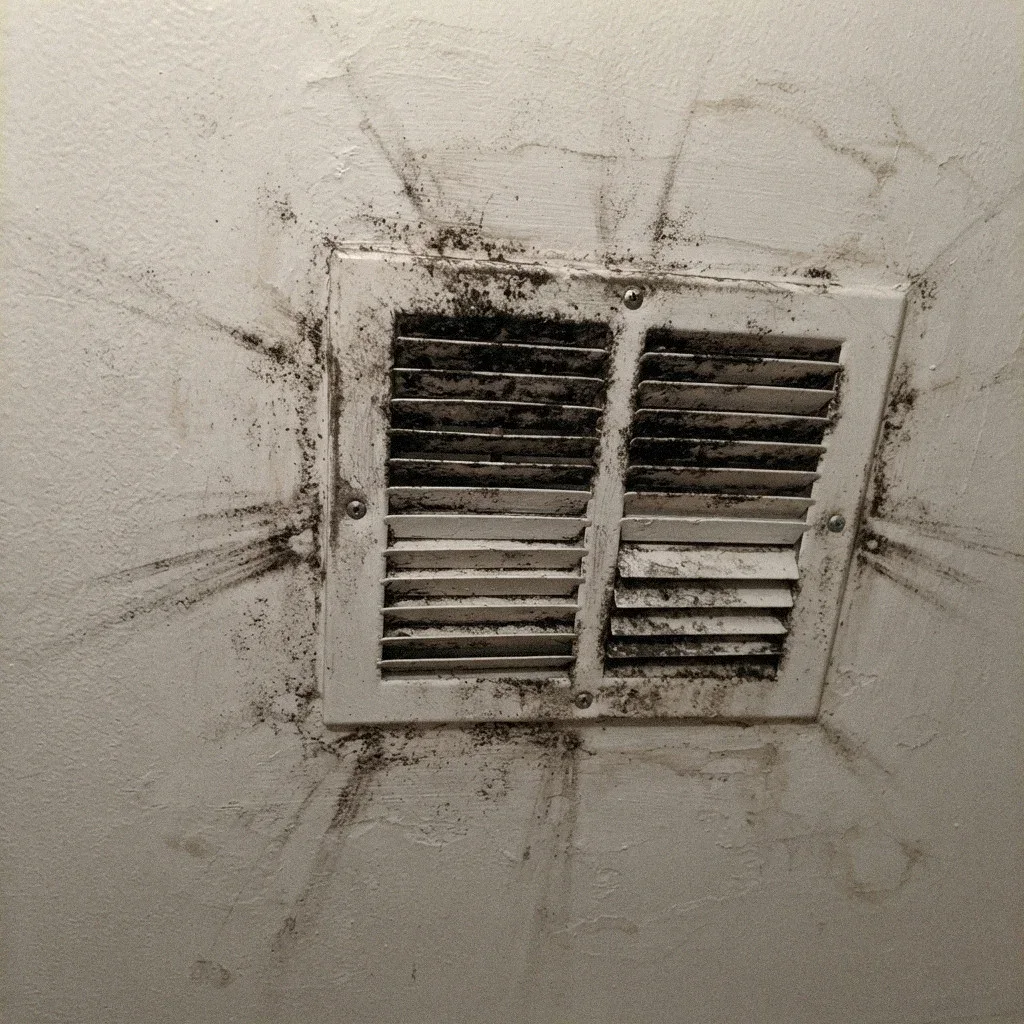
Musty Smell Near Air Vents

A musty smell near a return air grille, or a stained ceiling tile near a rooftop unit, often points to the HVAC system. A backed-up condensate line can drip into a drop ceiling for weeks.

Stains Below a Flat Roof

Flat and low-slope roofs pond water after even a light winter rain. A membrane seam or HVAC curb can leak slowly, so the stain may show up two rooms from the source.

Odor in a Closed-Up Suite

A restroom, break room or kitchen with a floor drain or slow fixture leak can grow mold at the base of a wall long before anyone smells it. A suite sitting empty between leases can hide it even longer.

Growth After a Past Cleanup

Mold that keeps returning means the leak behind it is still running. Fixing the source matters as much as removing the growth.

How It Works

Our Commercial Mold Removal Process

Walk the Affected Area

A licensed pro notes what is visibly affected, whether HVAC is involved, and what must stay operational during the work.

Written Scope of Work

The property manager or facilities contact gets the area, the approach and an estimated timeline in writing before anything starts.

Contained Removal

Barriers isolate the work zone from occupied space, and affected material is removed and disposed of following IICRC S520 practices.

Documentation for Your File

Written completion notes and photos go to the property manager, along with care notes for whoever manages the space afterward.

Why this matters

A slow roof leak or a failed rooftop unit condensate line can run for weeks behind a suspended ceiling before anyone on staff notices. Occupied space, shared HVAC and tenant leases make commercial work very different from a house call.

Licensing & Local Standards

Code-Compliant Commercial Mold Removal in California

Who Signs Off on Commercial Work

A commercial building answers to a landlord, a property manager and sometimes an insurer before anyone touches a wall. Scheduling has to work around tenants, deliveries and business hours.

Nights and Weekends

The contractor should be willing to work nights or weekends so a retail floor or a leased suite along Convoy Street doesn't sit closed during the week.

Paperwork Matters

Property managers usually want a written scope, photos before work starts, and a clearance summary once it is done. A verbal walkthrough isn't what an insurer or landlord will accept later.

Ask What License the Contractor Holds

California has no mold-specific contractor license, so mold work is done by contractors licensed by the Contractors State License Board. You can check any license on the CSLB lookup.

Budget

What You Would Pay for Commercial Mold Removal

Most commercial mold removal jobs in San Diego fall inside these ranges. The inspection costs nothing and the exact figure is written down before any work starts.

Commercial Mold Removal — estimated ranges, per visit
Time InvolvedTypical Cost RangeLasting Result
Bleach whitens the patch you scrubbed and leaves the rest of the colony rooted in the material underneath. A remediation crew removes what is holding the growth, not just the shade of it. If the moisture feeding it stays, whatever painted over the stain returns within a season, in Del Cerro or anywhere else in the county. Basic cleanup where no demolition is needed an estimated $2975–$26250
A can of mold-killing spray treats one visible patch on one visit. It says nothing about the leak, the condensation point, or the airflow gap that grew that patch in the first place. Spray it again next month and the same stain reappears, because the surface was never the actual problem to begin with. Growth behind drywall in one contained area an estimated $3500–$37500
Cleaning products are rated for hard, nonporous surfaces like tile and glass. Drywall, wood trim, and insulation absorb moisture and hold growth below the surface, where a wipe or spray cannot reach. Porous material with real growth in it usually gets removed and replaced, not scrubbed and resealed. Broader containment with damaged-material removal an estimated $5250–$60000
Store-bought treatments are built to satisfy a one-time visible complaint, not to diagnose why a surface stayed damp long enough to grow something. Without finding and closing off the moisture source, any cleaning is temporary. The stain returns because the same conditions that made it are still sitting behind the wall. Large HVAC or structural material involvement an estimated $8400–$100000

Two quotes for the same visible patch can differ widely because one bid covers only the moldy surface and the other covers the moisture behind it. The lower number often means the job gets repeated. The licensed pros we connect you with should explain what part of the price is the cleanup and what part is stopping the water.

Questions & Answers

Frequently Asked Questions

Can mold removal be done after hours or on weekends?

Yes, the work can usually be scheduled around business hours, since the job doesn't require the space to be closed at a set time. Ask the licensed pros we connect you with about evenings or weekends, because availability depends on the contractor and the size of the containment area.

Do we have to close the whole building?

No, most jobs let a business stay open in the parts not being worked on. A contractor can isolate one suite or floor and hand back a section as it clears. A single-tenant building near Sorrento Valley has more room to shut a wing, while a multi-tenant strip on University Avenue usually needs staged work.

What documentation will our property manager need?

Most property managers and insurers want a written scope of work before the job and a description of the completed work with photos afterward. Get the scope, containment plan and completion notes in writing before work begins, since verbal agreements don't hold up in a lease or claim file.

Do we have to notify tenants or employees first?

A property manager typically handles tenant notice directly, not the contractor. Confirm who is responsible for that communication before scheduling, since it depends on the lease and on whether shared systems like HVAC are affected.

What will our insurer or landlord need to see?

That depends on the policy and the cause of the moisture, so there is no general answer. Get a written scope of work first, then ask the insurer or broker what the policy covers before you authorize work.

How much does commercial mold removal cost in San Diego?

Every property is different, so the only accurate number comes from a quick inspection. That said, most commercial mold removal jobs in San Diego run an estimated $3500–$25000 per visit, depending on the size of the property and how severe the problem is. Pricing is confirmed in writing before any work begins, and our rates tend to sit a little under the typical local going rate.

Learn More

Commercial Mold Removal: Further Reading

Rainfall is a poor clock for an indoor moisture problem. A pinhole plumbing leak, an uninsulated cold-water line, or a bathroom fan that ends in the attic can keep one small area damp while the rest of the house feels dry. The useful clue is where growth returns after cleaning, because that points back toward the source.

Air Purifiers and Mold in San Diego
Prevention

Air Purifiers and Mold in San Diego

A HEPA air purifier catches airborne mold spores passing through it, which is real and useful. It does nothing to growth already sitting on a windowsill, drywall or AC coil, and it will not tell you where the water is coming from.

Read article
San Diego Bathroom Fans: Are They Venting Outside?
Prevention

San Diego Bathroom Fans: Are They Venting Outside?

A bathroom extractor fan that sounds fine can still be venting straight into the roof space above it. In San Diego's marine humidity, that single wiring mistake feeds mold in two rooms instead of none.

Read article
Does Bleach Actually Kill Mold? San Diego
Mold Basics

Does Bleach Actually Kill Mold? San Diego

Bleach whitens mold on tile and grout, but on drywall, wood or grout lines it often leaves the growth intact underneath. Here is what bleach can and cannot do, and what actually works.

Read article
Get Started Today

Talk through this specific job

This is one piece of a larger job, and it rarely stands alone. A leak that stains a ceiling in Kensington or a condensation line in a Pacific Beach bathroom usually needs both the moisture stopped and the growth removed, in that order. The licensed pros we connect you with in San Diego can tell you on the call whether this service covers what you're dealing with or whether the source needs attention first. Call Now: (619) 833-1053 and describe what you're looking at.

Call (619) 833-1053
Free inspections & same-day service available
Call (619) 833-1053 Schedule Online