Bleach is the first thing most San Diego homeowners reach for when a dark patch shows up on a bathroom wall or a closet in a 1950s Clairemont house. It seems logical: bleach is strong, it smells strong, and it turns the stain white almost immediately. Whether that result means the mold is gone depends entirely on what surface it was sitting on, and that distinction gets lost in most advice online.
Where Bleach Genuinely Works
On a hard, non-porous surface, bleach does kill surface mold. Tile, glass, sealed countertops and glazed grout have no internal structure for the fungus to root into, so a bleach solution wiped across the surface reaches everything there is to reach. This is why bleach is a reasonable choice for mold on a shower tile wall or a bathroom mirror frame in a Pacific Beach or North Park bathroom, surfaces with nothing underneath the growth to hide in.
Why Drywall Is Different
Drywall, wood trim, grout lines and unsealed grout are porous. Mold on these materials sends fine filaments, called hyphae, down into the material itself, not just across its surface. A bleach solution is mostly water and cannot travel far into a porous material before it evaporates. The surface bleaches white, but the fungus living a few millimeters below the surface, in the paper facing of drywall or the fibers of wood, is untouched.
Color Is Not the Same as Growth
This is the point worth sitting with: bleach is a strong oxidizer, and oxidizers strip color from organic pigment efficiently. That is a bleaching reaction, not a fungicidal one in every case. A wall that looks clean after a bleach wipe-down can still carry living mold underneath, which is why the same dark patch in a Golden Hill or South Park rental often returns within weeks in the identical spot.
The Ammonia Warning
Never mix bleach with ammonia or with any cleaning product that contains ammonia, including many glass and multi-surface cleaners. The reaction produces chloramine vapors, which are hazardous to breathe in an enclosed room like a bathroom or closet. Check labels before combining cleaning products, and never assume two products are compatible because they are both sold as disinfectants or mold cleaners.
Why It Comes Back on Porous Material
When mold returns on drywall or wood after a bleach treatment, it is not because the bleach was applied incorrectly. It is because bleach was never capable of reaching the fungus growing inside a porous material in the first place. The visible bloom is only the part of the organism exposed to air; the rest is embedded in the paper, the paint layer, or the wood grain, out of reach of a surface wipe.
What to Use on Porous Surfaces
For small, contained mold on a porous surface, a detergent and water solution, or a product labeled specifically as a mold cleaner for porous materials, removes surface growth without adding unnecessary moisture. Physical removal, wiping and scrubbing away the visible growth, matters more than which chemical does it. For material that is soaked through or structurally affected, cleaning the surface will not resolve what is happening underneath it.
When Removal Means Replacement
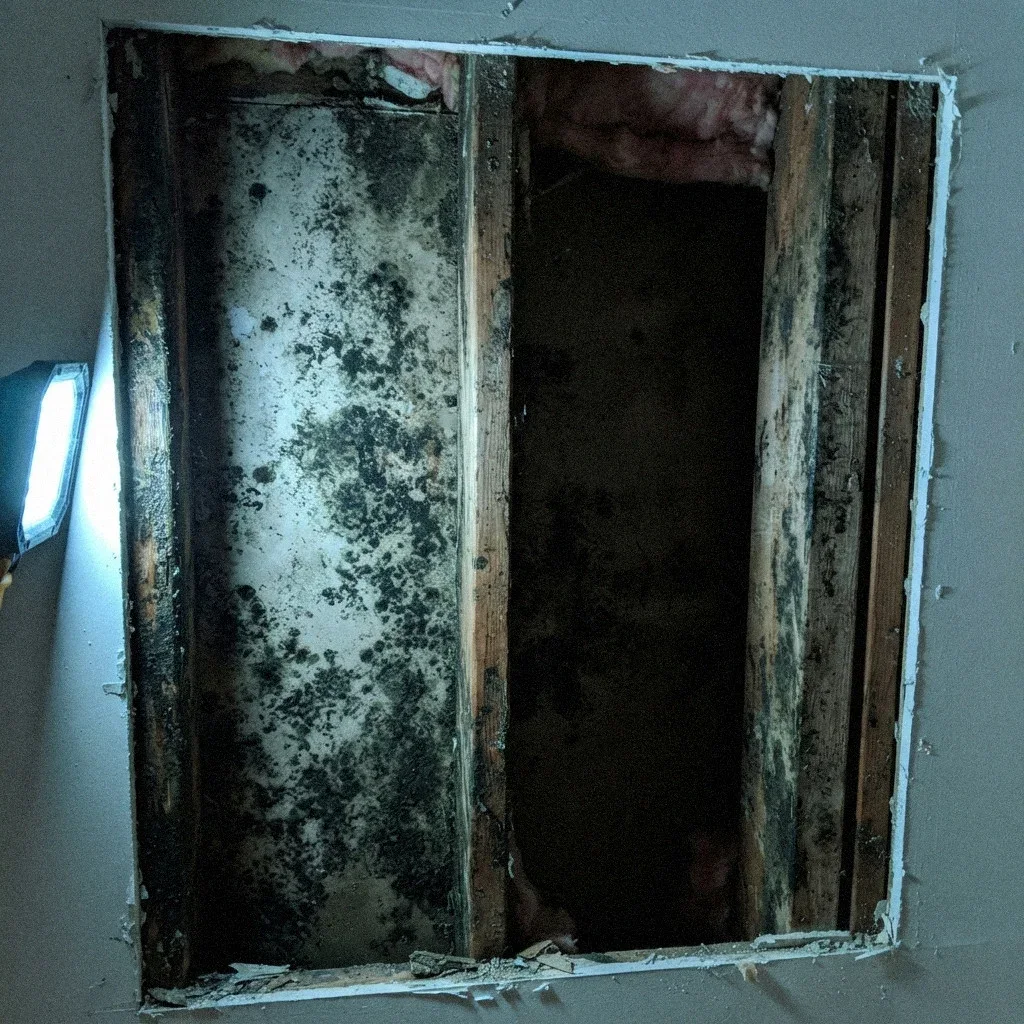
Drywall that has been wet long enough to grow mold across a visible patch has usually absorbed water into the paper facing and the gypsum core. No surface treatment reverses that. The standard approach for affected porous material like this is removal and replacement rather than cleaning, which is a different scope of work than a bathroom tile wipe-down and outside what this article covers.
What Bleach Cannot Tell You
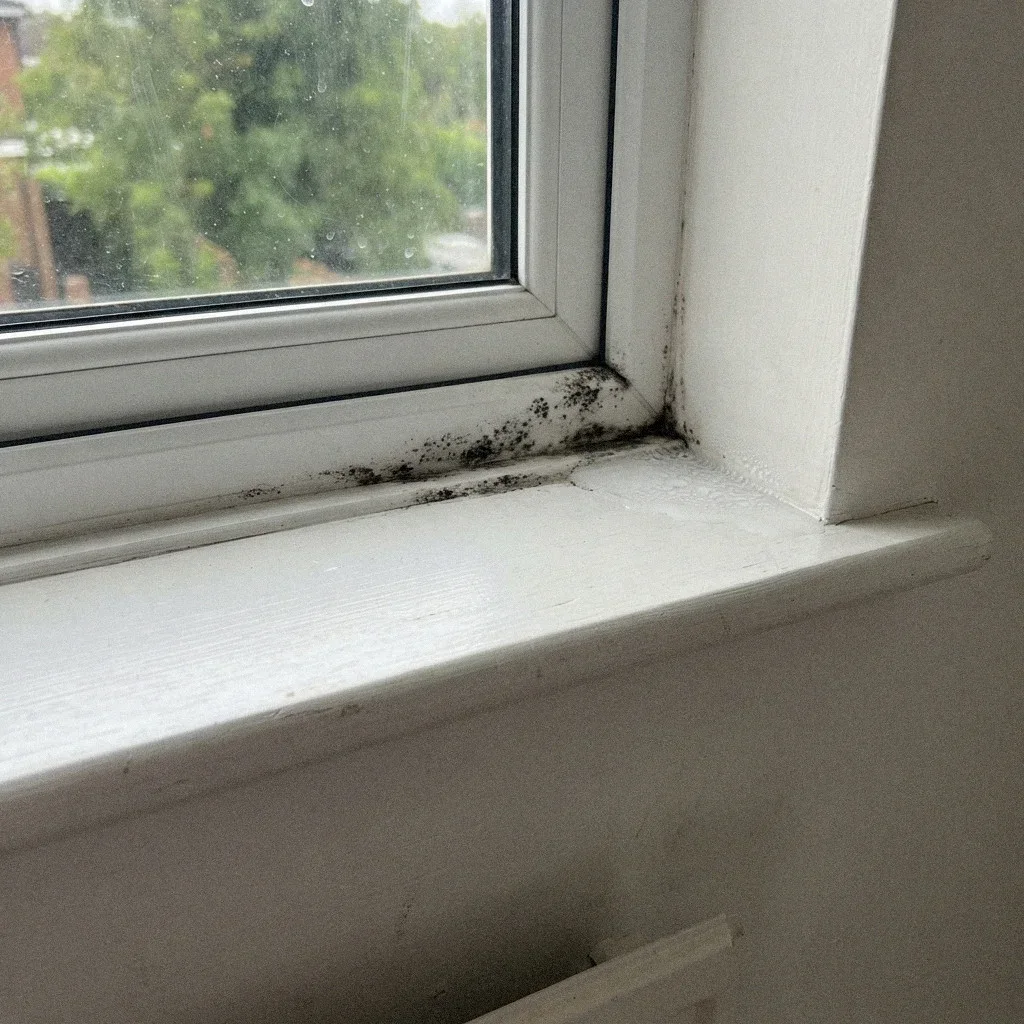
Bleach also does nothing to address why mold appeared in the first place. In a University Heights or Normal Heights house with a single-glazed aluminum window, condensation on cool mornings is often the actual source, not a leak. Treating the mold on the sill without addressing the condensation means the same patch reappears, bleached or not, because the moisture producing it never stopped.
A Note on Color and Species
It is worth separating two things people often merge: the color of a mold patch and its identity. Black, green or white growth cannot be identified as a species by eye, bleached or not. Whether a patch is dangerous is not something a homeowner can determine from color, before or after cleaning, which is one more reason bleach's cosmetic effect is misleading.
For Larger or Recurring Growth
A small, isolated patch on a hard surface is reasonable to handle with a wipe-down. A patch that covers a few square feet of drywall, that keeps returning in the same spot, or that appears after any kind of water event is a different situation, and the mold removal process for that scale of problem is covered in the mold remediation process guide, not here.
The Simple Version
Bleach is a legitimate tool for hard, non-porous surfaces and a poor one for drywall, wood and grout, where it bleaches color without reaching the fungus underneath. Never mix it with ammonia. For anything porous, removal and, where needed, replacement of the material does the work bleach cannot. The moisture behind the growth is the part worth tracking down.
Dealing with this in your home?
Mold in San Diego rarely starts with a storm. Marine air off the coast meets a cool interior surface, or an air conditioner drips quietly behind drywall, and growth begins without a drop of rain. A 1950s tract house near Clairemont Mesa Boulevard and a Craftsman near South Park fail the same way: moisture first, staining second. Bleach handles the color. It does not handle the source.