Most mold calls in older San Diego houses trace back to a bathroom fan doing less than the homeowner assumes. The fan runs, the noise sounds right, and nobody checks further. But a fan is only doing its job if it is actually pulling humid air out of the house and putting it outside the building. Plenty of fans in 1940s to 1970s houses across the city were installed to satisfy a switch on the wall, not to solve a moisture problem. That gap is where the mold starts.
What A Fan Is For
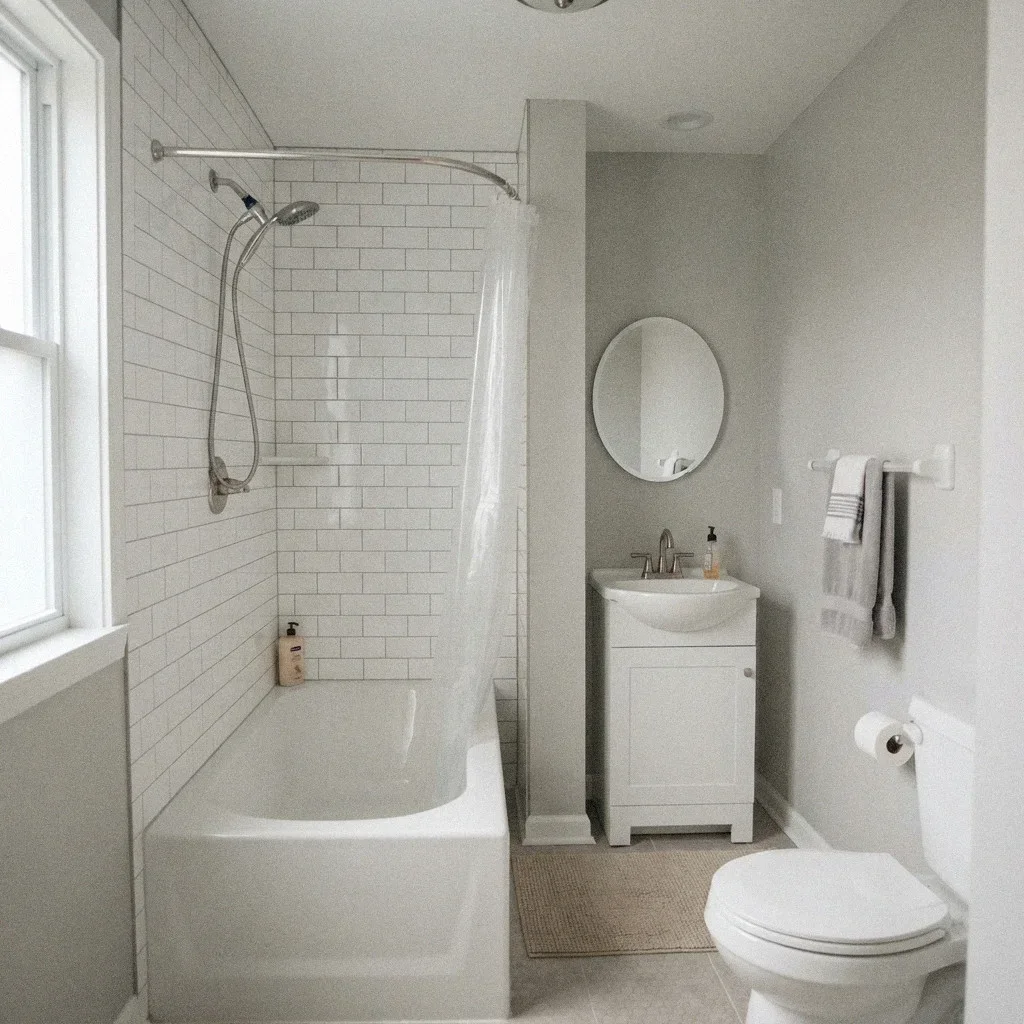
Showering puts a large amount of water vapor into a small room in a short time. Without a working exhaust path, that vapor lands on the coldest surfaces in the room, usually the window and the upper corners of the walls and ceiling. In a house near the coast, where the air outside is already carrying marine layer moisture much of the year, the bathroom has no dry outside air to borrow from. The fan is the only mechanism actually removing that water from the house.
How Long To Run It
A fan needs to run well past the shower itself. Running it only while the water is on clears little of the vapor that has already condensed onto tile and glass. A reasonable rule is to leave the fan on for twenty to thirty minutes after the shower ends, long enough for the mirror and window to stop sweating. Some homes have a timer switch that already does this. If yours does not, treating the fan switch like a light switch is most of the problem.
Testing Whether Air Moves
Noise is not proof of airflow. A cheap way to test a fan is to hold a single sheet of toilet paper or a tissue up to the grille while it runs. If it does not pull against the grille, the fan may be running a motor that has come loose from its housing, or the ducting behind it has come apart, collapsed, or was never connected in the first place. A fan that spins but moves no air is functionally decorative.
Venting Into The Roof Space
The more common fault in older San Diego housing stock is a fan that does move air, but sends it nowhere useful. Instead of ducting to a roof cap or wall vent outside, the duct simply ends above the ceiling, inside the roof space. Every bit of humid bathroom air the fan removes gets redeposited a few feet away, onto the framing and roof sheathing. The homeowner sees a dry bathroom and assumes the fan solved the problem, when it only relocated it.
Why This Is So Common
Ducting a fan properly through a roof means cutting a hole in roofing material, fitting a cap, and sealing it against weather. Terminating the duct a foot above the ceiling is faster and cheaper, and from inside the bathroom the result looks identical. This shortcut shows up across housing eras in the city, from Craftsman bungalows in North Park and Golden Hill to the mesa tract housing in Clairemont and Serra Mesa, wherever a fan was added or replaced without opening up the roof.
Signs The Duct Ends Wrong
A few clues suggest a fan is venting into the roof space rather than outside. There may be no visible roof cap or wall vent anywhere near the bathroom's location. The duct, if you can see it from inside the attic access, may simply stop in open space rather than connecting to anything. And a fan that runs constantly without ever seeming to reduce steam in the room is moving air somewhere, just not far enough.
What This Feeds Upstairs
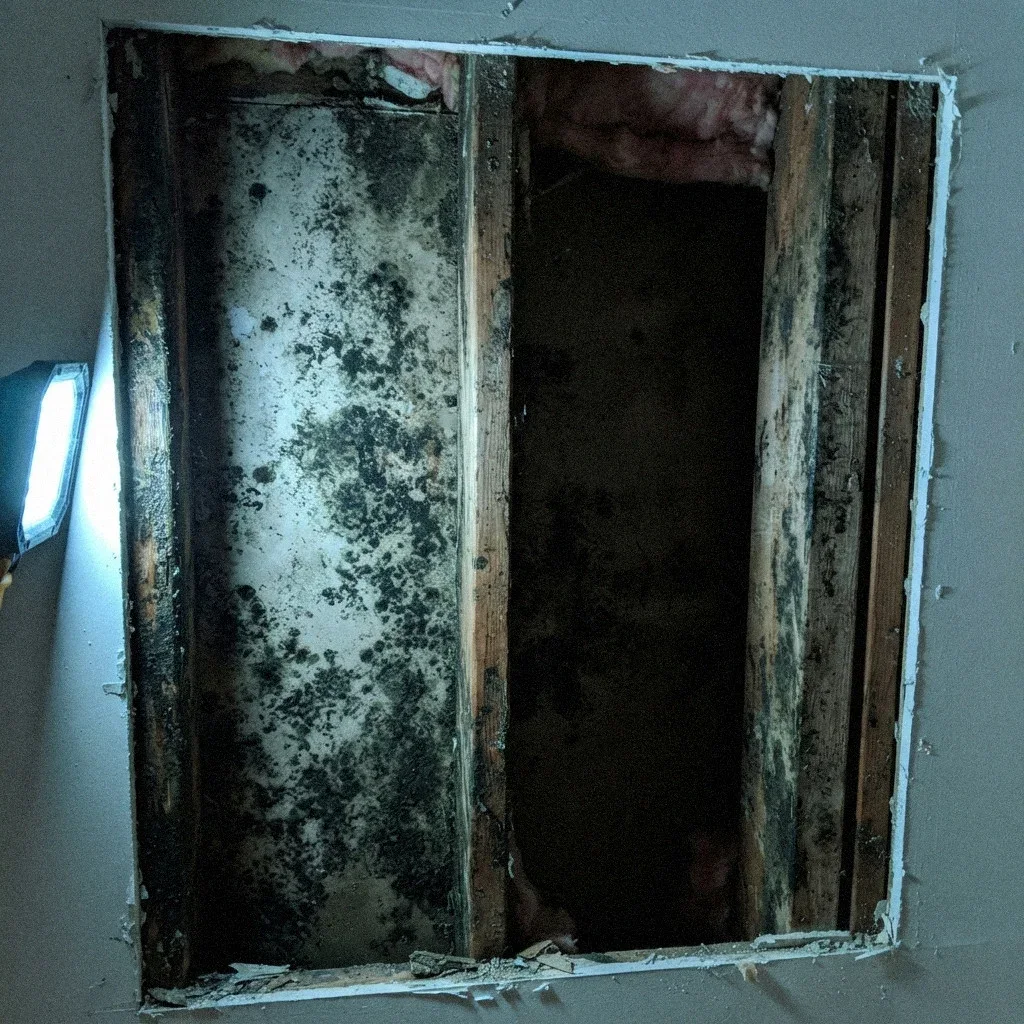
Roof framing and the underside of roof sheathing are not built to handle repeated soaking in warm, humid air. Wood that stays damp for long stretches, in a space with limited air exchange, is exactly where mold establishes. This guide is only concerned with the fan and duct causing the problem; what that moisture does once it reaches the roof space, and how it gets addressed there, is covered in the attic mold guide.
A Window Is Not A Fan
Cracking a bathroom window after a shower helps a little, but it is not a substitute for mechanical exhaust. Many older bathrooms in the city still have single-glazed aluminum windows, which run with their own condensation independent of anything else happening in the room. Relying on a window also assumes there is one, and assumes the outside air is drier than the inside air, which is not a safe assumption during the marine layer months.
Fixing A Misdirected Duct
Correcting a fan that vents into the roof space usually means rerouting the existing duct to a roof or wall termination point rather than replacing the fan itself. This is a job for someone who can work safely above the ceiling and seal a roof penetration correctly, not a weekend fix with a longer piece of flexible duct. Getting the routing right the first time matters more than the horsepower rating on the fan.
When The Mold Is Already There
A fan earns its keep by running long enough to clear the humidity a shower adds, not just while someone stands under the water. Fifteen to twenty minutes after the shower ends is a reasonable minimum in most Kensington or Talmadge bathrooms. Hold a tissue near the grille: if it barely moves, the fan is spinning but not pulling real air volume, and the moisture stays put regardless of the timer on the switch.
The Fan Is Cheap To Check
Checking a bathroom fan costs nothing but a few minutes and a tissue. Fixing a misrouted duct costs far less than remediating a roof space that has been absorbing bathroom humidity for years. In a city where the air itself carries moisture for much of the year, courtesy of the marine layer rolling in off the Pacific Ocean, the fan is one of the few moisture sources a homeowner fully controls. It is worth confirming it actually works before assuming it does.
Dealing with this in your home?
Mold in San Diego rarely starts with a storm. Marine air off the coast meets a cool interior surface, or an air conditioner drips quietly behind drywall, and growth begins without a drop of rain. A 1950s tract house near Clairemont Mesa Boulevard and a Craftsman near South Park fail the same way: moisture first, staining second. Bleach handles the color. It does not handle the source.