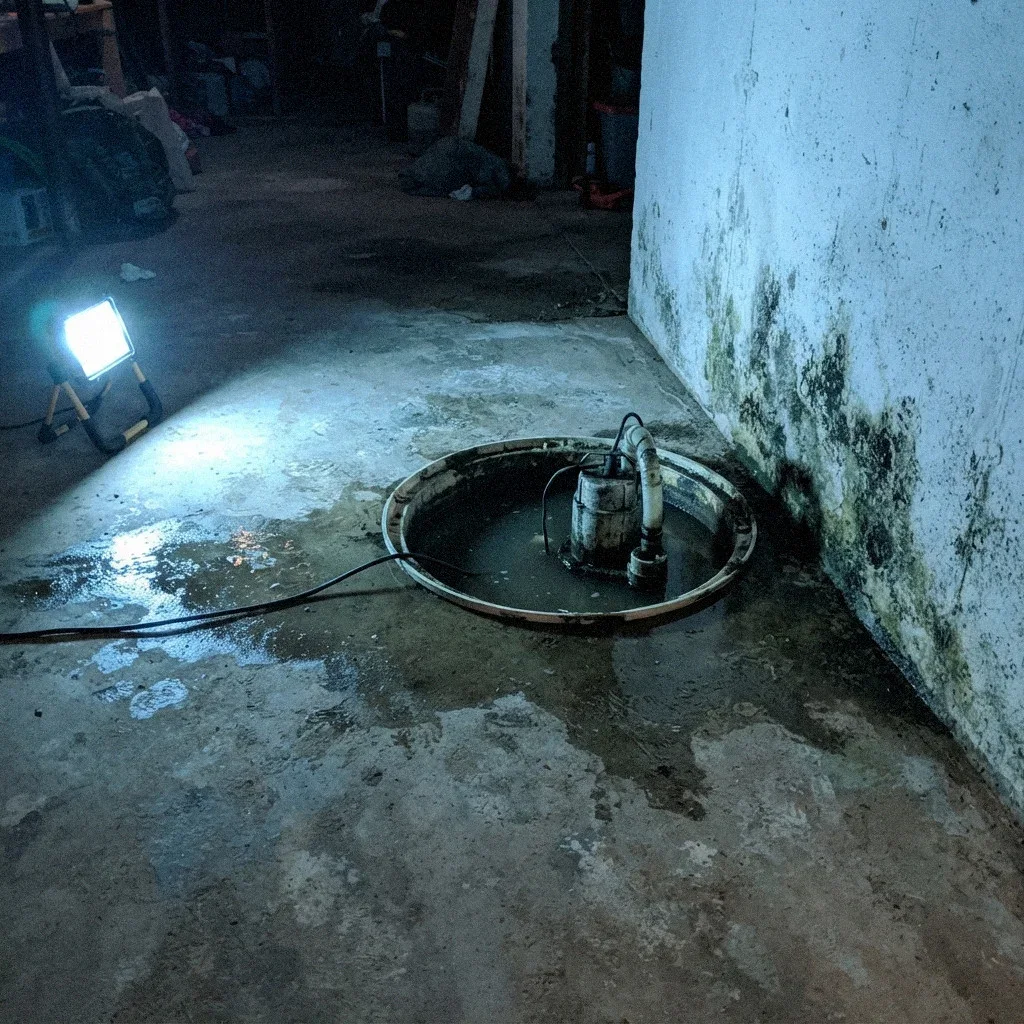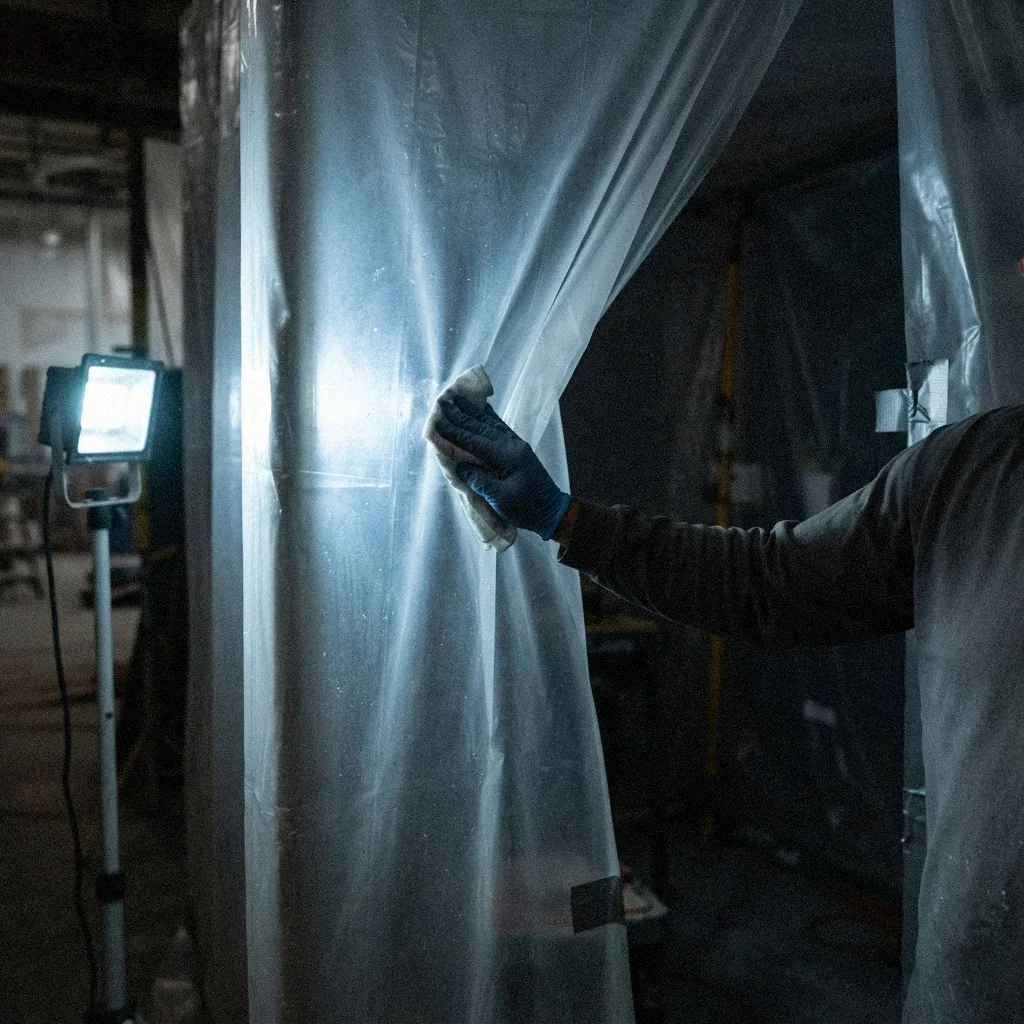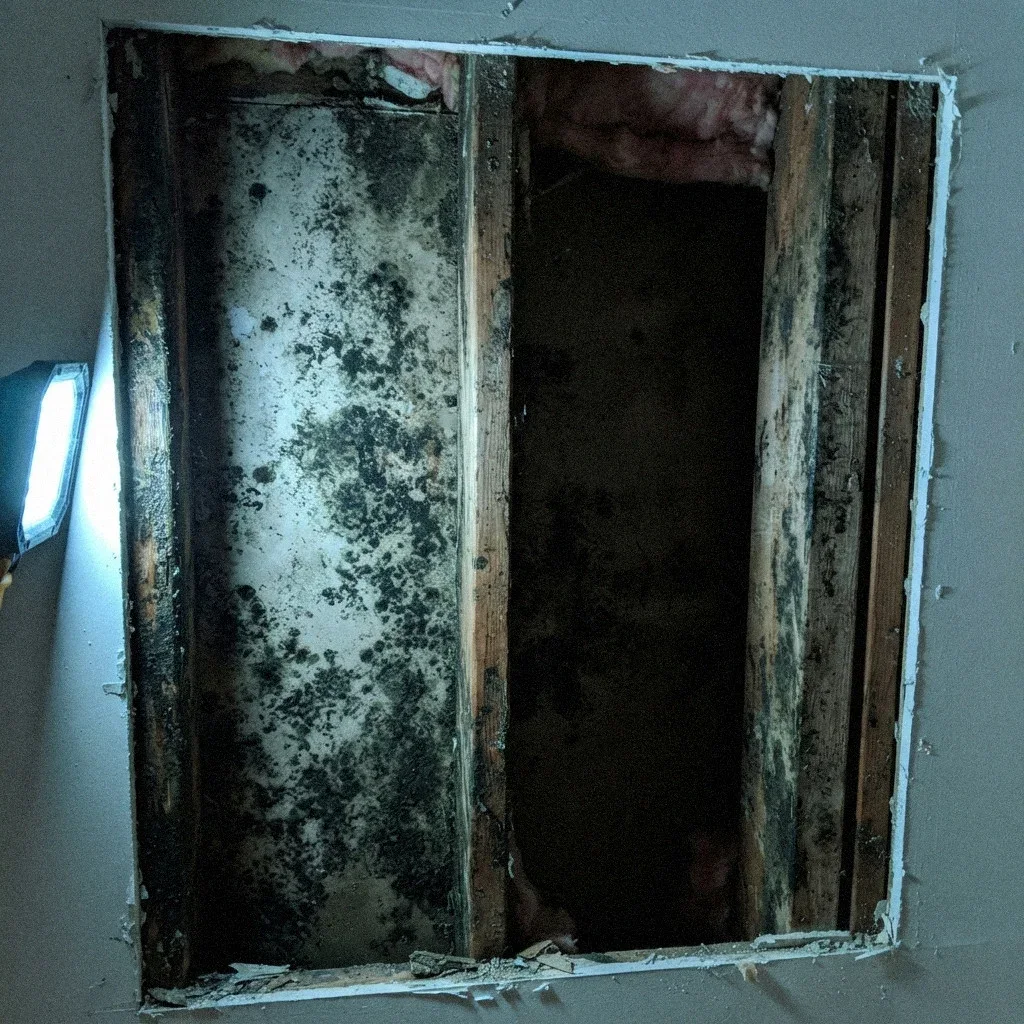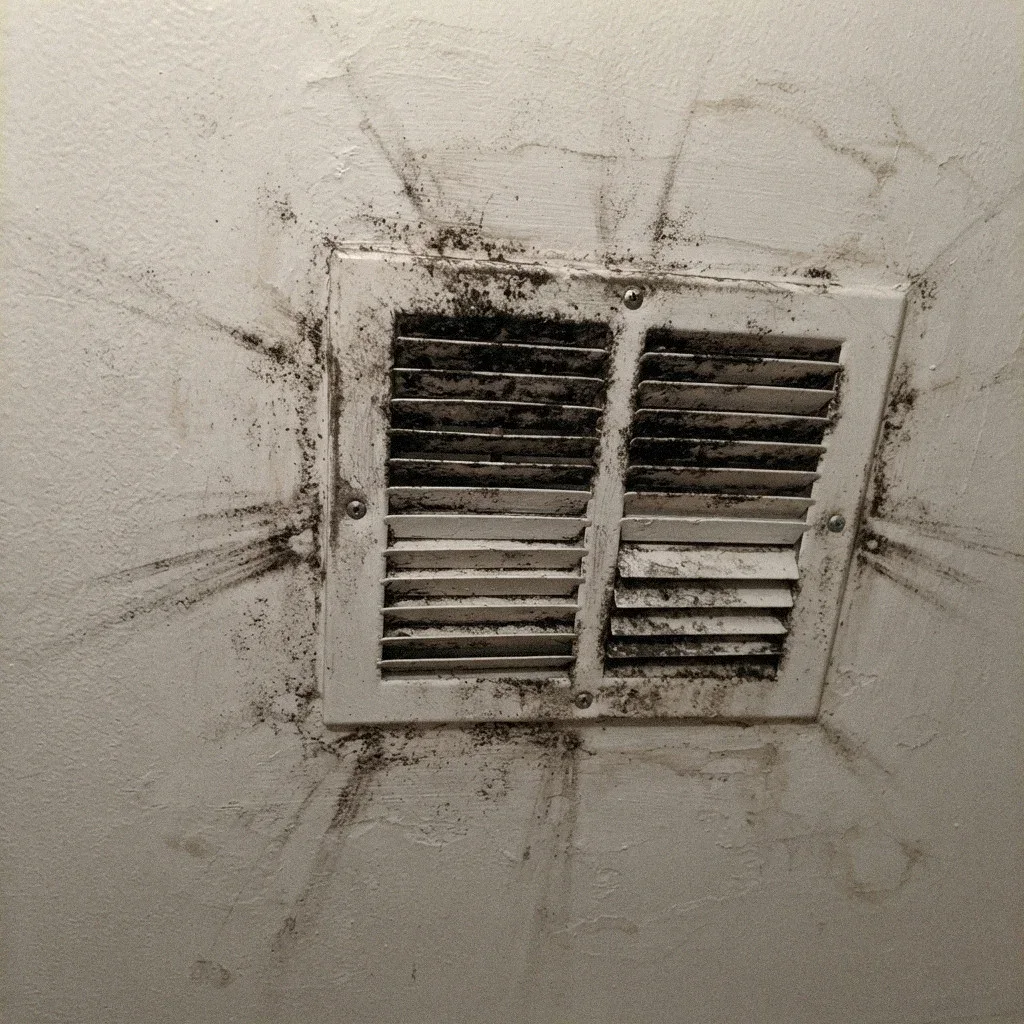
A homeowner in Clairemont or Kensington sees a dark patch near a window and buys an air purifier the same afternoon. It is a reasonable instinct: the unit runs, the app says the air is cleaner, and the smell seems to fade. But a purifier treats the air in a room, not the surface where the growth is actually rooted. Understanding the difference matters more than the wattage or the filter grade printed on the box.
What a HEPA Filter Catches
A true HEPA filter is rated to capture at least 99.97 percent of particles at 0.3 microns, which covers most mold spores as they drift through the unit. Run one in a bedroom in Bay Park or North Park and it can measurably reduce the spore count in that air over time. That is a genuine benefit for someone sensitive to airborne particulate. It is also the entire benefit. The filter never touches the colony feeding on a wet surface across the room.
What It Cannot Reach
Mold growing on a windowsill in a 1960s place in Talmadge, inside a wall cavity in Golden Hill, or across a ceiling tile in University Heights is not airborne while it is established there. It is anchored in the material, feeding on it. A purifier pulls in room air; it has no mechanism for reaching into drywall or grout. Spores released during normal disturbance get some of them caught. The colony itself is untouched and keeps growing exactly as before.
The Question It Cannot Answer
Mold is a moisture problem before it is a cleaning problem. An air purifier has no way to tell you whether the source is condensation on a single-glazed aluminum window, a clogged AC condensate line, or a slow leak on a flat roof common to mid-century homes near Serra Mesa. Running one while the water source stays active just means clean-smelling air over a colony that keeps expanding underneath it.
Where Purifiers Genuinely Help
There is a legitimate role here. During or after cleanup of a small area, in a room being dried out, or for a household member with respiratory sensitivity, a HEPA unit sized to the room can lower spore exposure while the real fix happens. Think of it as support for the work, run alongside finding and drying the moisture, not a stand-in for either step.
Coastal Air Adds Its Own Load
San Diego's rainfall is light and seasonal, arriving mostly between December and March, but the marine layer that rolls in over neighborhoods like Ocean Beach and Pacific Beach through the late spring and summer keeps indoor humidity elevated on days with no rain at all. A purifier run in that kind of house is fighting a steady supply of moisture-fed spores, not an occasional spike, which is worth knowing before assuming the unit alone has solved anything.
No Purifier Replaces the Source Check
The EPA's guidance is to dry wet or damp material within 24 to 48 hours to prevent growth from starting. That window has nothing to do with air filtration; it is about the material itself. A purifier bought instead of tracking down a leak near Mission Valley or a condensate line backing up in a Kearny Mesa apartment buys time on the smell while the underlying damage keeps spreading unseen.
Filters Do Not Sort Species
None of this means testing is pointless everywhere. It has a narrow use: confirming a suspected hidden source behind a wall or under flooring before opening it up, or documenting conditions for a landlord dispute. It cannot tell you which species is growing, and it will not replace finding where the water came from. A lab result is a supplement to the moisture investigation, never a shortcut around one.
A Small Test for the Difference
If a purifier is doing its full possible job, the room air improves while the visible patch stays exactly the same size, because the two are unrelated. If the patch is shrinking or growing, that has nothing to do with the filter running in the corner. Watching the surface, not the app's air-quality number, is the honest way to judge whether anything is actually improving.
What Handles the Surface Itself
Cleaning a moldy surface is a separate task from filtering air, and bleach in particular is a common mistake: it can strip the color from a patch without killing what is growing underneath a porous material, which reads as success and is not. The full mechanics of surface treatment and why porous materials often need to be removed rather than cleaned are covered in the mold removal guide.
Sizing and Placement Basics
Where a purifier is useful, sizing it to the actual room volume and placing it away from a wall so air can circulate through it both matter more than the marketing claims on the box. A unit rated for a living room will not do much in a small closed bathroom near a shower that stays humid long after use, which is exactly the kind of room in an older Bankers Hill or Hillcrest apartment where surface growth tends to start.
Start with the Water, Not the Filter
The useful order is water first, surface second, air third. Find and stop whatever is keeping a surface wet, address what has already grown, and then decide whether a purifier adds anything for the people living in that space. Skipping straight to the filter treats the symptom that is easiest to buy a solution for, while the part actually causing the problem keeps working.
Dealing with this in your home?
Mold in San Diego rarely starts with a storm. Marine air off the coast meets a cool interior surface, or an air conditioner drips quietly behind drywall, and growth begins without a drop of rain. A 1950s tract house near Clairemont Mesa Boulevard and a Craftsman near South Park fail the same way: moisture first, staining second. Bleach handles the color. It does not handle the source.