San Diego's rain gauge says dry: nine to ten inches a year, most of it gone by March. But relative humidity near the coast stays high for months, because the marine layer sits over neighborhoods like Ocean Beach and Pacific Beach long after the rain has stopped. Dew point matters more than rainfall here. When indoor air holds that much moisture and a building's ventilation cannot clear it, condensation forms on cool surfaces regardless of what the sky is doing. That gap between rainfall totals and indoor dampness is most of the answer to why mold keeps showing up in dry-sounding weather reports.
Fog, Not Storms
Locals call it May Gray and June Gloom: a marine layer that pushes in overnight and sits low until the sun burns it off by midday. That cycle repeats through summer, keeping outdoor air near its dew point during the hours nobody is running a fan. Homes in Pacific Beach and Bird Rock absorb that moisture through stucco and glass long before any seasonal rain arrives.
A Climate With No Off Season
San Diego sits at the edge of a humid subtropical influence layered onto a semi-arid coastline, which is part of why the mold conversation here does not match a colder city's. There is no hard freeze to shut mold down for months, no dry cold snap that kills spores. Temperatures barely swing, so anywhere with sustained dampness in North Park or Golden Hill keeps producing spore count year-round instead of in a single wet season.
The Dew Point Problem
Condensation forms whenever a surface drops below the air's dew point, and single-glazed aluminum windows are common enough in older housing stock near University Heights and Kensington to make that routine. Water beading on glass every morning is not a leak. It is humid air meeting cold metal, and if it drips onto a wood sill long enough, it becomes organic material a mold colony can use.
Crawl Spaces Under Older Homes
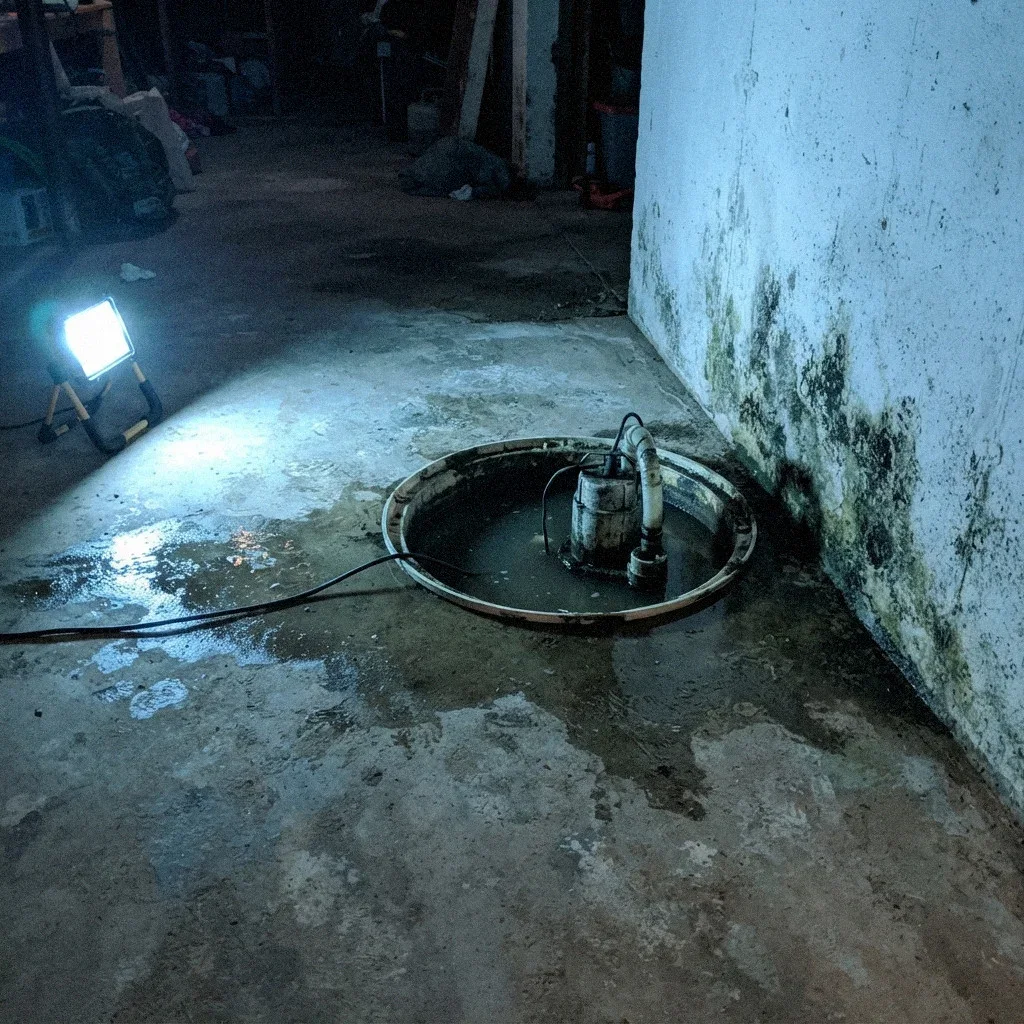
Older sections of North Park, South Park, Golden Hill and Point Loma sit on wood framing above open ground rather than a poured slab. Bare soil under the house gives off moisture every day, rain or not, and without a vapor barrier that moisture has nowhere to go but up into the floor joists. Organic material in the framing and subfloor gives mold something to feed on once the moisture is steady. Homes near Chollas Creek or the San Diego River corridor deal with this even in months when nothing has fallen from the sky.
Slabs And Stucco Envelopes
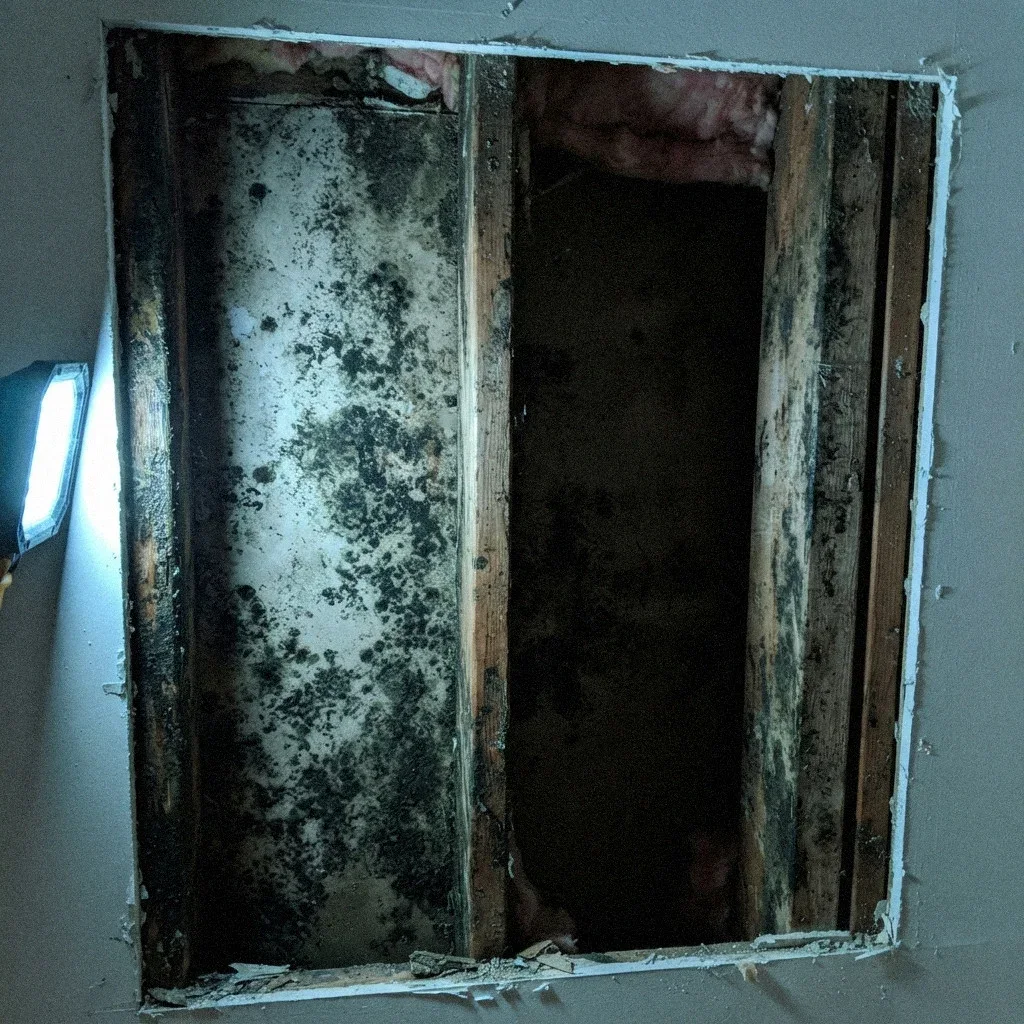
Newer construction toward Mira Mesa, Clairemont and Rancho Bernardo tends to sit on a concrete slab, which removes the crawl space problem but does not remove moisture intrusion. Stucco is a porous material, and where flashing has failed around a window or at a roof-to-wall joint, the stucco holds water against the sheathing behind it rather than shedding it. Air conditioning, where a house has it, pulls humidity out of the air and lowers the odds of condensation; homes without it, common closer to the coast, rely on ventilation alone to manage the same load.
When Air Conditioning Turns Against You
Air conditioning is common inland, less so along the coast, and where a unit runs, the condensate line is doing real work. Let that line clog and the overflow finds its way into the pan, then the cabinet, then the ceiling below it. A home in Rancho Bernardo or Scripps Ranch depends on that line more than it depends on the compressor to keep a closet from turning musty.
Fans That Vent Nowhere
Ventilation is the plainer fix and the one most often missing. Plenty of bathrooms built decades ago in Normal Heights or City Heights either have no extractor fan at all or one that dumps warm, wet air straight into the attic rather than outside. Every shower adds humidity to that roof space, and framing up there has no way to dry between uses.
Every Neighborhood Reads Differently
San Diego's canyons and mesas mean two houses a mile apart can carry different moisture loads. A place near Tecolote Creek or Chollas Creek holds ground moisture longer than a home up on a mesa in Serra Mesa. None of that shows up in a citywide rainfall average, which is why two neighbors can disagree about whether this is a rainy-climate problem at all.
What The Climate Doesn't Explain
Climate explains the moisture, not the growth pattern in any one house. Two homes on the same block, both sitting in the same marine humidity, can end up in different places. One has a working extractor fan venting outside; the other vents into the attic and quietly raises the spore count up there. One has intact flashing; one does not. San Diego's climate sets a baseline of dampness that a humid subtropical city would recognize, but whether that dampness turns into visible growth still comes down to the building itself.
What This Doesn't Change
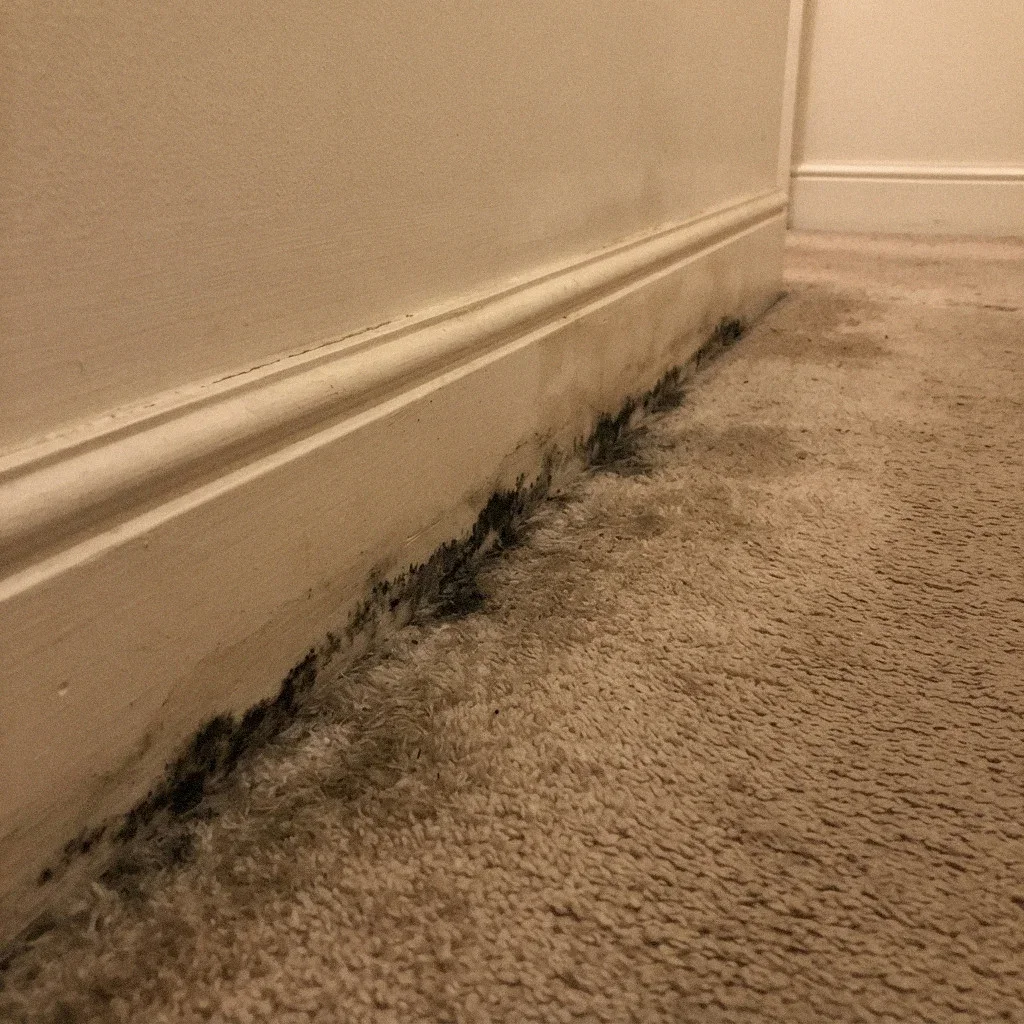
None of this changes what mold itself is once it appears. Color still does not tell you the species. Testing air for spores is still usually unnecessary when growth is visible, since a lab result rarely changes the removal step that follows. Bleach still lightens what you can see without touching what has grown into a damp material underneath it.
The Practical Read
The useful takeaway is not that San Diego is uniquely bad for mold. It is that a dry rainfall total tells you nothing about indoor humidity here, so judging risk by whether it rained last week misses the actual driver. A house near Kearny Mesa or Linda Vista can grow mold in August with zero rain in sight, because the air itself never dried out.
Dealing with this in your home?
Mold in San Diego rarely starts with a storm. Marine air off the coast meets a cool interior surface, or an air conditioner drips quietly behind drywall, and growth begins without a drop of rain. A 1950s tract house near Clairemont Mesa Boulevard and a Craftsman near South Park fail the same way: moisture first, staining second. Bleach handles the color. It does not handle the source.