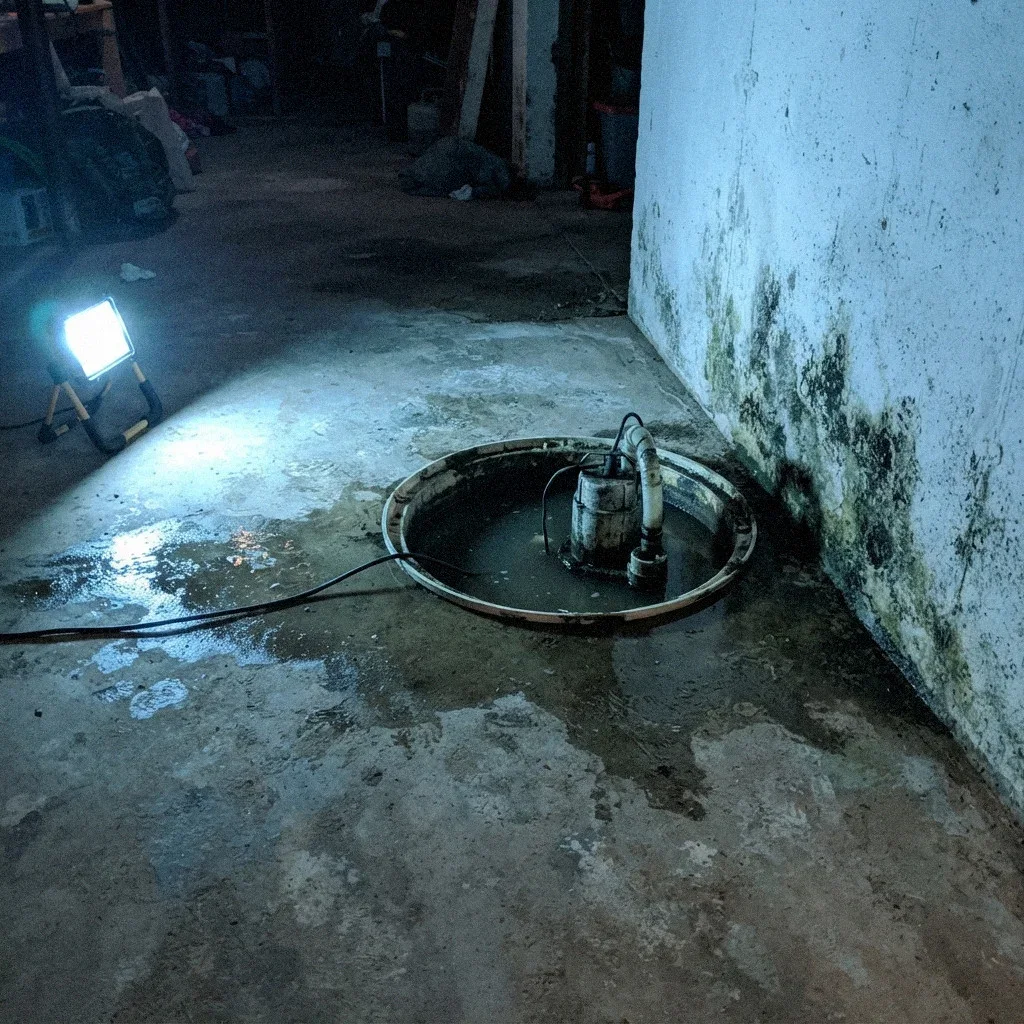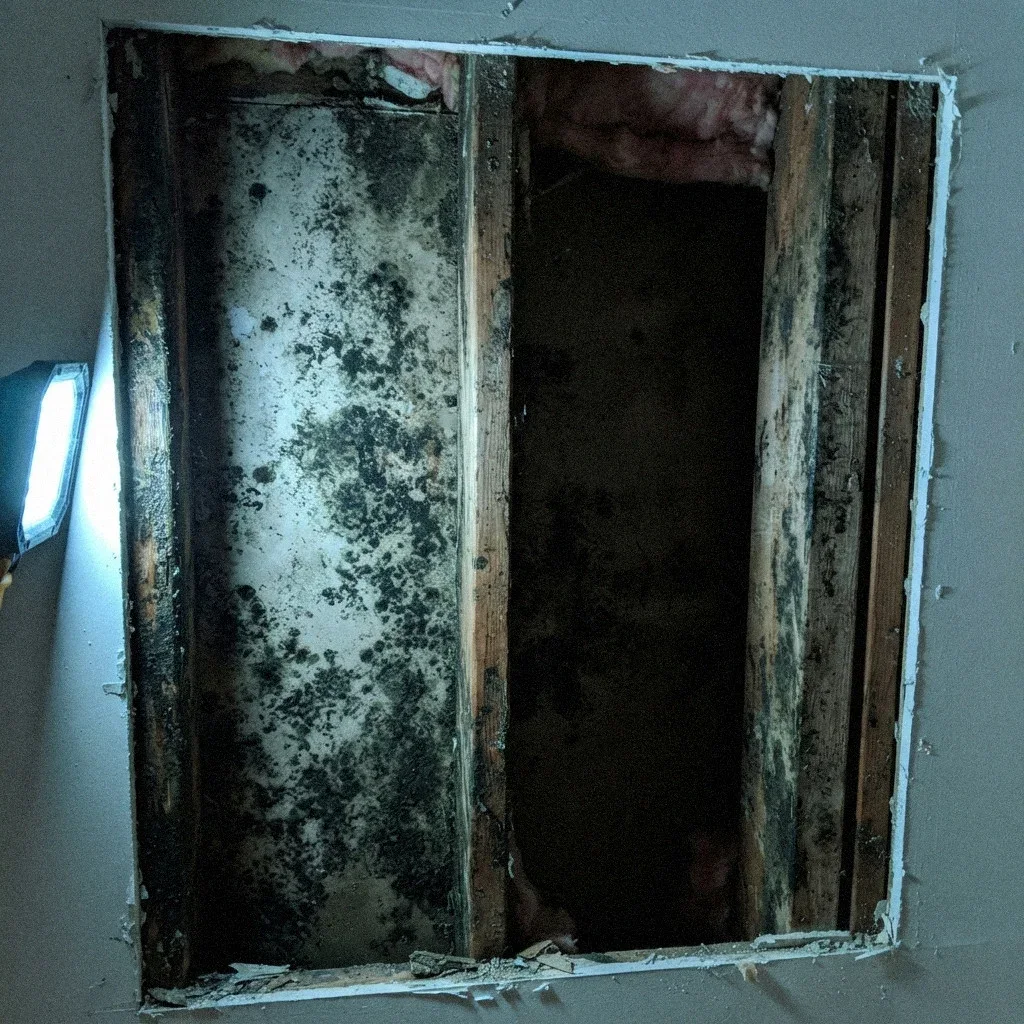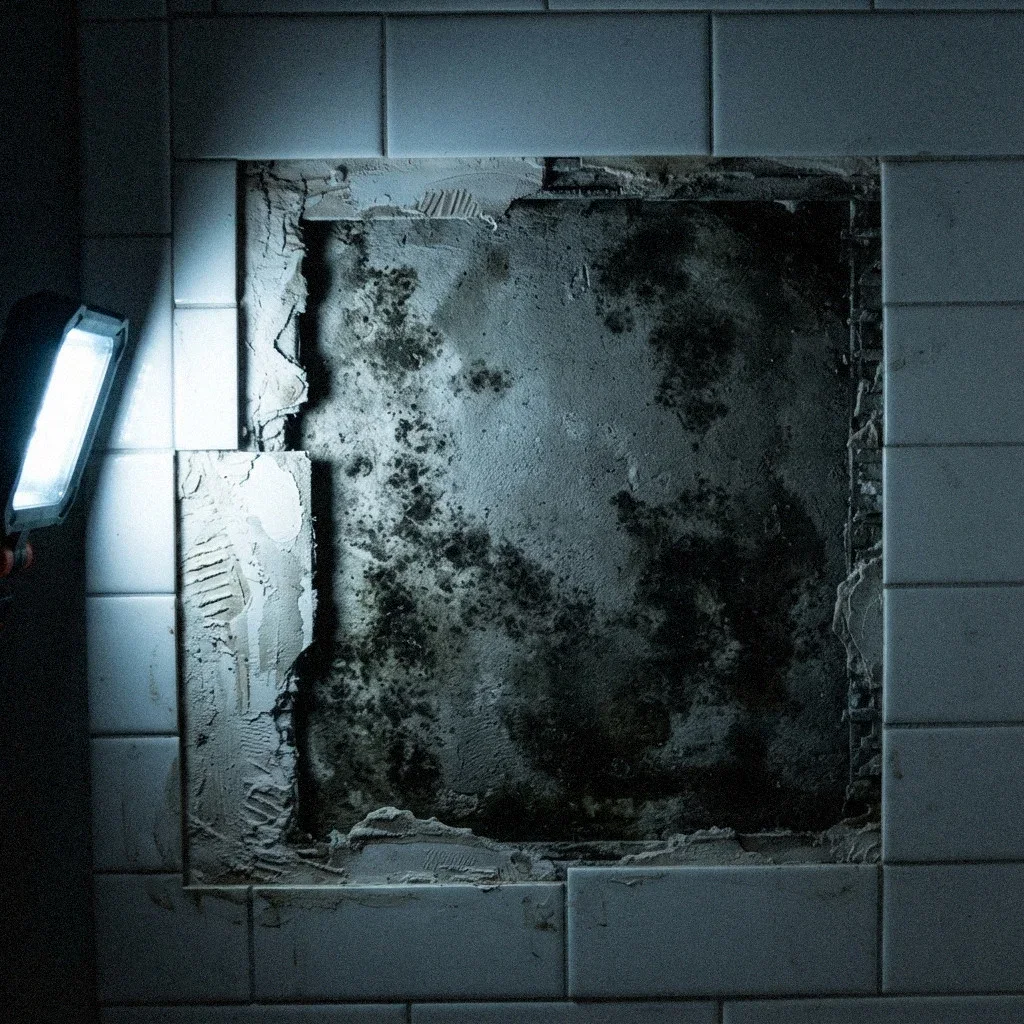
A homeowner in North Park spots a gray-black smudge above a window and assumes the worst. Half the calls the licensed pros we connect you with take start this way, and a fair share end with a shrug: it's soot, or old water staining, or just dust holding condensation on the glass. Telling growth from its look-alikes matters because the wrong guess wastes money or, worse, leaves real growth alone while somebody scrubs a stain that was never alive.
Efflorescence On Masonry
Efflorescence is a white or gray crust that forms when water moves through concrete, block or brick and evaporates, leaving mineral salts behind. It shows up on retaining walls and foundations across Clairemont and Allied Gardens, especially where irrigation runs close to a wall. It is dry, powdery and brushes off easily. Mold stays soft or fuzzy and returns after cleaning. Efflorescence is a sign of water movement through masonry, not a health concern by itself.
Soot From Candles Or Fireplaces
Older homes near Golden Hill and South Park often still have a working fireplace, and candles are common everywhere. Both leave soot: a fine black film that settles on ceilings, walls and curtains, usually heaviest near the source and fading with distance. Soot smears when rubbed and leaves a gray streak on a fingertip or cloth. Mold does not behave this way. If the mark is confined to one wall near a mantel or a candle shelf, soot is the more likely explanation.
Old Water Staining
A brown or yellow ring on a ceiling in a 1950s Clairemont tract home often marks a leak that happened once, was fixed, and never grew anything. Staining like this is flat, follows the shape of the water's spread, and does not change texture. Active mold has a raised or fuzzy surface and tends to spread outward over time rather than stay fixed in one ring. A stain with no odor and no texture change is usually history, not an ongoing problem.
Dust On Condensation
Single-glazed aluminum windows, still common in pre-1980s housing across Normal Heights and City Heights, run wet on cool mornings when the marine layer settles in. Dust and pollen stick to that moisture and dry into a gray film on the sill and the frame. It looks alarming but wipes away with a damp cloth in one pass. Mold on a windowsill instead builds a texture that returns within days of cleaning, because the moisture source behind it hasn't changed.
Harmless Surface Mildew
Mildew is a loose term people use for light surface growth on shower grout, a shaded fence in Ocean Beach, or a bathroom ceiling with poor airflow. It is thin, often gray or white, and sits only on the surface rather than into the material. This site treats mildew as part of the mold conversation rather than a separate category, because the distinction that matters to a homeowner is depth and spread, not the word used to describe it.
Why The Confusion Happens
Some houses near Sunset Cliffs and along Rosecrans Street run single-glazed aluminum windows original to construction. Cold glass meets warm indoor air on foggy mornings and water beads on the frame, the sill and sometimes the drywall beneath it. That film can look like a spreading colony, but wipe it and it comes off clean, leaving no shadow behind. If a dark stain remains after wiping, treat it as growth rather than condensation and go from there.
What Color Cannot Tell You
None of these five look-alikes can be sorted out by color alone, and neither can mold itself. Black, green and white growth all occur across the same species, and a look-alike can be any of those colors too. Color tells you almost nothing about what a patch is or how serious it might be. Texture, spread pattern and location relative to a moisture source are far more useful than the shade on the wall.
A Simple Way To Check
Press a cloth against the mark. Soot and dust wipe away and leave a clean surface behind. Efflorescence brushes off dry. A water stain is flat under your fingers and doesn't come off at all. If what's left has any texture, comes back within days, or smears without lifting cleanly, treat it as growth rather than residue. This one check resolves most of the uncertainty before anyone needs to decide what to do next.
When It Is Actually Mold
If a patch has texture, keeps expanding, or returns quickly after wiping, it is worth finding out what species it might be and how removal typically works. That guide covers containment and cleaning in more depth than a single post like this one should. The point here is only to rule out the things that are not mold before spending time or money on the assumption that they are.
Testing Is Rarely The Answer
No test tells a homeowner in Clairemont or Allied Gardens whether the air in a given room is safe to breathe, because no federal or state agency has set a number for that. A lab can sometimes name what's growing, but it cannot rule health risk in or out, and it adds a wait without changing the next step: find the moisture, stop it, remove the growth. Testing has a narrow, specific use; confirming that a stain is alive is not usually one of them.
Find The Moisture First
None of this replaces a look at the surface in question, since photographs and descriptions only go so far. For the fuller breakdown of what active growth looks like room by room, see the types of mold identification guide. What actually separates a stain from a colony is rarely the color; it's whether water reached that spot recently and whether anything is still feeding it.
Dealing with this in your home?
Mold in San Diego rarely starts with a storm. Marine air off the coast meets a cool interior surface, or an air conditioner drips quietly behind drywall, and growth begins without a drop of rain. A 1950s tract house near Clairemont Mesa Boulevard and a Craftsman near South Park fail the same way: moisture first, staining second. Bleach handles the color. It does not handle the source.