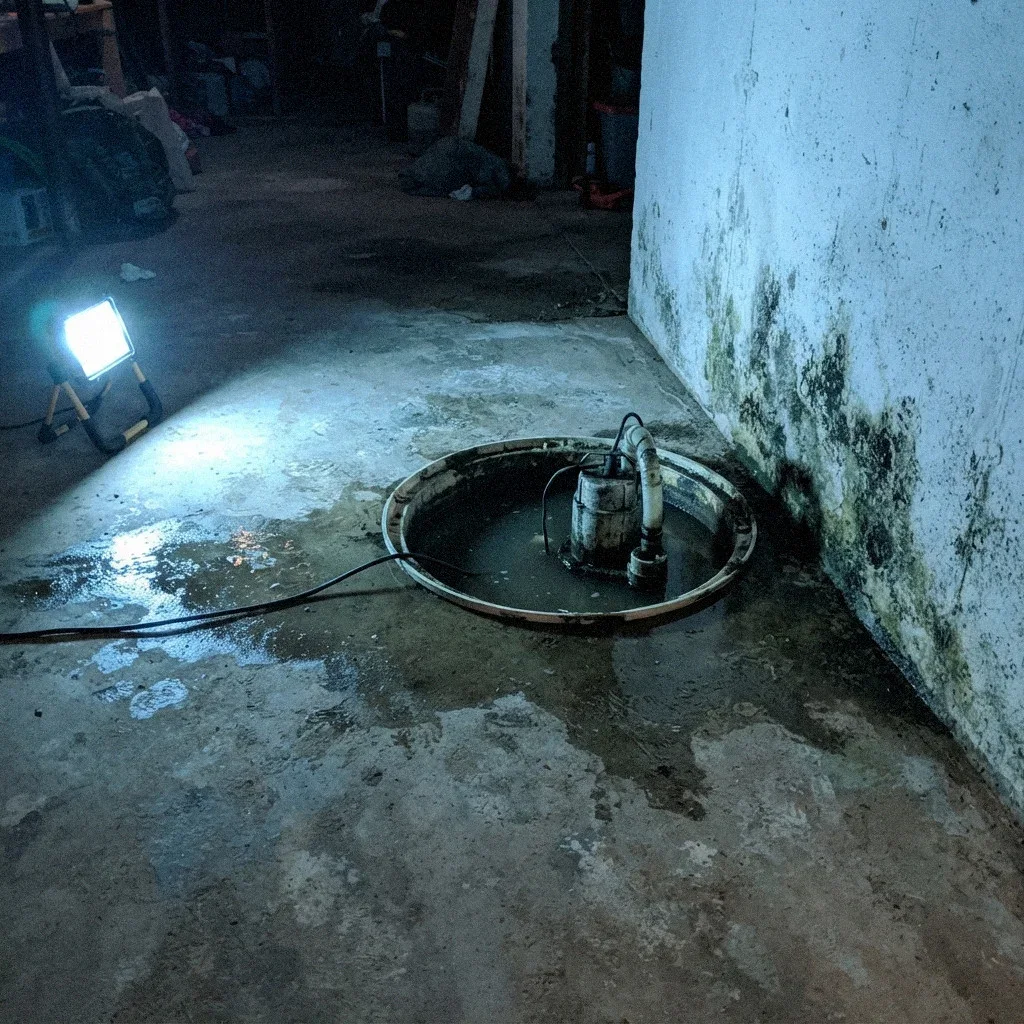
Every mold quote in San Diego eventually gets to a line called containment, and it is usually the biggest number on the page. Homeowners in Clairemont or North Park who get two quotes often see one skip it entirely and wonder why that one is cheaper. It is cheaper because it is doing less. Containment is not padding. It is the part of the job that keeps spores from a bathroom ceiling in Kensington from ending up in a bedroom down the hall.
What Containment Physically Is
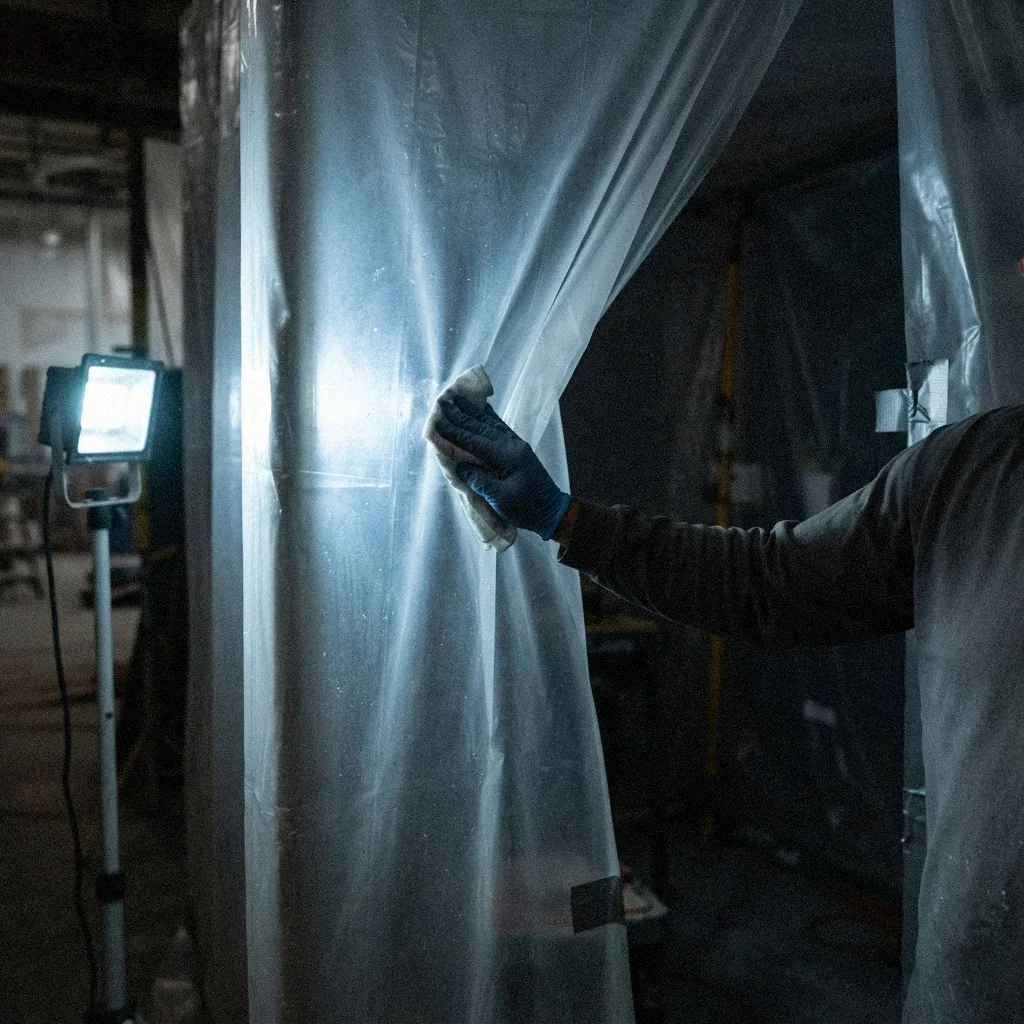
Containment is plastic sheeting, usually 6-mil poly, taped and framed into a sealed barrier around the work area. In a Talmadge condo it might wall off one bathroom. In a Bay Park house with attic growth it might seal a whole hallway and the attic hatch above it. The point is a physical boundary between the moldy zone and the rest of the house, so that cutting into drywall or pulling insulation does not scatter material into rooms that were clean before the crew arrived.
What Negative Air Pressure Does
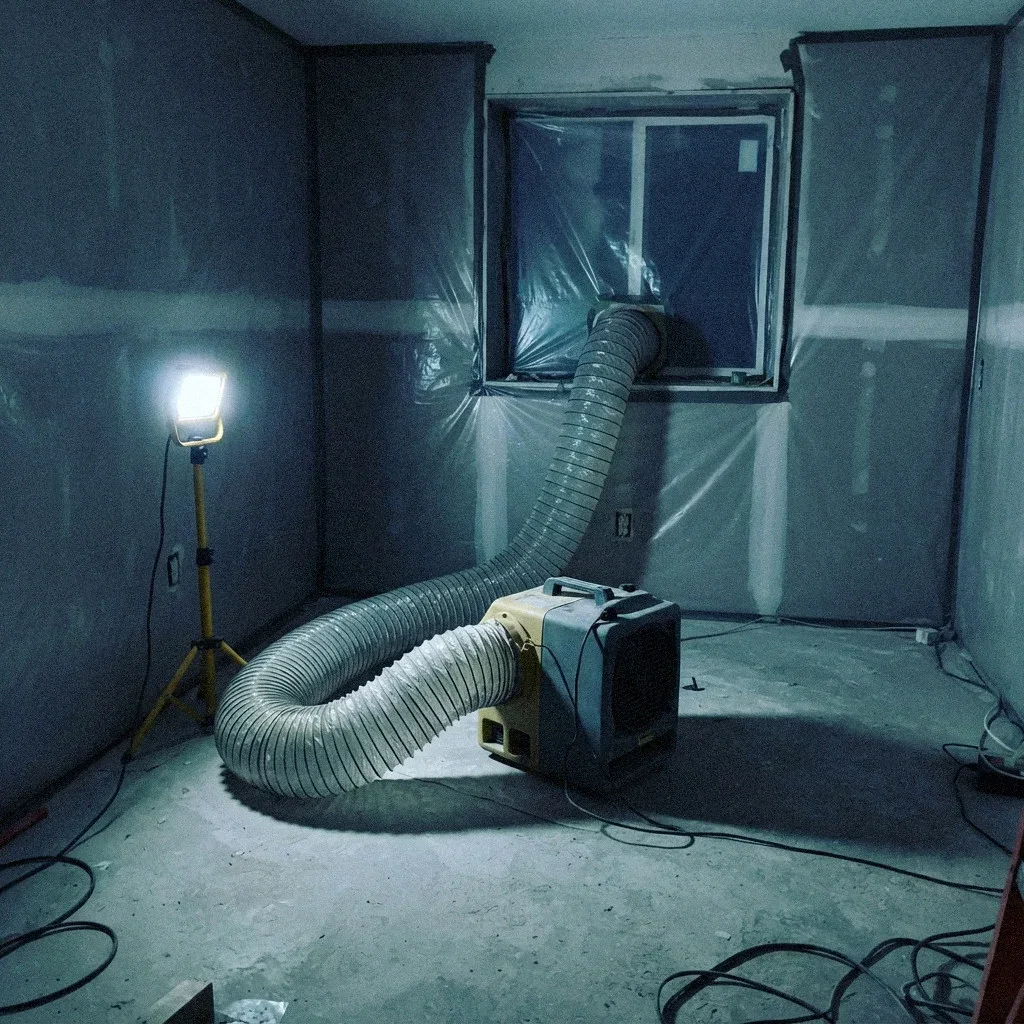
Sheeting alone does not stop air movement, and air movement is how spores travel. A negative air machine, a HEPA-filtered fan, pulls air out of the contained space and exhausts it outside, usually through a window or door. That drop in pressure means air flows into the containment, not out of it, whenever someone opens the plastic flap to go in or out. Without it, opening that flap pushes disturbed, spore-laden air straight into the rest of a Serra Mesa or Linda Vista home.
What Happens Without It
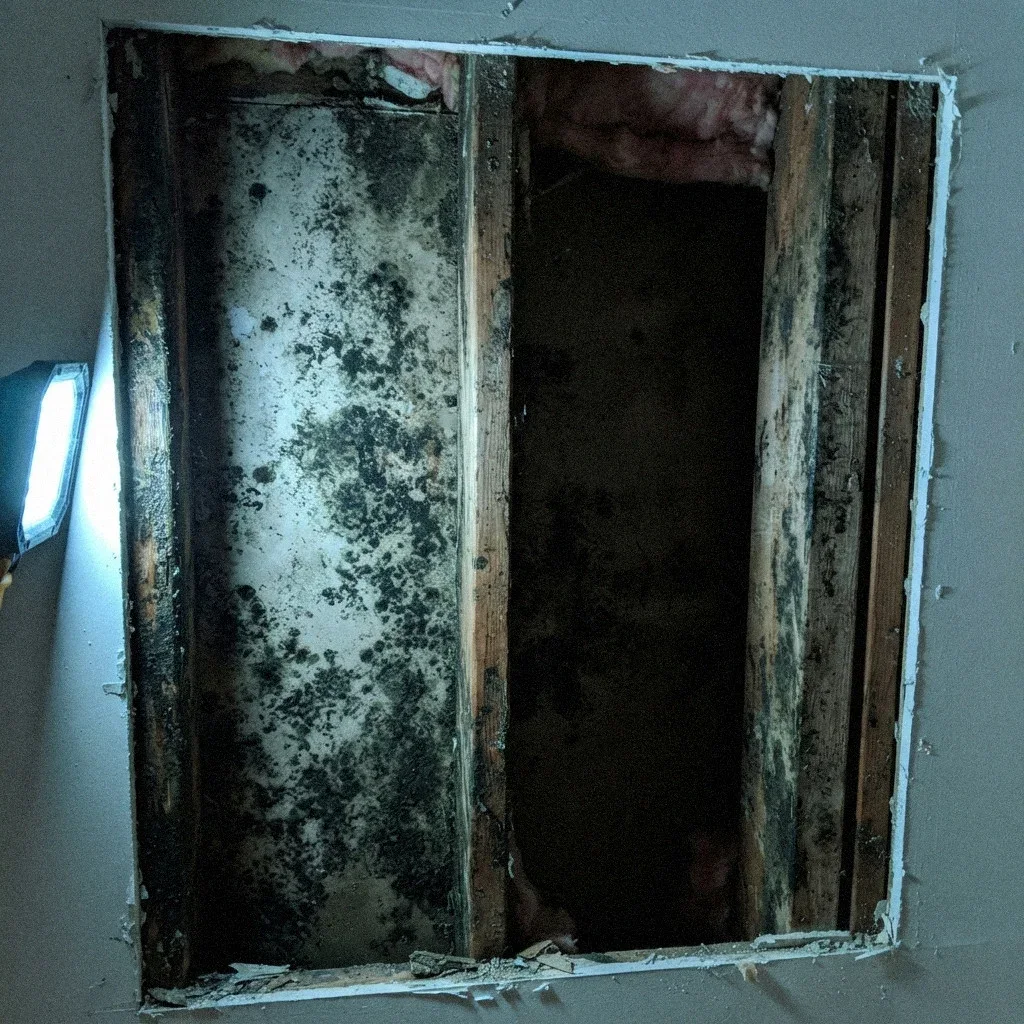
Skip containment and negative air, and demolition becomes the spreading event instead of the fix. Cutting out moldy drywall releases far more material into the air than the undisturbed growth ever did on its own. In a City Heights apartment with central air, that disturbed air gets pulled into the return vent and distributed through every room on the system. A homeowner can end up with a smaller patch of visible mold and a larger, invisible problem than they started with.
Why Cheap Quotes Drop It
Containment costs money in three places: materials, labor to build and tear down a sealed structure, and equipment rental or ownership for the negative air machine itself. None of that shows up as visible "cleaning," so it is the easiest line for a lowball quote to cut without the homeowner noticing until later. A quote that is missing containment on a job of any real size in University Heights or Golden Hill is not a better price. It is the same job with a step removed.
Scale Changes The Setup
Not every job needs the same containment. A single moldy window sill in a Pacific Beach rental might not need sealed plastic at all, just careful cleaning and ventilation. A few square feet of drywall in a Mission Valley condo might need a simple single-chamber seal. A large job, an attic in a Rancho Bernardo house or a crawl space area in an older Point Loma property, may need multiple chambers and a bigger negative air unit. The setup should match the size of the disturbance, not a flat rule.
Containment Is Not The Fix
None of this removes mold. Containment and negative air control where the mess goes while the actual work, removing affected material and drying the space, happens behind the plastic. A licensed pro who quotes containment but no moisture source has still only done half the job. The plastic protects the rest of the house during removal; it does nothing about the leak, the condensate line, or the humid air that let the mold grow in a Clairemont bathroom in the first place.
How Long Containment Stays Up
Containment generally stays sealed for the full length of remediation, not just the demolition day. That includes removal, cleaning, and often a drying period afterward, since opening the barrier too early can let residual dust back into the house. On a small job in a Normal Heights apartment that might be a day or two. On a larger job with structural drying involved, it can run longer. The negative air machine typically runs the whole time containment is up, not only while cutting is happening.
Checking A Quote For This
A reader comparing quotes in San Carlos or Allied Gardens can ask directly: is containment included, and is negative air pressure part of it. A vague answer, or a quote that lists "cleanup" without describing a sealed barrier, is worth questioning. This is not about brand names or certifications. It is about whether the physical steps that stop spread are actually in the plan, priced, and written down, rather than assumed or skipped.
Why San Diego Air Makes This Worse
San Diego mold is rarely a rain problem. It is marine humidity meeting a cool surface, or an air conditioning condensate line backing up into a wall, and that means growth often sits undetected for a long stretch before anyone notices a smell. A patch found late in a Bay Ho or Kearny Mesa home is often larger under the surface than it looks, which raises the stakes on containment: more disturbed material, more spores, more reason not to skip the barrier.
What This Page Does Not Cover
This page is about the mechanics of containment, not a full walkthrough of a remediation job from first inspection to final clearance. For the complete sequence, including how a job is scoped and what happens after containment comes down, that belongs on a dedicated guide rather than repeated here at half the depth. And none of this touches pricing directly; the actual cost page is the place for ranges tied to job size.
The Question Worth Asking First
The most useful question a homeowner in Talmadge or East Village can ask a quoted pro is not about containment at all. It is where the water is coming from. Containment controls the mess during removal, but if nobody has identified the moisture source, whether a condensate line, a roof leak, or humid air with nowhere to go, the mold comes back regardless of how carefully the plastic was taped up the first time.
Dealing with this in your home?
Mold in San Diego rarely starts with a storm. Marine air off the coast meets a cool interior surface, or an air conditioner drips quietly behind drywall, and growth begins without a drop of rain. A 1950s tract house near Clairemont Mesa Boulevard and a Craftsman near South Park fail the same way: moisture first, staining second. Bleach handles the color. It does not handle the source.