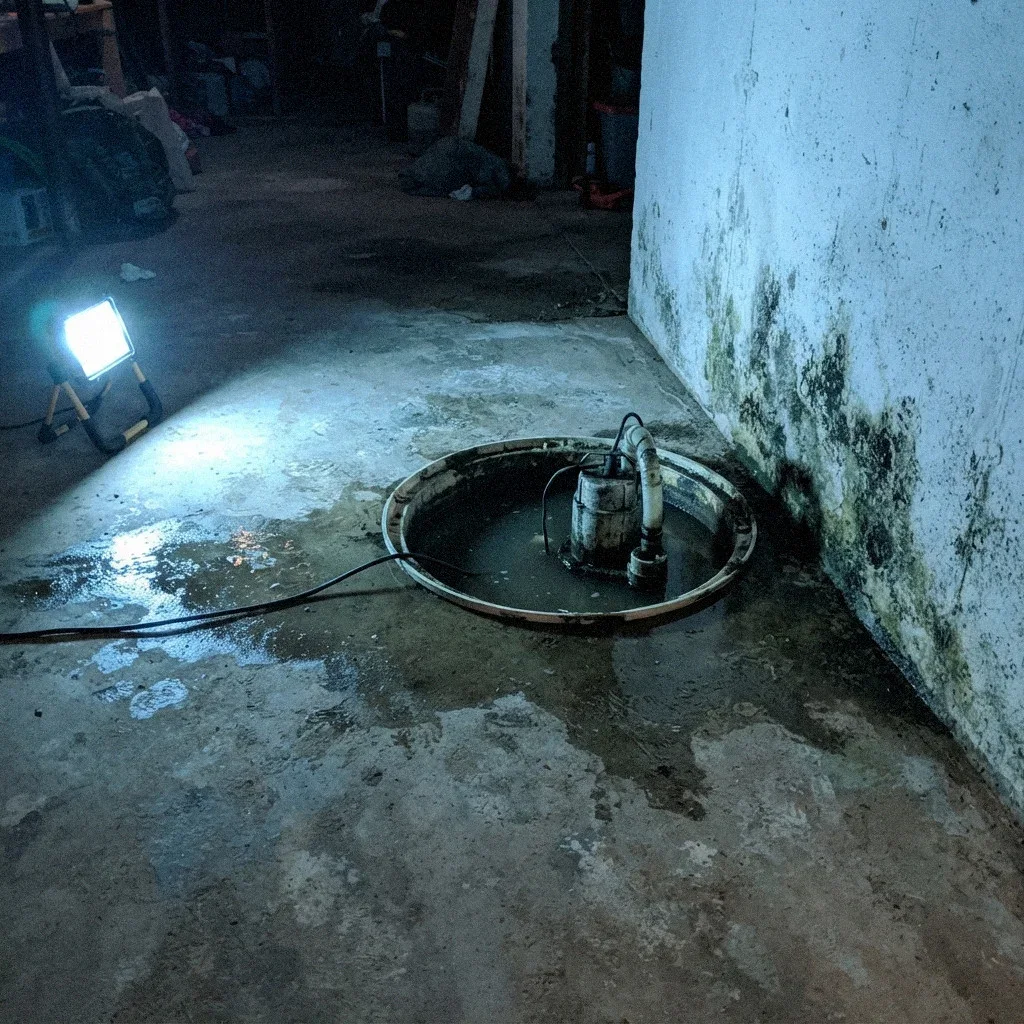
Drywall with mold growing on it is not a surface to scrub. The paper facing and the gypsum core both hold water, and once mold has colonized that paper, the growth is inside the material, not sitting on top of it. In San Diego homes from the 1940s through the 1970s, that panel comes out. This post covers why, how much gets cut, and where it goes once it leaves the wall.
Why Cleaning Is Not an Option
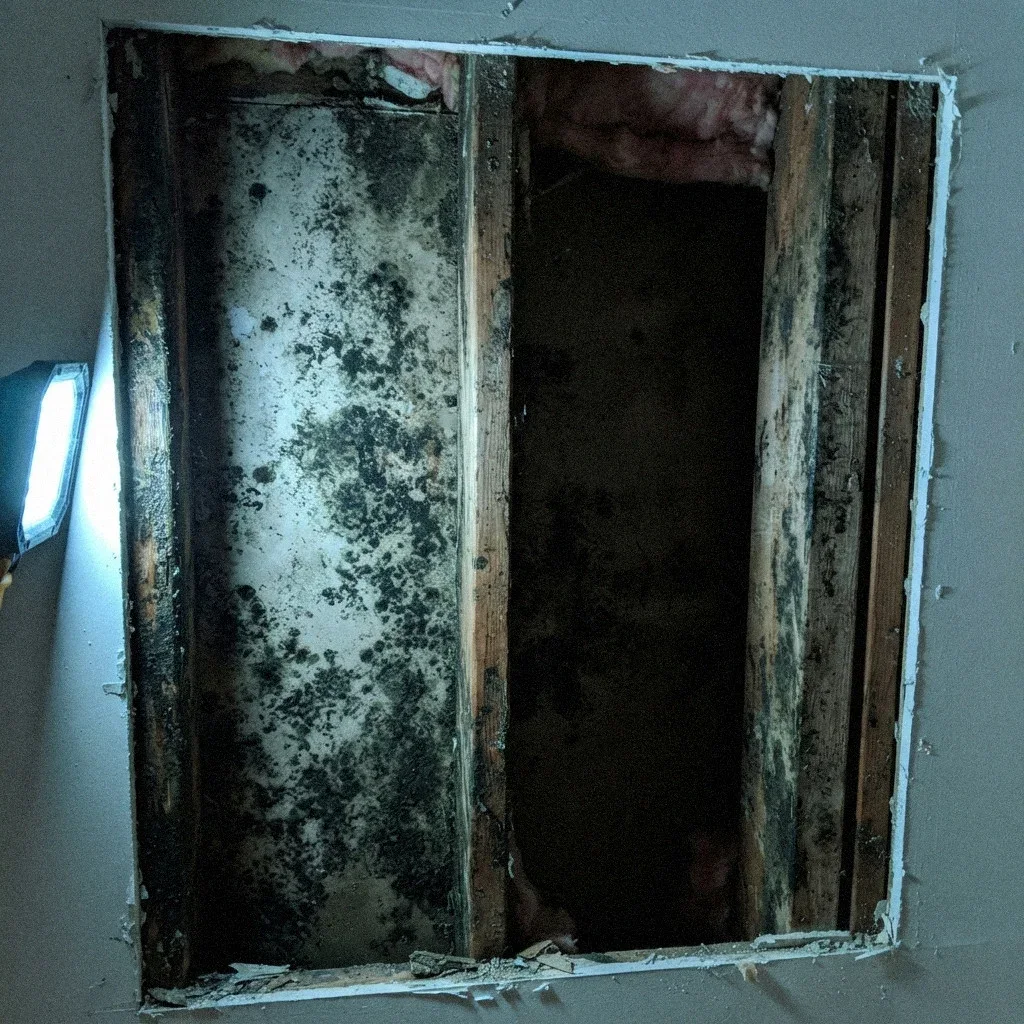
Drywall paper is essentially cardboard, and mold hyphae grow into it rather than resting on its surface. Wiping the visible patch removes color, not the organism, and the core behind it stays damp long after the surface looks dry. That is why the licensed pros we connect you with cut it out rather than treat it in place, the same way they would not try to disinfect a wet sponge back into a dry one.
How Far Past the Stain
Visible staining marks where growth is obvious, not where it stops. Spores and hyphae travel ahead of the stain through the paper facing, so the cut line sits some distance beyond the last visible mark, into material that still looks clean. Cutting exactly to the edge of the stain routinely leaves growth behind the new patch, which is why the margin matters more than the stain itself does.
Framing Gets Checked, Not Cut
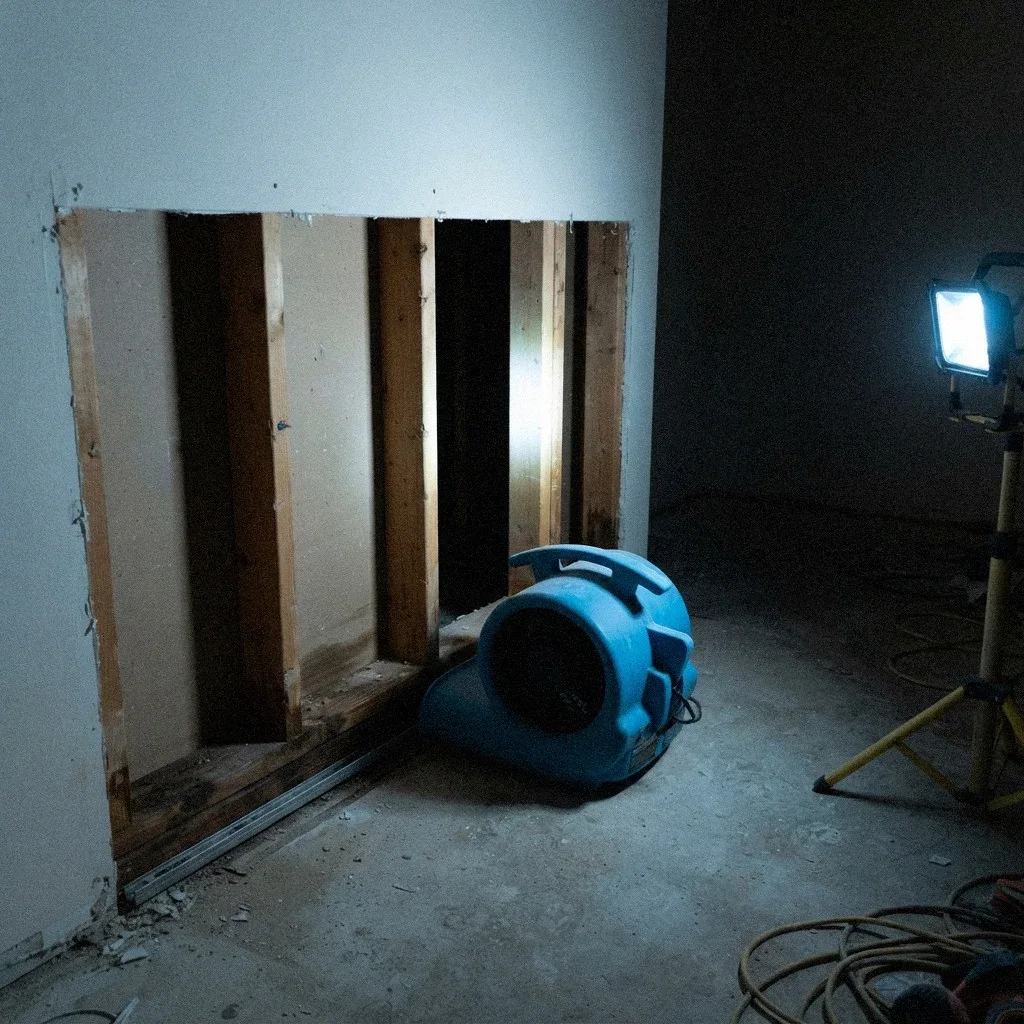
Wood studs and plates are denser and dry out differently than drywall, so they are not automatically removed. The licensed pros we connect you with check exposed framing for softness, staining, or a moisture reading that says the wood itself is still wet. Framing that reads dry gets left in place and allowed to air out before the wall goes back together; framing that does not read dry is a separate conversation.
Why It Leaves Bagged
Cut drywall is not carried out in the open. Breaking or flexing a moldy panel releases spores into the air of the room and the hallway it travels through, which spreads the problem instead of ending it. The licensed pros we connect you with bag material where it is cut, seal the bag, and only then move it through the house, which keeps the debris from reseeding rooms that were never part of the original problem.
Containment Around the Cut
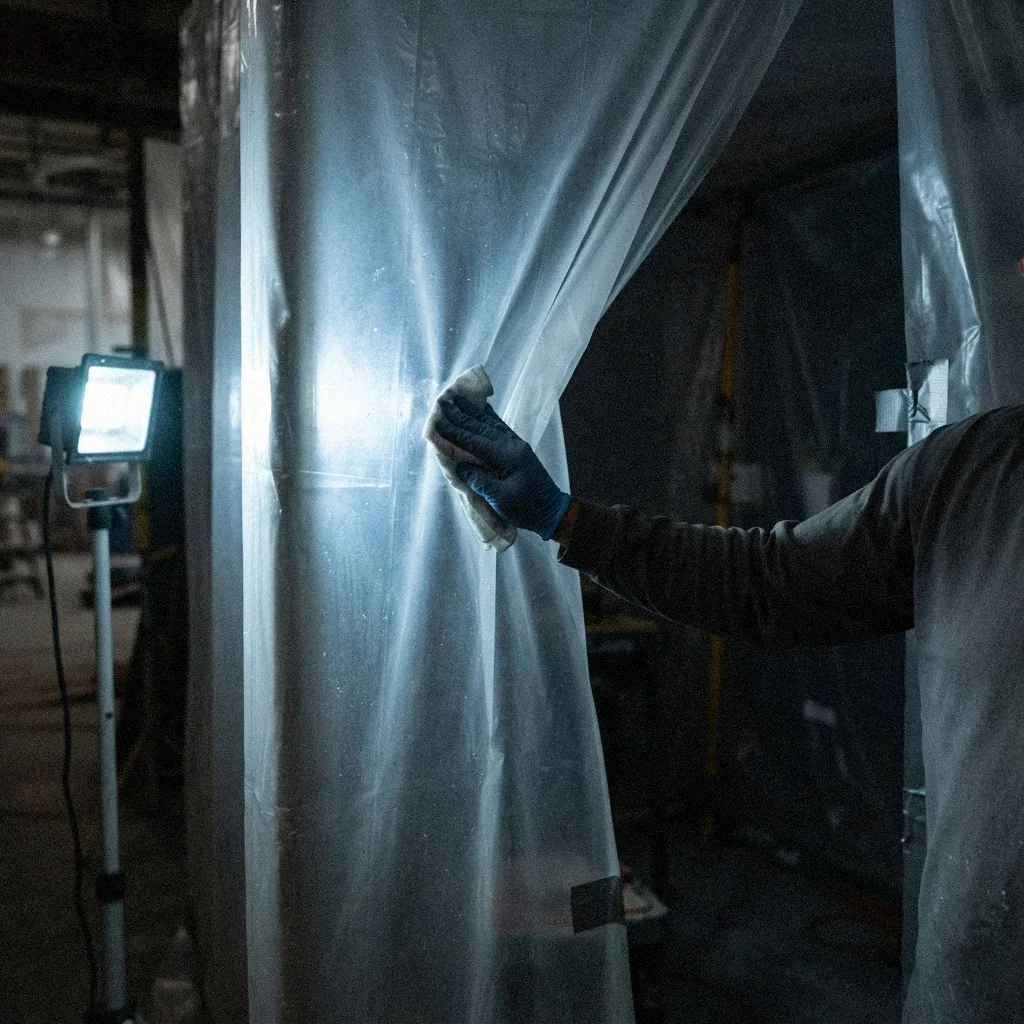
Before any cutting starts, the work area is typically sealed off from the rest of the house with plastic sheeting, and air moving out of that space is filtered rather than left to drift into hallways and bedrooms. That containment is what makes bagging effective. Cutting a panel in an open room and bagging it afterward still lets dust settle on furniture and flooring the whole time the cut is happening.
What Happens to Insulation
Batt insulation behind a moldy wall is porous the same way drywall paper is, and it holds moisture the same way. Fiberglass batts that have been wet do not dry back to their original condition and cannot be cleaned in place, so they come out with the drywall rather than being dried and reinstalled. Rigid foam board is a different material and is judged on its own condition rather than automatically discarded.
Porous Versus Non-Porous
The reason drywall and insulation are removed while a tile floor or a metal stud might not be comes down to porosity. Porous materials have internal structure that mold can grow into, so cleaning only reaches the surface. Non-porous materials like tile, glass, and solid metal have nothing for growth to get into, so surface cleaning actually removes what is there instead of leaving a hidden layer behind.
Where the Bagged Material Goes
Once sealed, bagged drywall and insulation leave the property as construction debris. It is not set on the curb loose or stacked in the garage, both of which risk tearing a bag and releasing what it was sealed to contain. The bags are moved directly to disposal, which is a routine step in remediation work across San Diego houses near Mission Valley, El Cajon Boulevard, and every neighborhood between them.
This Is Not a Sanitizing Step
Removing porous material is sometimes described as if it were a cleaning technique, but it is closer to the opposite: the site is saying this material cannot be cleaned well enough to keep, so it leaves the building instead. Nothing about bagging and disposal kills or treats mold elsewhere in the house, and it does not address whatever moisture problem let the growth start in the first place.
The Water Question Still Stands
Insulation is the clearest case for disposal rather than cleaning. Fiberglass batt is full of air pockets that trap spores and hold moisture long after a surface looks dry, and there is no practical way to clean it. Once a batt has been wet, in a Clairemont attic or a Linda Vista wall cavity, the licensed pros we connect you with treat it as waste, not salvage. It comes out with the drywall it touched, bagged the same way, for the same reason: keeping the material sealed until it leaves the house.
Where This Fits in the Job
Cutting, bagging, and disposing of porous material is one stage in a larger remediation process, not the whole of it. For how that stage connects to containment, air filtration, and the moisture inspection around it, the mold remediation process guide lays out the full sequence. This post stays narrow on purpose: what gets removed, how far the cut goes, and where the debris ends up.
Dealing with this in your home?
Mold in San Diego rarely starts with a storm. Marine air off the coast meets a cool interior surface, or an air conditioner drips quietly behind drywall, and growth begins without a drop of rain. A 1950s tract house near Clairemont Mesa Boulevard and a Craftsman near South Park fail the same way: moisture first, staining second. Bleach handles the color. It does not handle the source.