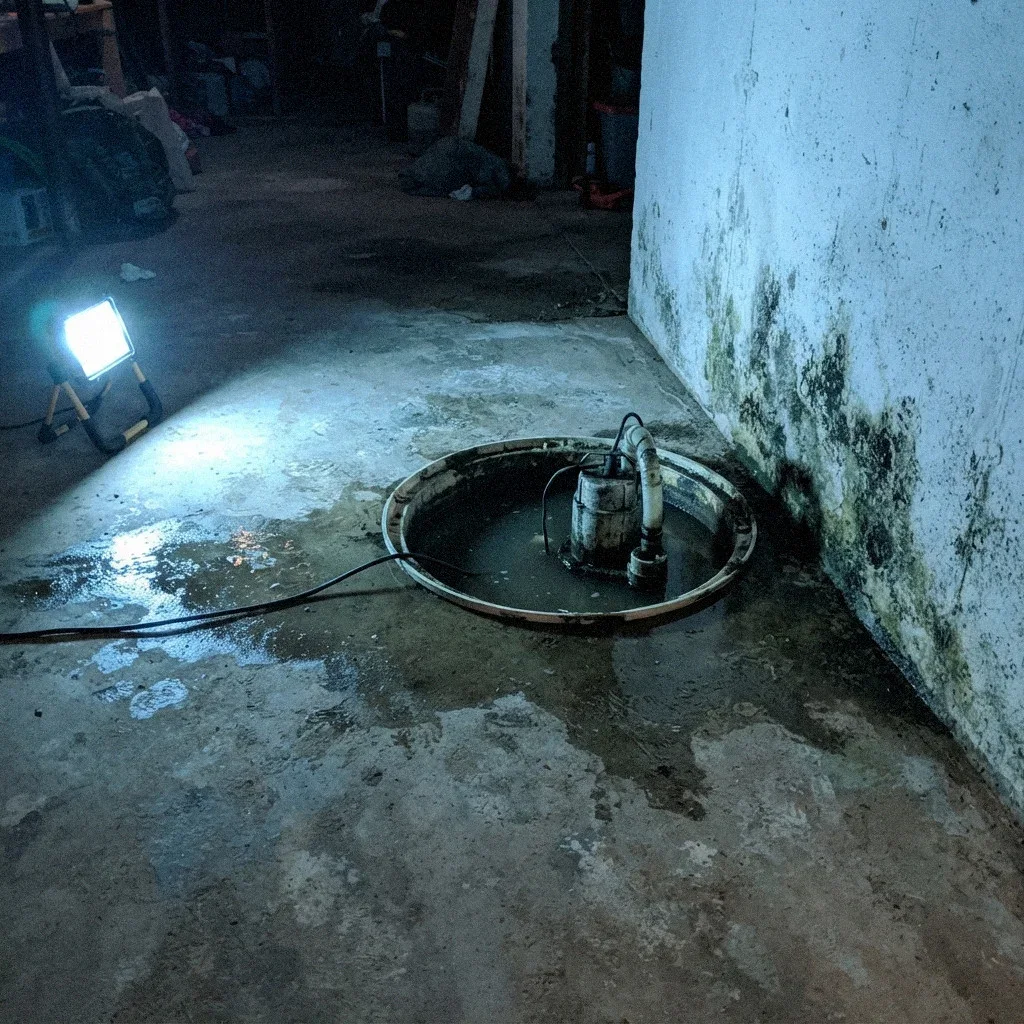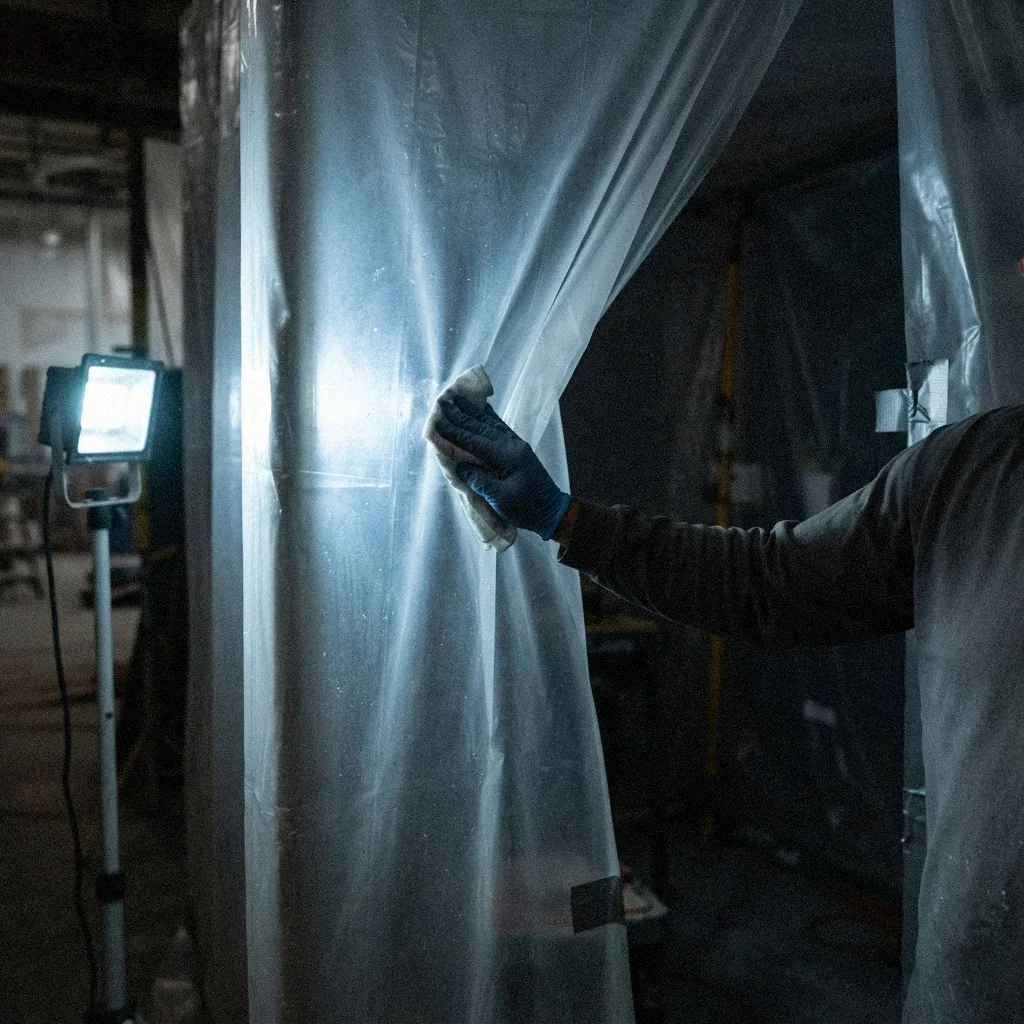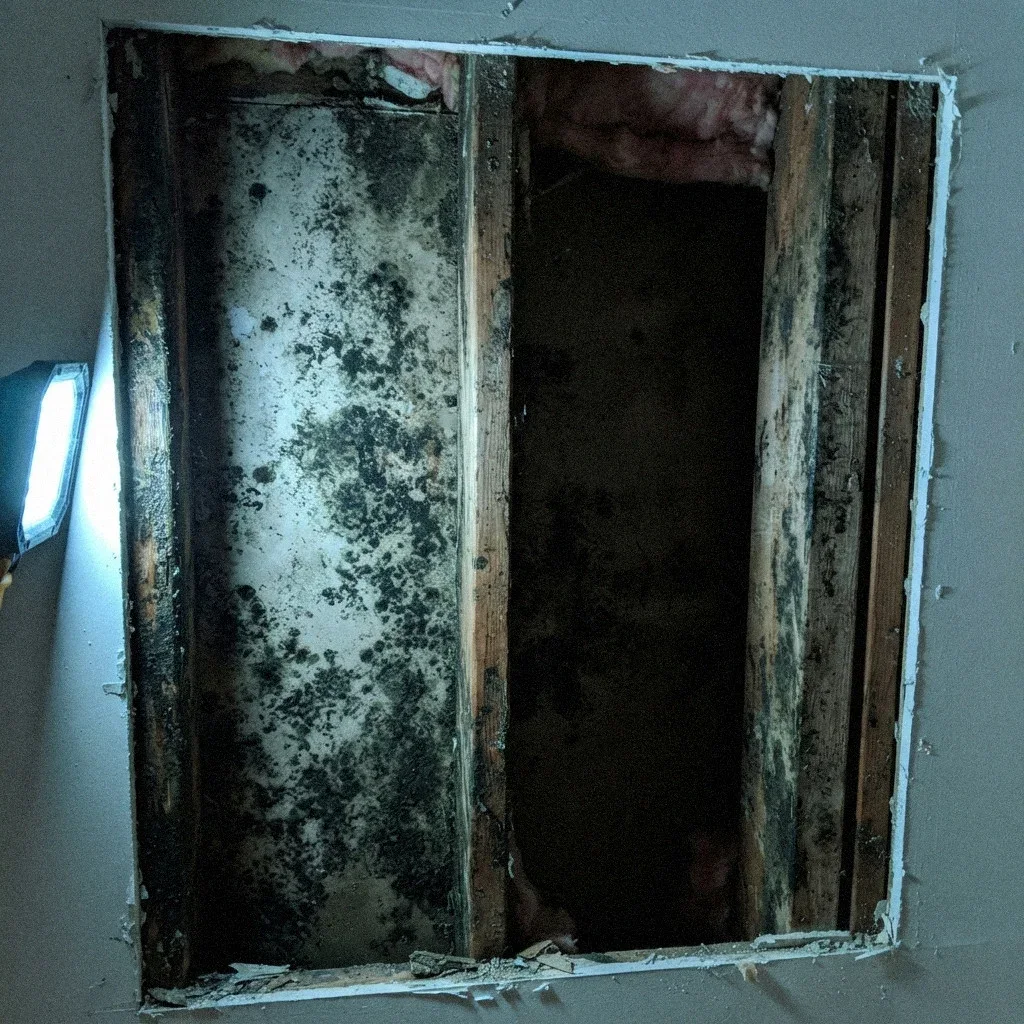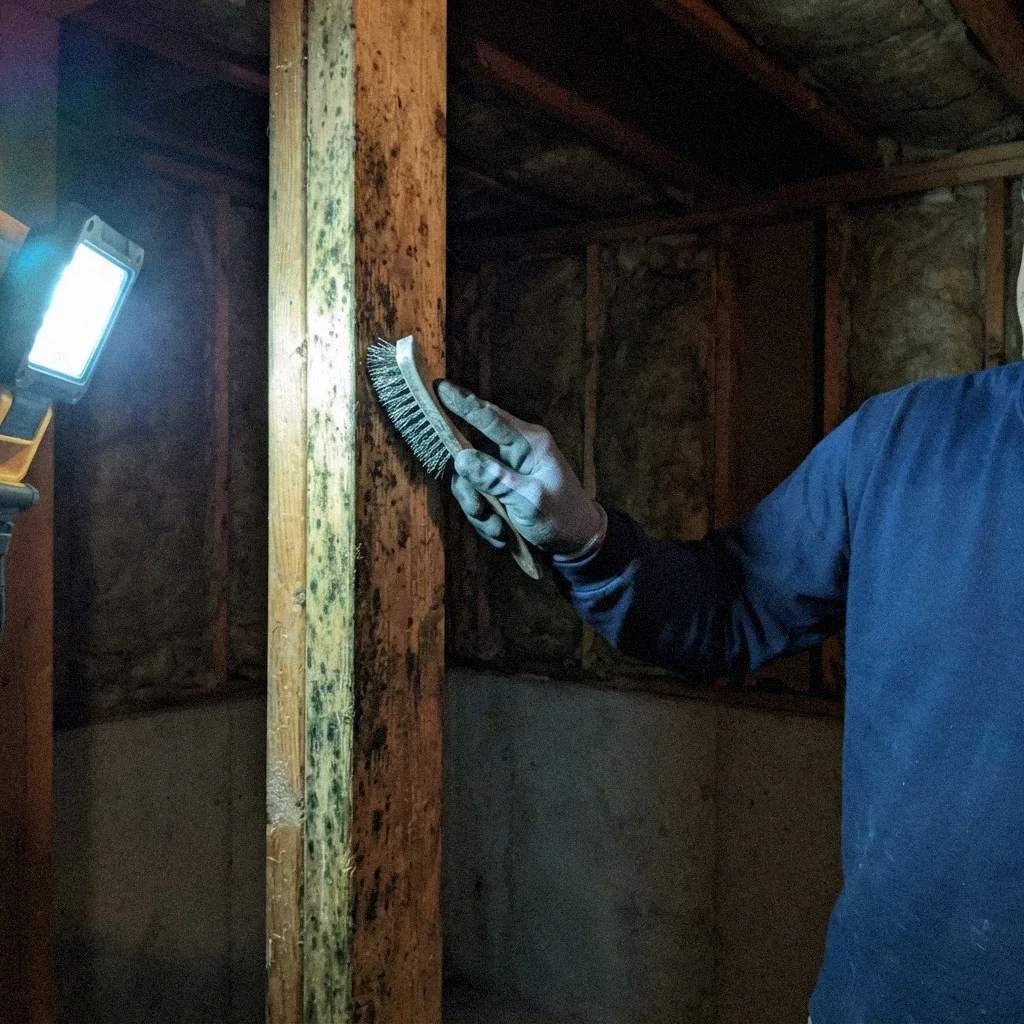
Most mold in a San Diego house is found by accident, not by inspection. Somebody moves a couch in Normal Heights and finds a dark ring on the baseboard, or repaints a ceiling in North Park and the same shadow bleeds through within a month. The visible mold is rarely the first sign. It is usually the fourth or fifth, arriving after a smell, a texture change, or a room that has felt wrong for a while. This page covers what tends to show up first, before anyone is looking for it.
A Smell With No Visible Source
A smell is often the first clue, a musty note that fades when a window opens and returns once the house is shut again. Staining that reappears through fresh paint is another: the pigment covers it for a few weeks, then the same outline bleeds back through because the water behind it never stopped. Neither one tells you what is growing. Both tell you there is still a source feeding it somewhere in the wall or ceiling.
Stains That Return After Painting
Paint or wallpaper that lifts, bubbles, or peels at a seam usually means moisture has been sitting against that surface long enough to break the bond with whatever is underneath. Drywall paper can hold that dampness for weeks without anyone noticing until the finish gives way. If the same spot keeps failing after it has been patched, the patch addressed the surface and left the cause exactly where it was.
Paint or Wallpaper Lifting Off
Paint that bubbles, cracks in a curved pattern, or peels away from drywall in sheets usually means moisture has gotten behind it, not just onto it. Wallpaper does the same thing, lifting at the seams first. Drywall paper facing is an easy material for mold to use once it is wet, and lifting paint is often the visible edge of a much larger damp patch that has not broken through the surface yet.
A Room That Always Feels Damp
A room that feels damp no matter the season, sticky air, a window that fogs before anyone has showered, is worth paying attention to on its own. It can trace to a roof that ponds instead of draining, to grading outside that pushes water toward the foundation, or to a mechanical cause like a clogged line that lets a cooling unit's runoff collect where it should not. None of those show up as a stain right away.
Symptoms That Ease Away From Home
People sometimes notice they feel better at work or on vacation than at home, then feel the same irritation return within a day of coming back. That pattern is worth paying attention to as a clue about the house, not as a diagnosis. This page will not tell you what that means for your health. For the confirmation step, including when a wall itself needs opening up, see the guide on how to know if mold is behind your wall.
Flat Roofs and Slow Leaks
Mid-century homes across Clairemont and Bay Park often have low-slope or flat roofs, and these pond water rather than shedding it quickly. A slow leak through a flat roof section can travel sideways along a joist before it drips through a ceiling, which means the stain you eventually see is not directly above the leak. Ceiling mold in these homes often shows up gradually, as a faint yellow-brown ring that widens over months rather than a sudden water mark.
Condensate Lines and Air Handlers
Some people notice their eyes or sinuses settle down within a day or two of leaving a particular room, then act up again once they are back in it. That pattern is worth writing down, room and timing both, because it is useful information. It is not proof of anything on its own, and it is not a stand-in for a look behind the surface, which is a separate step covered elsewhere on this site.
Why San Diego Grows Mold Without Rain
San Diego does not need rain to grow mold indoors. A house can sit through a dry stretch with no measurable precipitation at all and still develop a damp patch, because the moisture is coming from marine air meeting a cool surface, or from a mechanical source inside the walls, not from weather outside. That is why some of these signs turn up in months a homeowner would not think to worry about.
Older Construction, Hidden Cavities
Houses across Clairemont, Linda Vista, and Talmadge share enough in age and layout that the same signs tend to repeat between them: a hallway ceiling near a flat roof section, a closet on an exterior wall, a bathroom with no fan or a weak one. None of that means every house has a problem. It means the ordinary wear points are predictable once you know where a given house tends to hold moisture.
What These Signs Do Not Tell You
None of this tells you the species behind your wall, and that is fine. Identification rarely changes what happens next: the wet material comes out, the moisture source gets fixed, and the area gets cleaned. If you want the confirmation step spelled out, read how-do-i-know-if-mold-is-behind-my-wall. What matters here is catching the signs early, whether that is a smell near Balboa Park bungalows or a stain returning in a Clairemont bathroom, before the area you're dealing with grows past a size you can handle yourself.
When To Stop Guessing
A reader who has spotted one or two of these signs and wants the next step, how to tell what is actually happening behind a wall before calling anyone, will find that laid out on this site's dedicated page for confirming it. Reading a few of the marks a house gives off before symptoms line up under a doorway is a reasonable place to stop for tonight, and a reasonable place to start again once the question feels worth answering.
Dealing with this in your home?
Mold in San Diego rarely starts with a storm. Marine air off the coast meets a cool interior surface, or an air conditioner drips quietly behind drywall, and growth begins without a drop of rain. A 1950s tract house near Clairemont Mesa Boulevard and a Craftsman near South Park fail the same way: moisture first, staining second. Bleach handles the color. It does not handle the source.