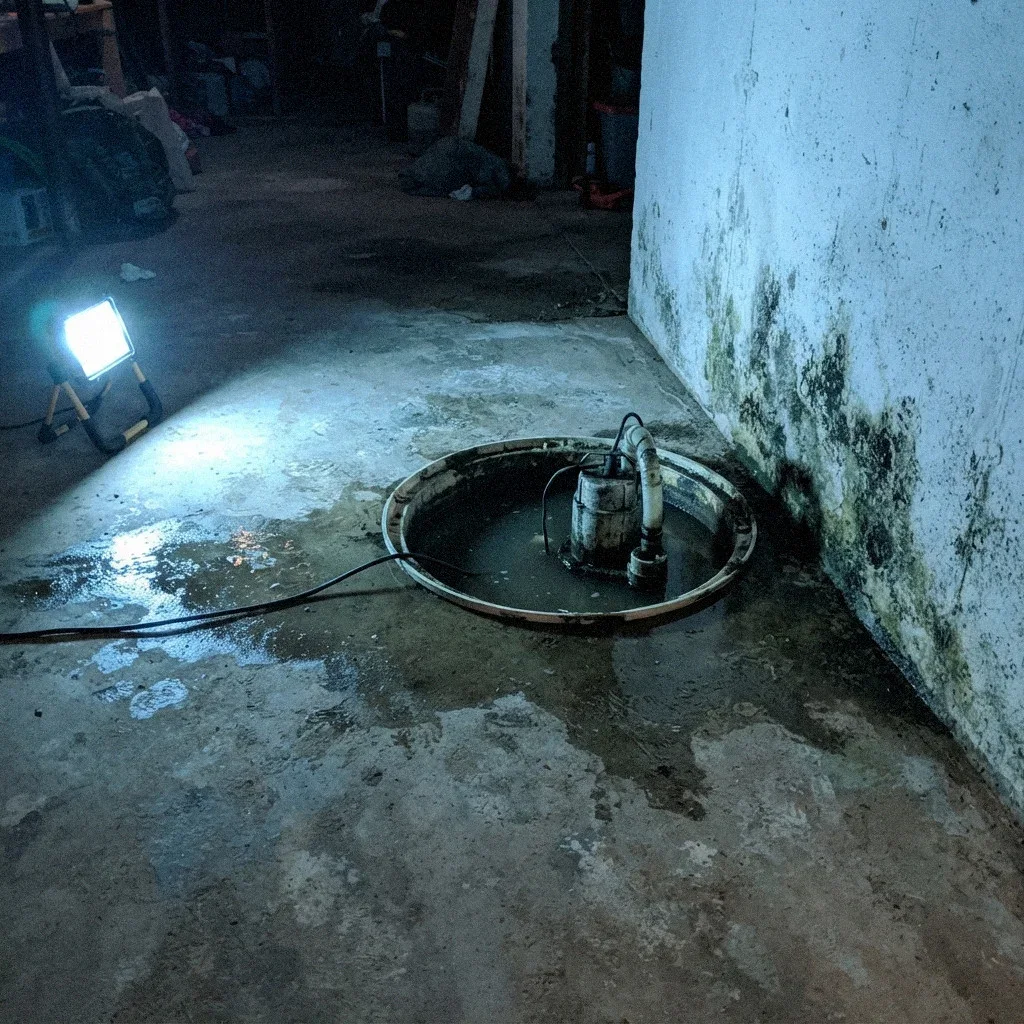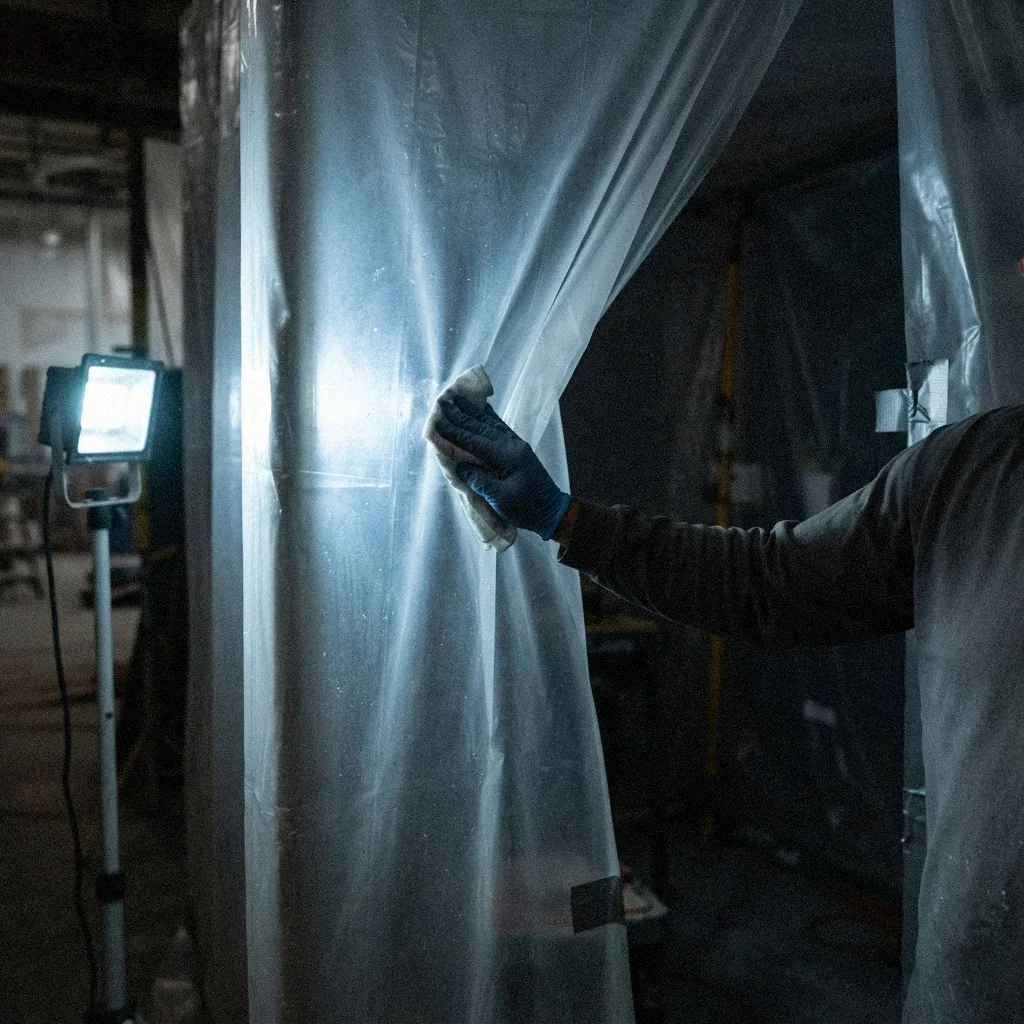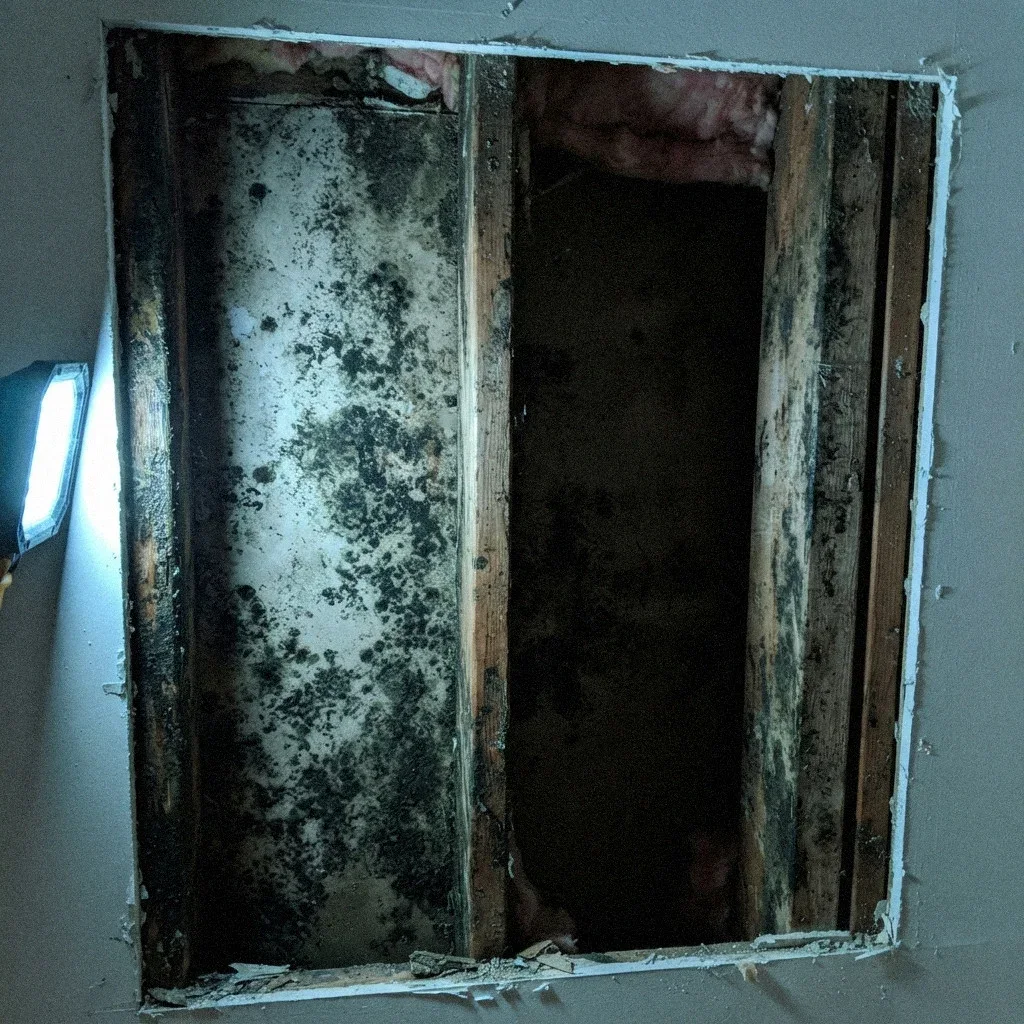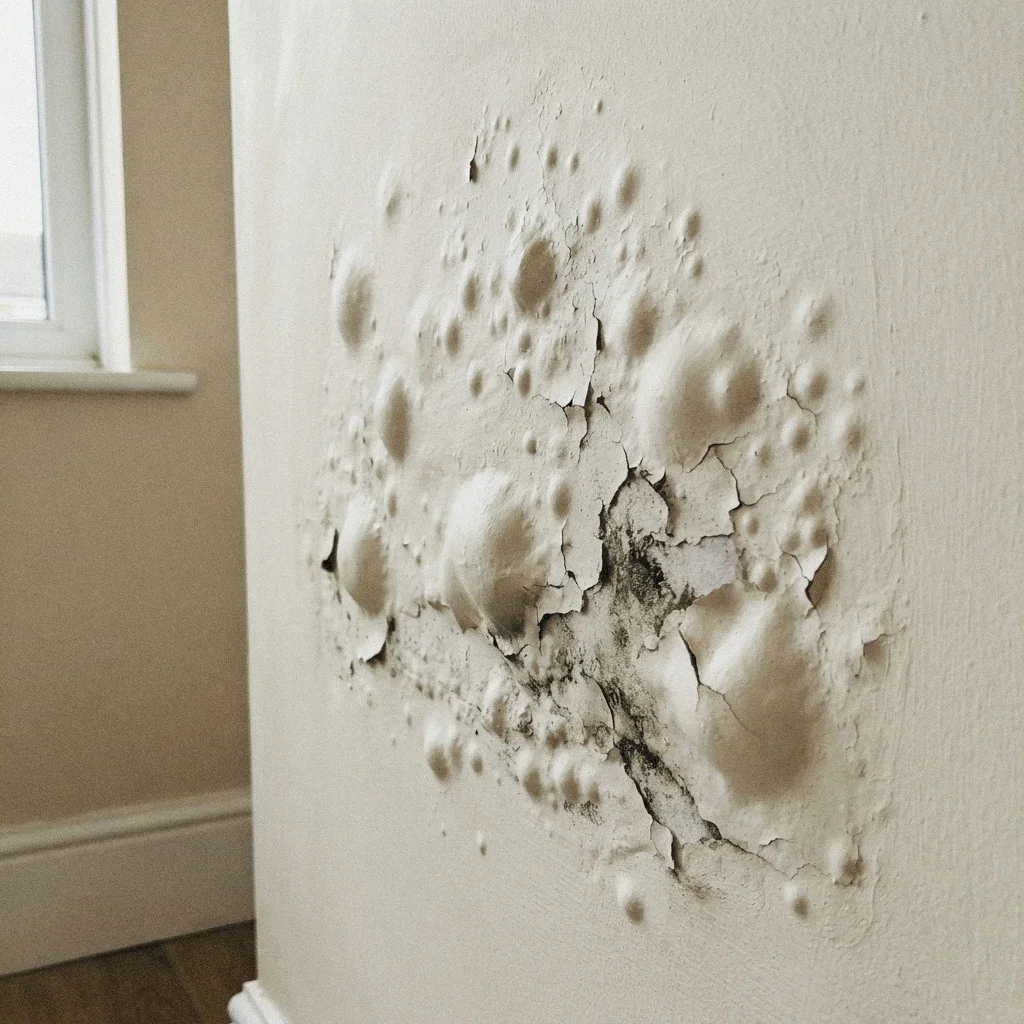
Mold and mildew get used almost interchangeably around San Diego, and the trade itself is loose about it. Mildew usually means a surface film, often on a Hillcrest bathroom tile or a windowsill near Balboa Park. Mold covers everything else, including growth inside a wall. The label rarely changes what a licensed pro actually does once they open up the area and look.
What People Mean By Each
In everyday use, mildew usually means a thin, flat, gray or white growth on a damp surface, like a shower curtain or window sill. Mold usually means the darker, sometimes fuzzy or slimy growth on drywall, wood, or fabric. Homes from Kensington to Linda Vista get both kinds of talk. Neither term is a scientific classification. They are household shorthand, and different people draw the line in different places.
Why That Line Is Loose
Mycologists do not sort fungi into mold and mildew as separate categories. Both words point at surface fungal growth, and the same organism can look powdery on one surface and fuzzy on another depending on moisture and what it is growing on. A patch on a Talmadge windowsill and a patch on a North Park closet wall can be related species that simply look different because the conditions differ. The visual split people rely on is not a biological one.
Color Never Identifies It
Black, green, white, or pink growth all get called mold or mildew depending on who is looking. Color tells you almost nothing about which organism is present, and it tells you nothing about health risk. A pale patch in a Bay Park hallway is not automatically safer than a black one in a Golden Hill garage. What color does tell you is roughly how established the growth is and how long the surface has stayed wet.
The Surface Matters More
What actually changes the response is the material, not the label. Growth on a sealed tile surface in a University Heights bathroom usually wipes off with cleaning. Growth on drywall, wood trim, or fabric in a Normal Heights bedroom closet has likely grown into the material, and wiping the surface leaves the problem underneath. That distinction, porous versus non-porous, drives the decision far more than whether someone calls it mold or mildew.
Where The Water Comes From
Neither word answers the question that actually matters: why is this surface wet. A blocked air conditioning condensate line can push water into a wall cavity in a Serra Mesa home with no visible leak anywhere else. A coastal house in Ocean Beach with no air conditioning at all can grow the same patch just from persistent marine humidity working on a cold, poorly ventilated wall. Calling it mold or mildew skips past the mechanism entirely.
No Safe Exposure Number
There is no recognized safe exposure limit for either mold or mildew, and no health agency publishes one that applies to a home. That is true whichever word gets used. It does not mean every patch is an emergency. It means the health question cannot be settled by naming the growth, and anyone claiming a number for safe exposure is stating something that does not exist.
Testing Rarely Settles Anything
People sometimes want testing to find out whether a patch is mold or mildew, expecting the lab result to change the plan. For visible growth, it usually does not. The remediation step is the same either way: find the moisture source, remove or clean the affected material appropriately for what it is, and stop the water. Testing has a place in specific disputes, but it is not usually the step that decides what a Talmadge or Kearny Mesa homeowner does next.
Bleach Treats The Color
A common instinct is to reach for bleach on either mold or mildew because the color is what looks wrong. Bleach can lighten or remove the visible color on a nonporous surface, but on drywall, grout lines, or wood it does not reach growth that has taken hold below the surface, and the moisture that caused it is still there. The stain fading is not the same as the problem being gone.
A Practical Way To Decide
A reasonable way to sort a real patch, in a Rancho Bernardo laundry room or a Point Loma garage, is to ask three things: how large is it, what is it growing on, and is the moisture source still active. Small patches on hard, nonporous surfaces with a fixable moisture source are manageable as cleaning jobs. Larger patches on porous material, or anything tied to a moisture source that keeps recurring, call for a different level of response.
When The Label Does Matter
There is one place the words diverge in practice: allergy and sensitivity. Some people react more to certain growth than others regardless of what it is called, and a household with asthma or allergies may want a lower threshold for acting on any visible patch, mild-looking or not. That is a personal-health decision, not a species identification, and it does not require settling whether the patch in question is technically mold or mildew.
The Question Worth Keeping
The label rarely changes the plan, but the plan still needs answers: what is the surface, how did it get wet, and is that water source still active. A full walk-through of how to judge growth by size and material is covered in the mold size and severity guide. For San Diego homes specifically, from Mission Valley to Scripps Ranch, the moisture mechanism is almost always more useful to name than the growth itself.
Dealing with this in your home?
Mold in San Diego rarely starts with a storm. Marine air off the coast meets a cool interior surface, or an air conditioner drips quietly behind drywall, and growth begins without a drop of rain. A 1950s tract house near Clairemont Mesa Boulevard and a Craftsman near South Park fail the same way: moisture first, staining second. Bleach handles the color. It does not handle the source.