A stuffy nose, a cough that will not quit, eyes that itch every evening — the internet says mold, and sometimes it is. Before assuming, it helps to separate what the body is telling you from what the building is telling you. Symptoms alone rarely name a cause. What they can do is point you toward checking a specific room in a San Diego house, especially one built before 1970, for the moisture that mold needs to grow in the first place.
What people commonly report
The complaints that come up most are nasal irritation, sneezing, watery eyes, a cough that will not settle, or a general stuffiness that feels worse indoors. Some people describe a musty smell alongside it, others do not notice any smell at all. None of these on their own point to mold specifically. They overlap with dust, pollen carried in from Balboa Park, pet dander, and ordinary seasonal congestion.
Why location is the useful clue
The detail worth paying attention to is not the symptom itself but where it happens. If someone feels clearer at work, at a relative's place in Golden Hill, or on a weekend trip and then worse again back home, that pattern says more than any single symptom does. It points toward something in the building rather than something seasonal or unrelated to the house at all.
Why this is not a diagnosis
Nobody, including a contractor, can look at a dark patch on a wall in Normal Heights or Kensington and tell a homeowner what is happening in their sinuses. Mold is associated with respiratory irritation and allergic response in the research, more so for people already sensitized, but that is a general association, not a way to confirm a cause in one house or one person. A doctor is the only one qualified to sort that out.
When to see a doctor
Symptoms that persist, worsen, involve breathing difficulty, or come with fever are reasons to see a doctor rather than wait on a building inspection. A physician can rule out infections, allergies unrelated to the home, and other causes that have nothing to do with moisture. The building and the body are two separate questions, and only one of them belongs to a contractor.
Why the building still matters
People describe a stuffy nose, sinus pressure, a scratchy throat, or eyes that itch by evening. Some notice wheezing they did not have before, or a cough that lingers past a cold. None of that names a cause on its own. A lot of ordinary irritants in a San Diego house produce the same list, from dust to a neighbor's yard work carried in on the marine layer. What makes the pattern worth acting on is not any single symptom but where it shows up and where it eases.
No safe exposure number exists
Recognized associations between indoor mold and health lean respiratory and allergic — irritation, asthma flare-ups, hay-fever type reactions — and people already sensitized tend to notice them first and worst. None of that amounts to a diagnosis, and nobody should try to name a condition from a smell or a stain. The California Department of Public Health has been direct about this: no policy sets a safe exposure number for dampness or mold indoors, so there is nothing to measure against anyway.
Where to look in the house
Relief on vacation, at work, or just after a weekend at the beach in Ocean Beach or Pacific Beach is the detail worth paying attention to. If breathing feels easier away from Clairemont or Linda Vista and worse again back inside, the building is the common thread, not the calendar or the pollen count. That pattern does not confirm mold specifically, since a stuffy furnace filter or a leaky window can produce the same relief-and-return cycle, but it is a reasonable prompt to look at the house rather than the medicine cabinet.
Testing is usually not the answer
If the away-from-home pattern holds, walk the house looking for what caused it rather than what it might mean for your lungs. Check under sinks, behind the washer, along a window track in a coastal spot like Pacific Beach or Ocean Beach where the marine layer keeps glass and sills damp for weeks at a stretch. A patch of color or a musty smell in one of those spots is worth treating as a lead, not a verdict, and worth following up before it spreads further.
Color is not identification
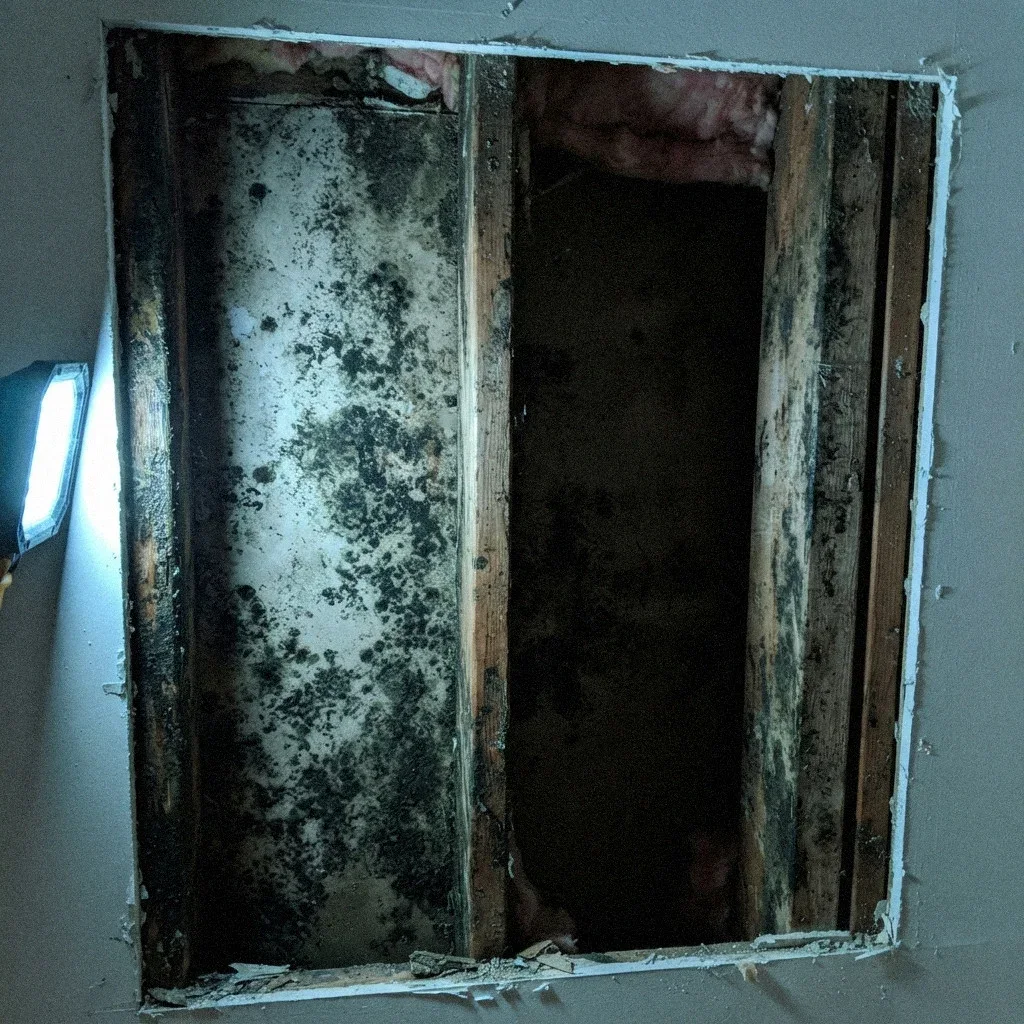
A patch that looks black, green, or orange does not tell anyone which species is growing, and the color has no bearing on health risk by itself. Identifying species by sight is not reliable, and it is not the deciding factor in how a problem gets handled. What matters is that it is growing at all, and where the moisture feeding it is coming from.
Bleach will not solve it
None of this is a diagnosis, and this page is not trying to be one. A doctor can sort out what a cough or a rash actually is; a musty smell or a stained ceiling tile is a separate, physical thing that either exists in the house or does not. If someone in a University Heights or Talmadge bungalow keeps feeling better elsewhere and worse at home, the reasonable next step is a look at the building, ideally paired with a conversation with a physician about symptoms that are not resolving on their own.
What to do with this pattern
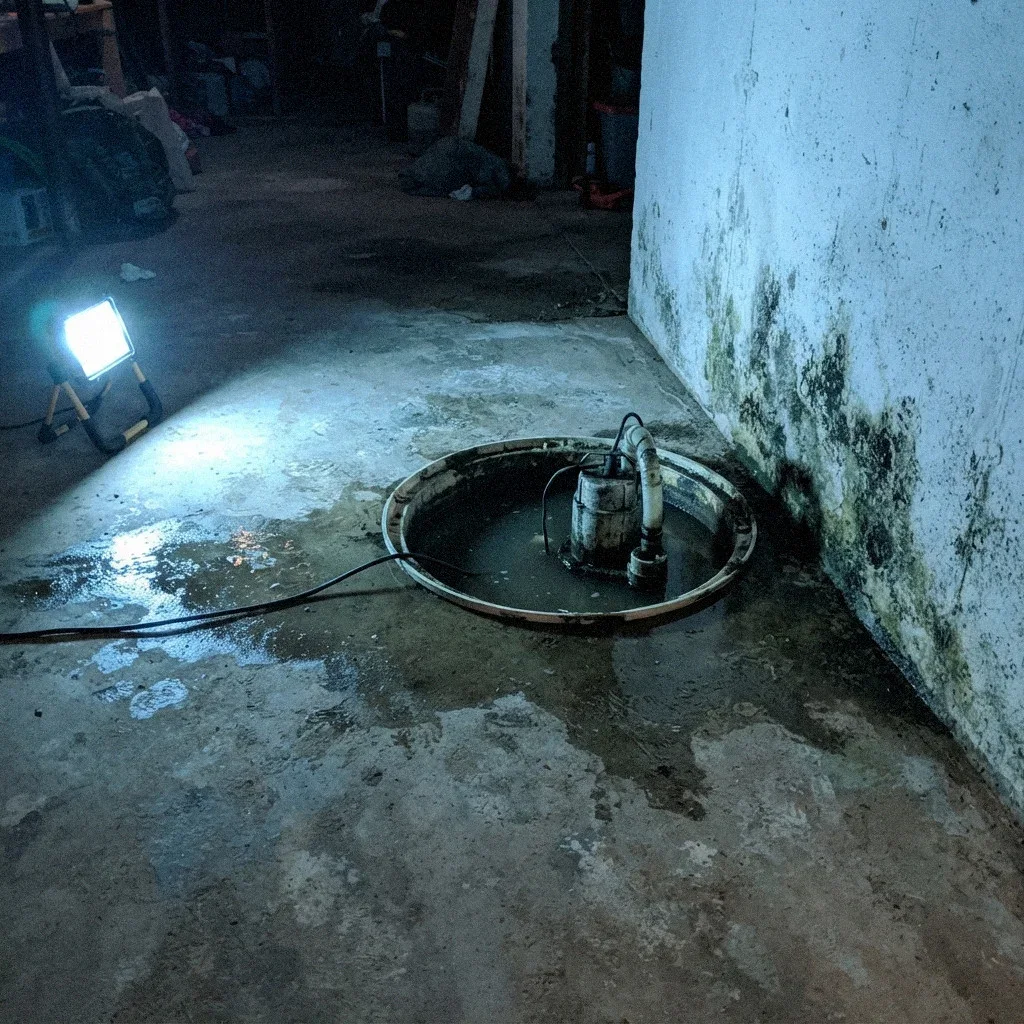
If symptoms track with the house and there is a visible patch, a smell, or a known moisture source like a slow leak near Mission Valley or a damp crawl space in South Park, that is worth addressing directly. The mold remediation process guide covers the full removal process. If symptoms are the only signal and nothing is visible, a doctor is the more useful call to make first.
Dealing with this in your home?
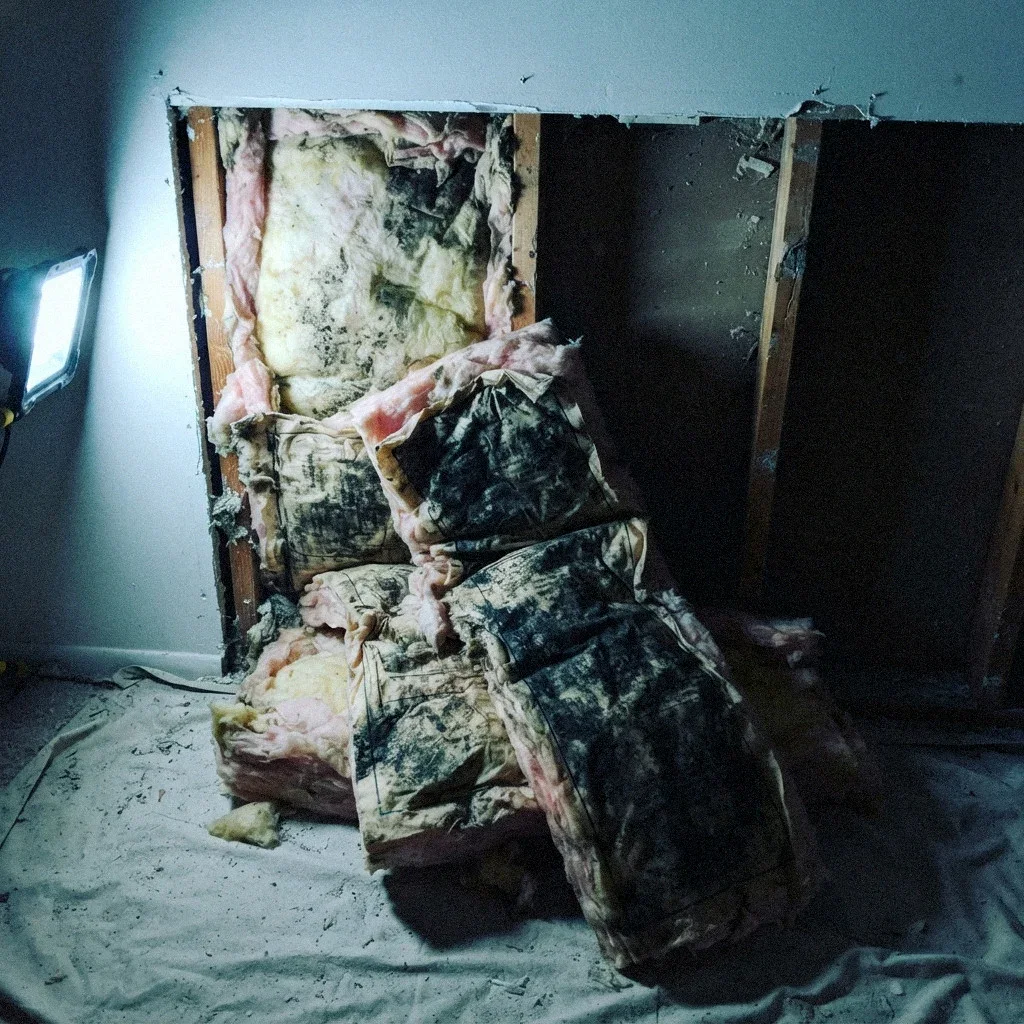
Mold in San Diego rarely starts with a storm. Marine air off the coast meets a cool interior surface, or an air conditioner drips quietly behind drywall, and growth begins without a drop of rain. A 1950s tract house near Clairemont Mesa Boulevard and a Craftsman near South Park fail the same way: moisture first, staining second. Bleach handles the color. It does not handle the source.