A pipe fails under a sink in Clairemont, or a roof lets water into an attic near North Park, and the question that follows is always the same: how long do we have. There is no single honest answer, because growth does not run on a clock. It runs on how wet the material stayed, how warm the room was, and how much air moved through it. San Diego's mild, humid coastal air makes this a live question here even without a storm behind it.
What Mold Actually Needs
Mold needs moisture, a food source, and a survivable temperature. The food source is rarely the limiting factor in a house. Drywall paper, wood framing, carpet backing and dust all qualify, which is why California public health guidance treats moisture as the deciding variable, not the material. If a surface in a home near Mission Valley or Kensington stays wet, something on it will support growth sooner or later. Dry the surface and the other two conditions stop mattering.
The Realistic Drying Window
No agency will hand you a fixed hour count, because the honest answer depends on what got wet. A gypsum ceiling holds water differently than a plywood subfloor under a Clairemont bungalow, and a warm, humid stretch off the coast pushes things faster than a dry Santee afternoon. What matters is the pattern: damp material given time and a stable temperature is a setup, and cutting that window down is the one variable a homeowner actually controls.
Why a Fixed Hour Count Fails
Anyone who gives a single number of hours before mold appears is guessing past the facts. Material matters: a wet subfloor near San Carlos holds water differently than a wet baseboard in Bay Park. Temperature matters, since a warm interior speeds every biological process. Humidity matters most in this city, where the ambient air is already carrying moisture before a leak adds more. A number without those three variables attached is not a fact, it is a shortcut.
Why Speed Still Matters
None of that uncertainty is a reason to wait and see. It is the opposite. Because the safe window shrinks under ordinary San Diego conditions, and because nobody standing in a hallway in Normal Heights knows exactly how many hours a wet wall has left, the only reliable move is to shorten the wet period itself. Pulling water out and moving air through the space earlier always helps; it never makes the outcome worse.
San Diego's Air Is Already Humid
This city does not need heavy rain to give mold a foothold, because it rarely gets heavy rain in the first place. What it has instead is a marine layer that keeps coastal air damp for long stretches, particularly in the months locals call May Gray and June Gloom. A leak that happens during a humid, overcast stretch near Ocean Beach or Pacific Beach is drying against air that is not helping it, even with the windows open.
The AC Condensate Pattern
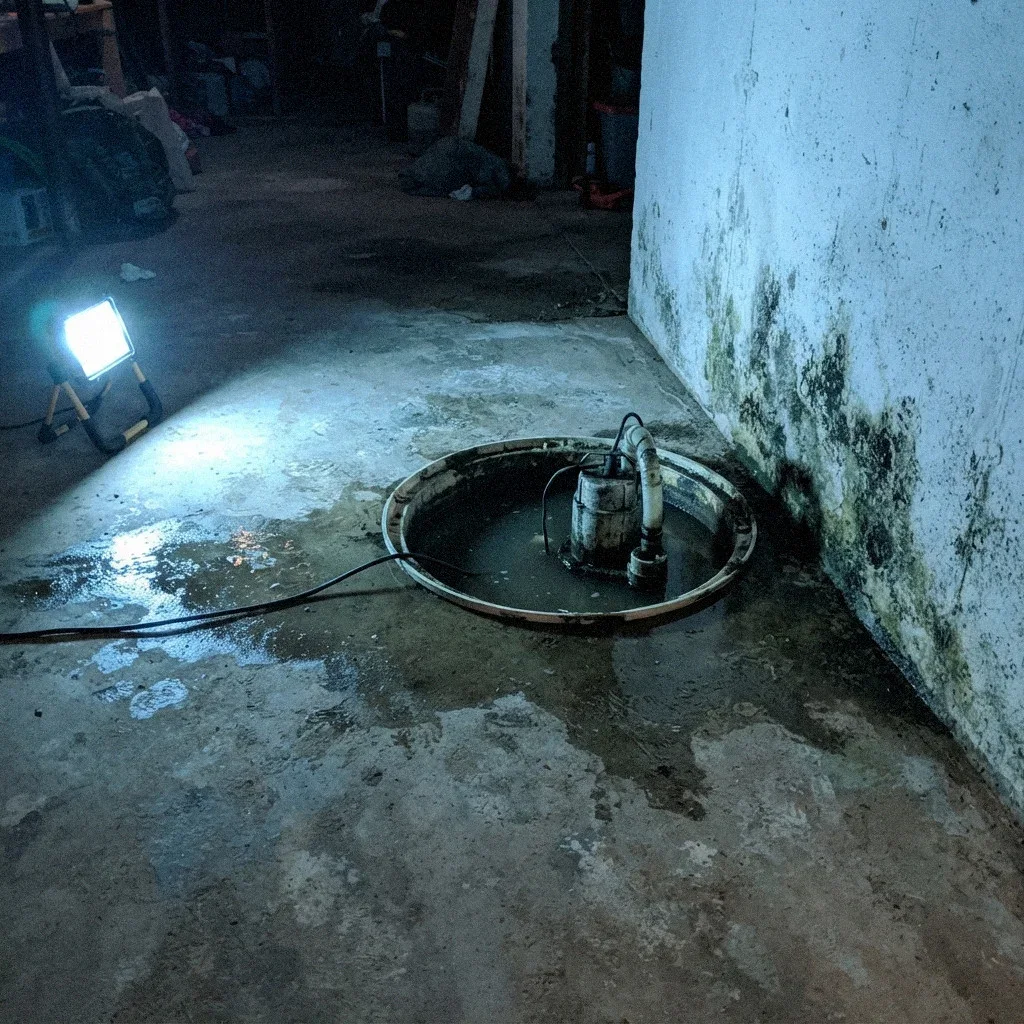
A slow drip under a Kearny Mesa kitchen sink can soak the cabinet base for weeks before anyone notices a stain. By the time the smell shows up, the wetting event is old news and the growth has had a long, quiet head start compared to a burst supply line that floods a Bay Park hallway in an afternoon. Slow and hidden is often worse than fast and obvious, because nobody started a clock.
Coastal Homes Without AC
Homes closer to the coast, in places like Ocean Beach or La Jolla, often skip air conditioning entirely, which removes the condensate risk but adds a different one. Without a mechanical system running, there is nothing dehumidifying the indoor air on a humid marine layer morning. A leak in one of these homes is drying into air that is already close to saturated, which is exactly the condition that stretches the drying window further than a homeowner expects.
What Slows Drying Indoors
Airflow is the variable most homeowners can control and most often ignore. A closed closet, a room behind a couch, or a cabinet under a sink in a Kearny Mesa kitchen all trap humid air against a wet surface with nowhere for it to go. Opening the space, running a fan across it, and keeping interior doors open all shorten the time a material spends wet, which is the only lever that actually changes the outcome of the timeline discussed above.
Color Is Not a Timeline Clue
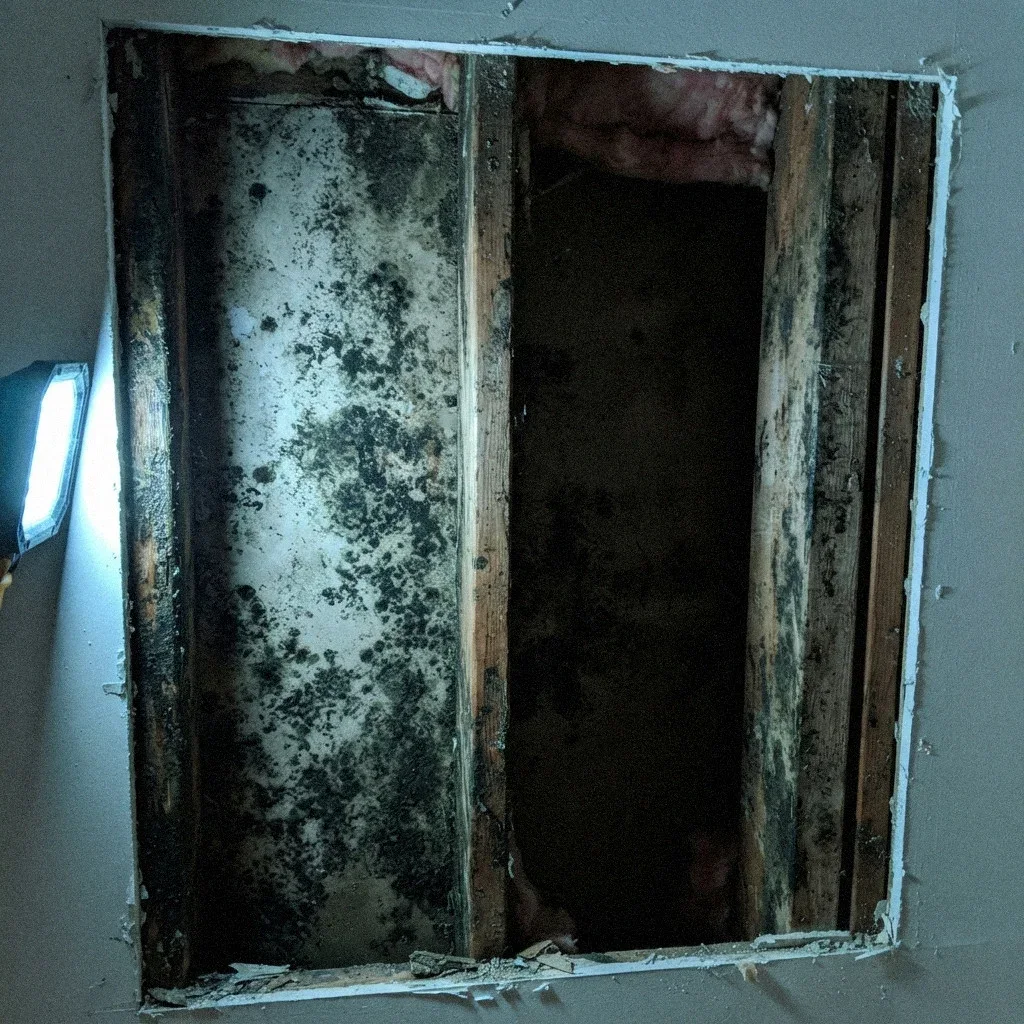
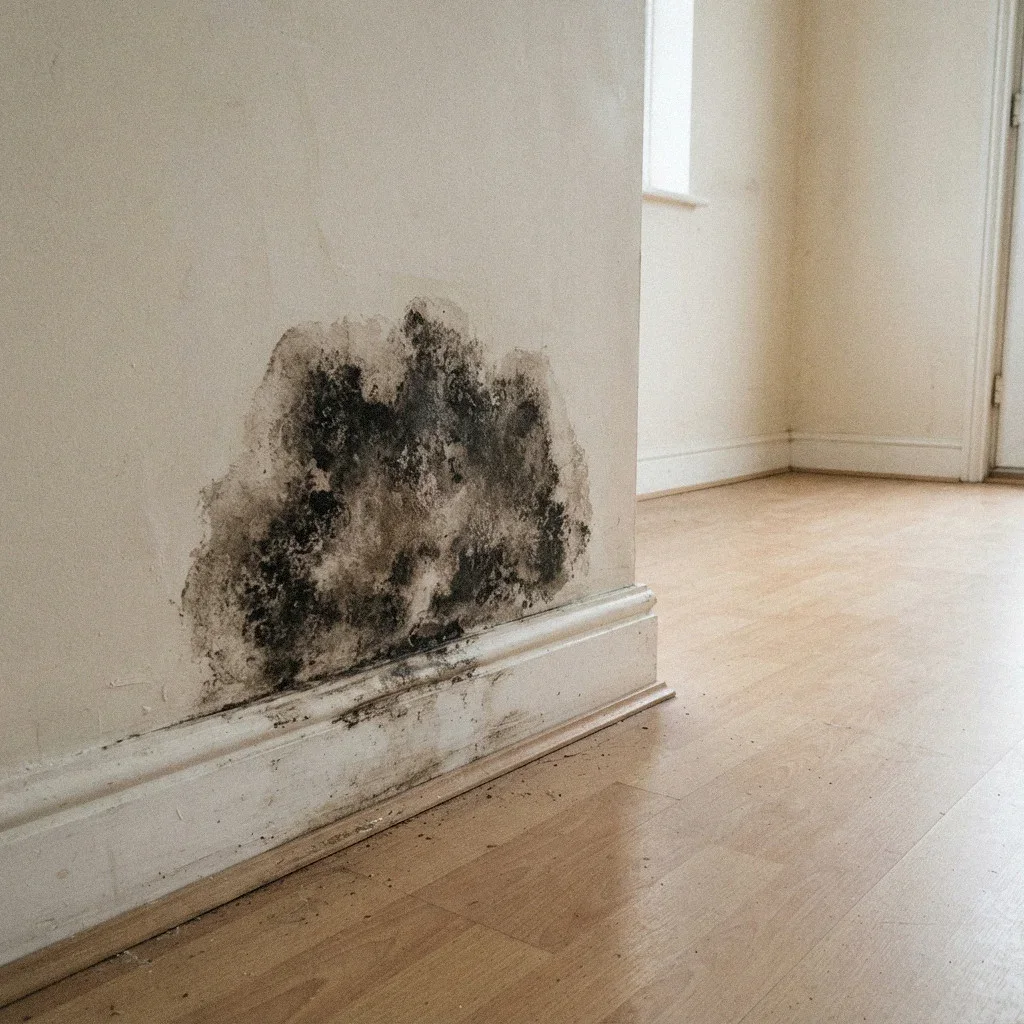
A dark patch does not tell you how long water has been sitting, and it does not tell you what is growing either. Color is a function of the surface and the light, not the species underneath it, so guessing at age or identity from appearance is not a reliable method. The only useful measurement is how long the material stayed wet, which is a question about the leak's history, not about what the patch looks like today.
When to Stop Guessing
Once a wetting event has passed the point where a homeowner is confident everything dried in time, guessing further does not help. The practical next step, and the one covered in more depth in the site's guide on removal, is figuring out how far the moisture traveled and whether it reached anything that stayed wet longer than the surface suggests. That is a different question from timing, and it deserves its own answer rather than a rushed one here.
The Question Worth Asking Next
The timing question always leads to a second one: not how fast, but how far. Water that soaked a baseboard in a College Area rental or ran behind a cabinet in a Linda Vista kitchen may have traveled well past where it is visible, and the drying window that matters is wherever the water actually stopped, not wherever it was first noticed.
Dealing with this in your home?
Mold in San Diego rarely starts with a storm. Marine air off the coast meets a cool interior surface, or an air conditioner drips quietly behind drywall, and growth begins without a drop of rain. A 1950s tract house near Clairemont Mesa Boulevard and a Craftsman near South Park fail the same way: moisture first, staining second. Bleach handles the color. It does not handle the source.