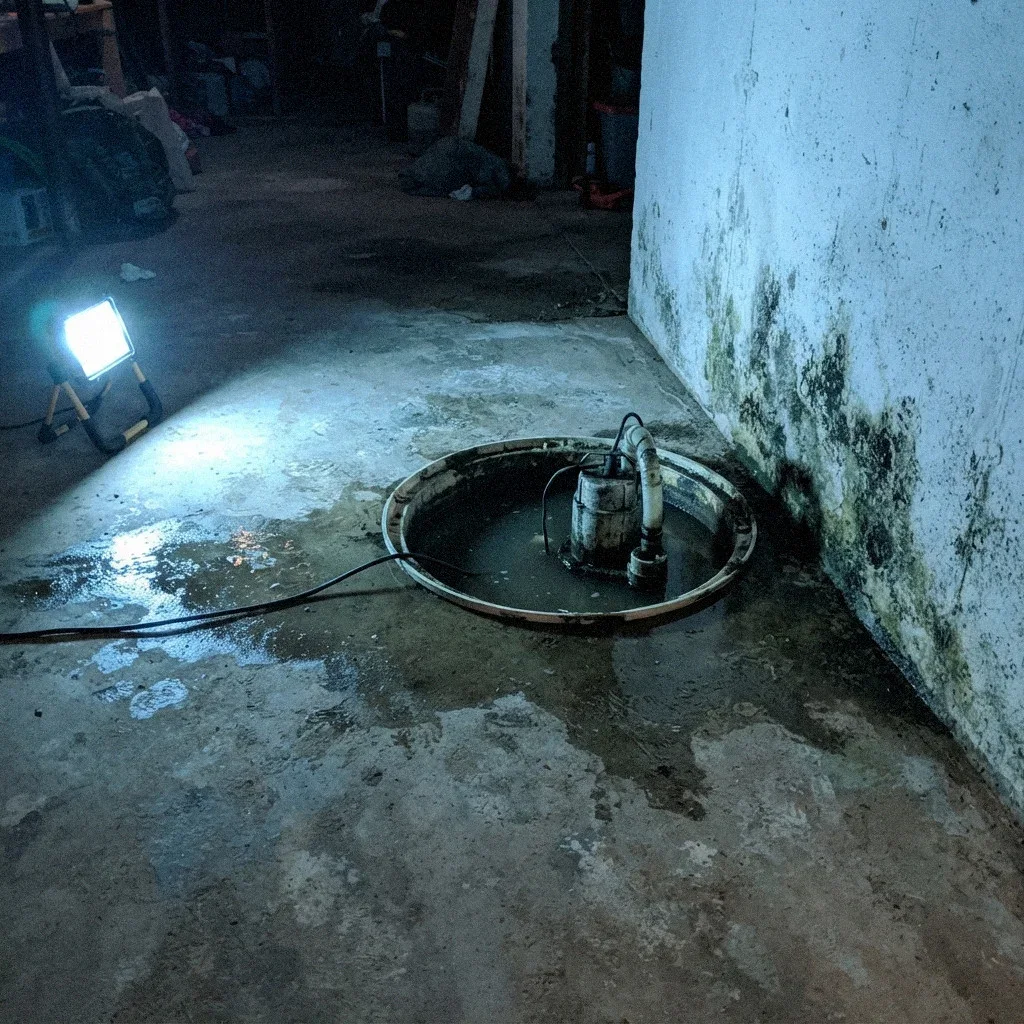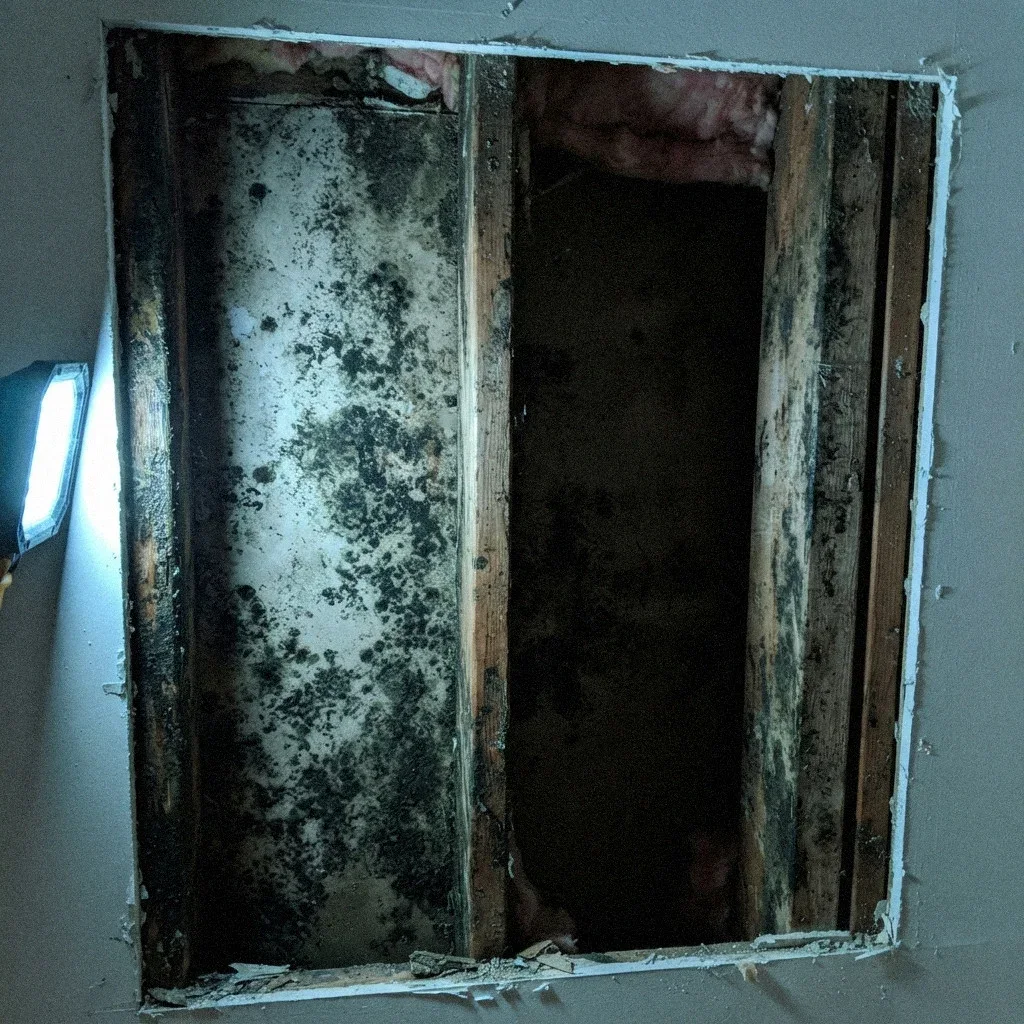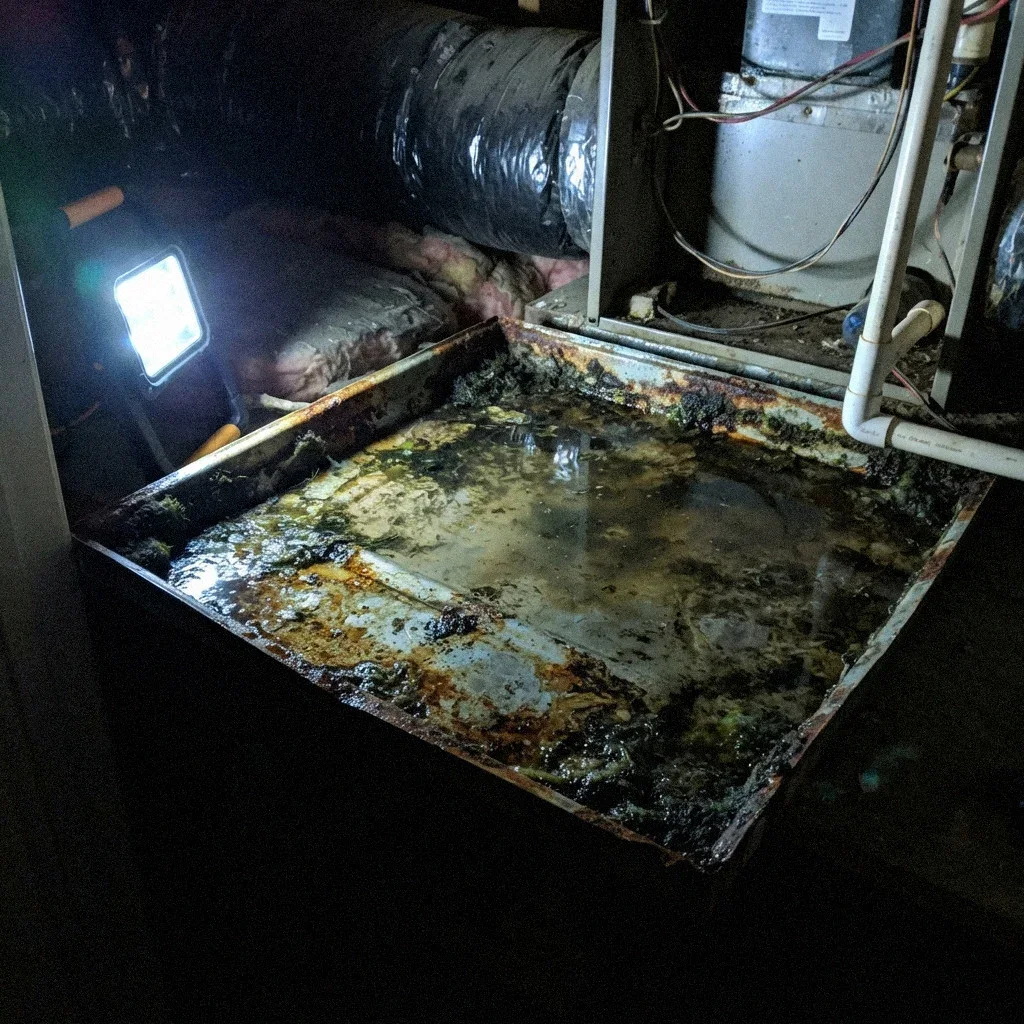
San Diego does not get much rain, which is exactly why gutters get ignored here. Nine or ten inches a year, mostly between December and March, feels too small to matter. But a gutter does not need a storm to fail. It needs leaves, dust, and a few months of neglect, and by February it is sending roof runoff somewhere it was never meant to go, straight down a wall instead of away from the house.
What a clogged gutter does
When a gutter fills with debris, water stops moving sideways toward the downspout and starts spilling over the front edge instead. That sheet of water runs down the fascia board, behind any loose drip edge flashing, and onto the siding below. Wood fascia stays damp longer than it looks, and paint hides the staining until the board is already soft.
Why the wall absorbs it
A wall that gets wet from overflow dries slower than one that gets wet from rain hitting it directly, because the water is concentrated in one narrow band and often runs behind trim rather than off the face of the wall. Stucco and wood siding both hold that moisture against the sheathing, which is where mold starts, not on the visible surface.
What happens at the ground
The same overflow that soaks a wall also saturates the soil directly beside the foundation, and San Diego soil is not neutral about that. Local clays are known for high expansive potential, meaning they swell when wet and shrink when dry. Repeated soaking from a bad gutter, in the same spot, season after season, moves that soil more than a single storm ever would.
Grading matters as much as gutters
A gutter packed with leaves from a jacaranda or a eucalyptus stops carrying water sideways to the downspout, so it spills over the fascia board in a sheet. That sheet runs down the siding, behind the trim, and into the wall assembly every time the marine layer breaks into real rain between December and March. The wall dries slowly because the coast keeps the air humid, and a soaked stud or sheathing stays damp long enough to grow mold before anyone in a North Park or Clairemont bungalow notices the stain.
How far a downspout should discharge
A downspout that dumps water at the base of the wall has not actually solved anything, it has just moved the overflow problem down one story. A downspout extension or a splash block should carry that water several feet clear of the foundation, onto ground that slopes away, not onto a flower bed built up against the stucco.
Splash blocks and extensions
A splash block spreads the water out so it does not carve a trench in the soil, but it only works if it is angled to carry water away rather than let it sit. A downspout extension does the same job over a longer distance and matters most on a lot where the ground near the house is nearly flat, common in older San Diego neighborhoods where the original grading has settled over decades.
Gutter guards, honestly assessed
A gutter guard reduces how often a gutter needs clearing, it does not eliminate the need. Fine debris and grit still get through most designs, and guards can trap moisture against the gutter's rear lip in ways that are hard to see from the ground. They are worth considering, not worth trusting blindly.
Soffit and eave exposure
Check gutters after the Santa Ana winds strip the eucalyptus and jacaranda trees common in older San Diego neighborhoods, and again before the first real rain in December. A five-minute look from a ladder, or with binoculars from the ground, shows whether a gutter is sagging or packed solid. Clairemont and North Park lots with mature trees overhead need this more than a bare Otay Mesa yard. Skipping it through the dry months is how a fall clog turns into a February wall stain nobody saw coming.
When to clear gutters locally
Most San Diego yards do not drop much leaf litter in a hard autumn the way colder climates do, but eucalyptus, pine, and jacaranda trees near neighborhoods like Clairemont, Kensington, and San Carlos shed steadily through the year. Checking gutters before the December through March rain arrives, and again partway through it, catches most of what builds up.
Signs the damage has started
A dark vertical streak below a gutter seam, soft fascia board, or a musty smell near an exterior wall after the rain the year sees are the early signs. None of them require a storm, only a gutter that overflowed quietly for a season while nobody was watching the wall behind it.
Where this fits the bigger picture
Gutter and downspout upkeep is maintenance, not a fix for a leak already in progress. A roof that leaks through its own covering, near Mission Valley or anywhere else in San Diego, is a different problem with a different cause, and it is covered on its own page rather than here. This one is about water that never should have reached the wall at all.
Dealing with this in your home?
Mold in San Diego rarely starts with a storm. Marine air off the coast meets a cool interior surface, or an air conditioner drips quietly behind drywall, and growth begins without a drop of rain. A 1950s tract house near Clairemont Mesa Boulevard and a Craftsman near South Park fail the same way: moisture first, staining second. Bleach handles the color. It does not handle the source.