The House Era Predicts the Failure Point
Cladosporium turns up across San Diego on cool, slightly damp surfaces: attic sheathing under a poorly vented extractor fan, closet walls in a Bay Park or Linda Vista home, or painted trim near a window that fogs with marine layer humidity most mornings before the air dries out.
It grows readily on painted drywall, wood trim, and other porous material wherever relative humidity stays elevated, which is why it shows up in older stucco homes near Golden Hill as often as in newer construction closer to Mission Bay.
Wiping visible growth with bleach or a store spray can lighten a patch for a week and leave the underlying colony intact below the surface. Nothing changes for the reader's household until the moisture source is found and closed off, whether that's a bath fan, a roof flashing, or condensate pooling somewhere unseen.
When Testing Actually Helps
- Appearance
- Dark green, brown, or black speckling, sometimes mistaken for surface dirt or soot on trim and sills.
- Common sites
- Window frames, bathroom walls, and ductwork or air handler cabinets where condensation collects.
- Smell
- A musty odor may be present, but smell alone does not confirm this or any other genus.
- Health note
- Associated with allergic and respiratory irritation in sensitized people; no disease is caused by any single species.
- Testing
- No published exposure limit exists, so a lab result cannot be compared against a safe level.
- Safe Level
- It does not follow a hard season here the way it might in a wetter climate. Marine layer fog is heaviest in late spring and early summer, so surfaces that stay damp from morning condensation, window sills, north-facing stucco, tend to show growth more in those months than in San Diego's dry, sunny fall.
- Diagnosis First
- an estimated $1100–$3900
Why It Spreads While You Decide
Cladosporium is frequently confused with Alternaria and with ordinary surface mildew, since all three can appear as dark, speckled patches on painted drywall, wood trim, or window sills in homes from Kensington to Serra Mesa. Surface color and texture look almost identical to the eye. Telling them apart requires lab sampling, which a mold assessor can arrange, though for a homeowner deciding what to do next, the distinction rarely matters.
The Work, in Order
Removal follows the material, not the species. A mold remediator strips and replaces affected porous material like drywall or insulation, because Cladosporium cannot be reliably cleaned out of it once it has taken hold.
Containment during the work keeps spores from spreading through the HVAC system to other rooms. Hard, nonporous surfaces are cleaned rather than replaced, and post-remediation verification confirms the area is clear before the space is closed back up.
Color is a guess, not an identification. Telling species apart takes a lab, and the California Department of Public Health is clear that no exposure limit exists to compare a result against anyway. What matters for a homeowner is smaller: is it spreading, what fed it, and how much surface is involved.
BLEACH ON TILE VERSUS REMOVAL OF POROUS MATERIAL
| The situation |
The sensible next step |
|---|
| Mold needs moisture, not rain. San Diego homes grow it through a dry summer just as easily as a wet winter, because humid marine air meeting a cool surface, or a leaking AC line, does the same job water would elsewhere. No exposure limit exists to test against. Color tells you nothing about species. The real question is always where the moisture is coming from. | Bleach changes the color of mold on a surface without addressing why it grew there. Left alone, the moisture behind it keeps feeding new growth in the same spot or the one next to it. The useful work is finding the damp source first, then deciding what removal the material actually needs. |
| Mold in San Diego rarely traces back to rain. It traces back to a surface that stays cool and damp longer than the air around it — a window, a closet wall, a duct running through humid air. Any pro who prices the job without asking what stays wet, and why, is pricing on a guess rather than the actual cause. | Color tells you almost nothing. A patch on drywall near Chollas Creek and a patch in a Clairemont hallway can be the same species or different ones, and a homeowner cannot tell by looking. What matters is how large the patch is, how long it has been damp, and whether the water source got fixed. Everything else is guessing. |
| A quote that skips the moisture source is only half a quote. Bleach changes the color of a stain, not the growth underneath it, so a clean-looking wall after a bleach wipe is not a solved problem. The licensed pros we connect you with should explain the source before pricing the cleanup. | Mold needs moisture, not rain. That single fact matters most in a city where a house can grow mold through a dry summer, no rain at all, because marine air meets a cool interior surface or an air conditioner drips where nobody looks. No published safe exposure level exists. The question worth asking is where the water is coming from. |
DISCLOSURE DUTIESNo separate price exists for removing Cladosporium specifically. Cost follows the material affected and the size of the area, the same as any other microbial growth a mold assessor identifies during a San Diego inspection. Genus does not set the scope; the porous material, the square footage, and the moisture source do. A mold remediator prices the affected materials, not the name on the lab report.
Mold Follows Moisture, Not the Calendar
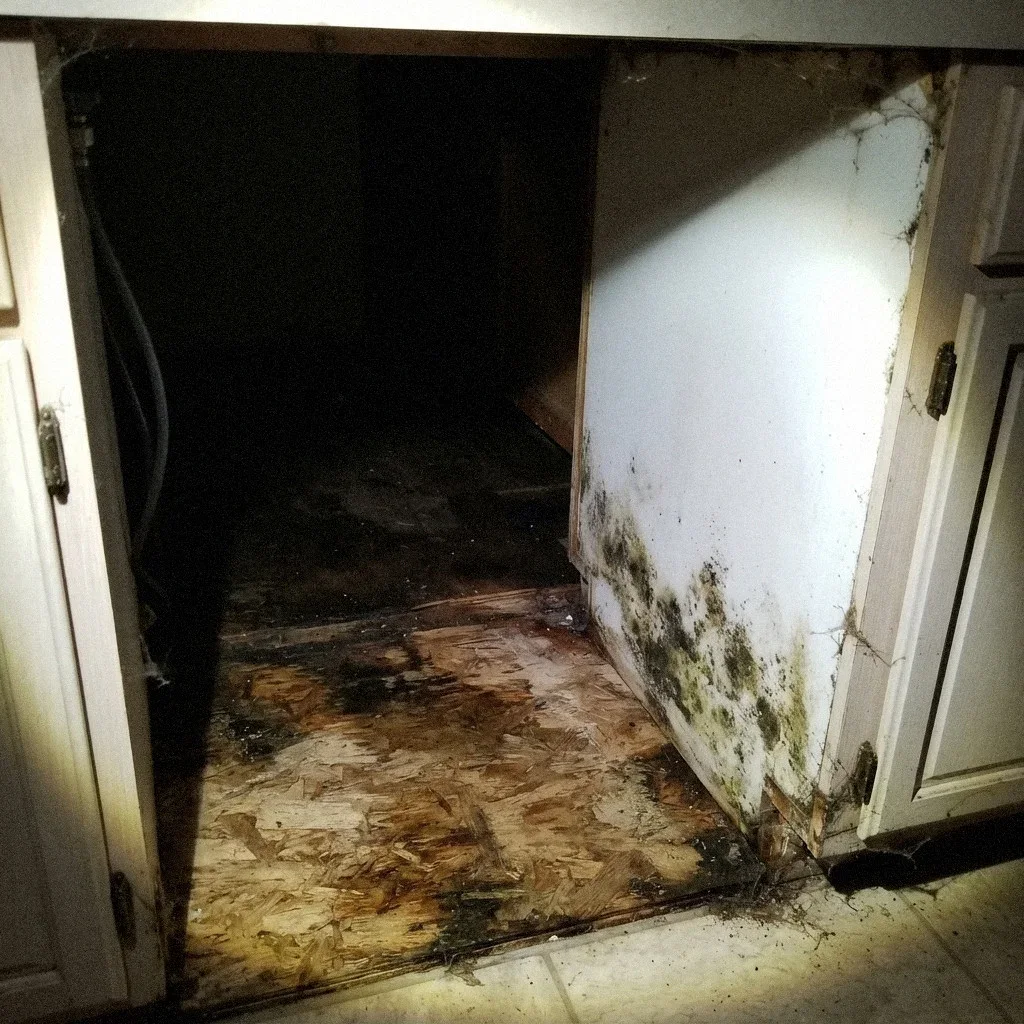
Cladosporium tends to appear as small dark green, brown, or black speckled patches, often on painted drywall, window sills, or inside air handler cabinets. It can spread across the surface of a porous material once moisture is present, but the affected material still governs removal, not the species growing on it.
When the Job Is Bigger Than a Weekend
A small surface patch on tile or glass can be wiped with a household cleaner. Anything on drywall, wood, or inside ductwork should go to a mold remediator, since scrubbing porous material spreads spores without removing the growth underneath.
Symptoms, and What They Do Not Prove
Cladosporium is linked to respiratory and allergic responses like asthma symptoms, hay fever, and general irritation, with more effect on people already sensitized. It is not tied to any specific diagnosed illness, and no exposure level defines a safe amount of it indoors.
Ready To Talk To A Licensed Pro?
A guide figure for cladosporium locally is an estimated $1100 to $3900, which is a band rather than a quote. What moves the price on this page is almost never the mold itself — it is what the water reached and how much of it has to come out. Surface growth on tile or paint in a well-ventilated bathroom is the cheap end. The same size patch on drywall with insulation behind it is a different job, because porous material is removed rather than cleaned and the area has to be contained while that happens. Get the cause identified before you compare two quotes, or you are comparing two different scopes. pricing guide, and the service that handles this is Mold Remediation.
There is no separate price for removing Cladosporium specifically. Cost follows the material affected and the size of the area, the same as for any other mold a mold assessor identifies during an inspection in a San Diego home.