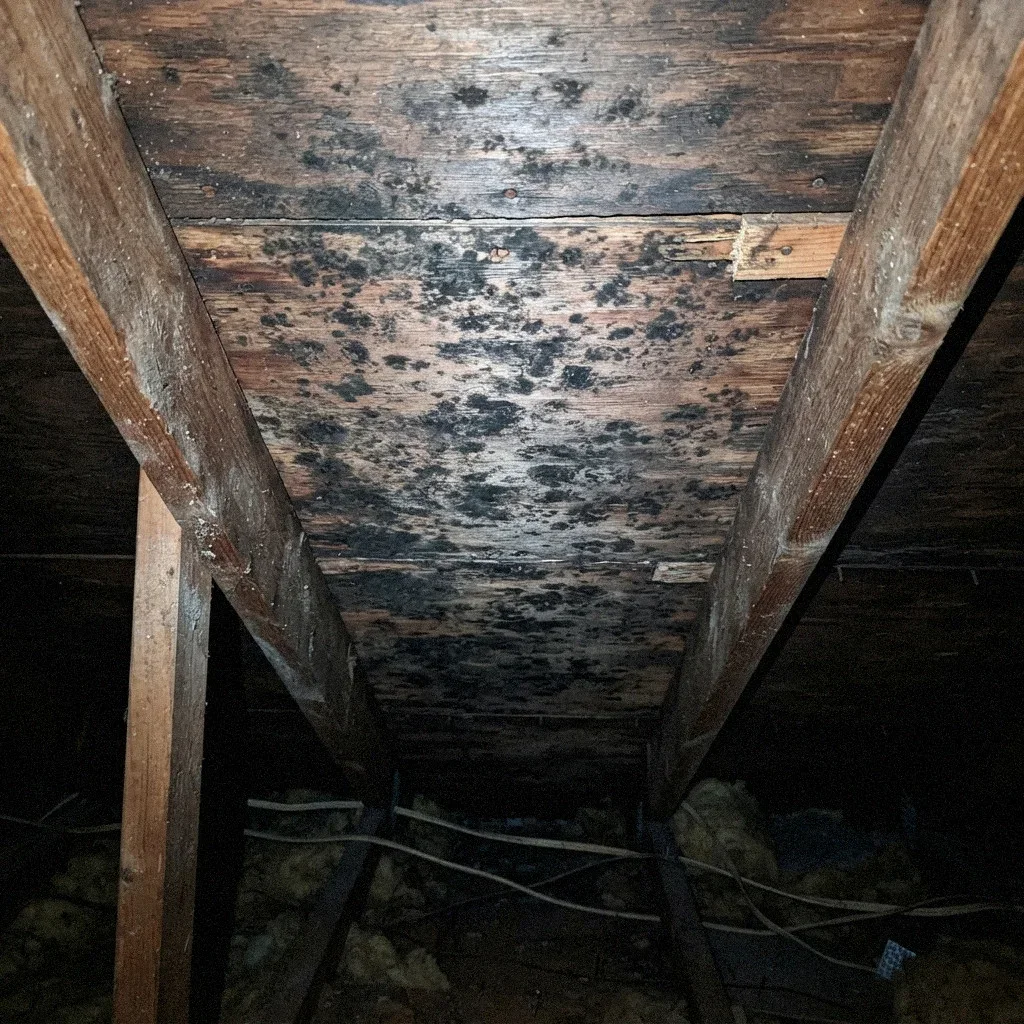
Color Tells You Nothing Useful
Marine layer humidity settles into shaded, poorly ventilated corners of houses from Ocean Beach to Pacific Beach, giving airborne Alternaria spores the damp surface they need to take hold on sills, trim, and stucco.
Older houses through North Park and South Park still run single-glazed aluminum windows that sweat with condensation on cool mornings, and that daily film of water is enough for Alternaria to colonize the frame and sill.
San Diego's mold pattern is unusual next to most of the country: the marine layer that cools mornings from roughly May into August can feed indoor growth without a drop of rain falling. A house can pick up a damp corner in the driest month of the year. That is why the moisture source matters more than the calendar here.
Why Bleach Doesn't Finish the Job
- Appearance
- Olive-green to black, often velvety, commonly mistaken for common household soot or dirt buildup.
- Found On
- Damp drywall, wood sills, caulk lines, and condensation-prone single-glazed aluminum window frames.
- Odor
- A musty, damp odor rather than any smell specific to this genus alone.
- Health Note
- Often noted on people with existing asthma or hay fever, alongside general irritation; no species-specific diagnosis is possible from a visual finding.
- Removal
- Same as any visible mold: dry the moisture source, remove affected porous material, verify with post-remediation checks.
- Testing Need
- Alternaria spore counts outdoors rise in the warm, dry months when landscaping and dead plant matter dry out, but indoor growth in San Diego tracks moisture and condensation year-round, not a rainy season this city barely has.
- Follow-Up
- an estimated $500–$1800
What Waiting Costs
Cladosporium, another dark, common outdoor mold that colonizes damp wood and painted surfaces indoors. Both appear as fine black or olive speckling and both favor the same humid, poorly ventilated corners of a house. Neither can be told apart by eye with any reliability. Color and texture overlap enough that a mold assessor uses lab analysis, not appearance, to tell them apart, and even then the remediation approach for affected porous material stays the same.
What Remediation Involves
A mold remediator treats the material, not the species: affected drywall, trim, or insulation gets removed and replaced rather than cleaned, since porous material holding growth cannot be fully restored.
Containment keeps spores from spreading to unaffected rooms during removal, and post-remediation verification checks that the work is complete before anyone closes the wall back up or repaints.
Bleach changes the color you are looking at, not the colony underneath it. It kills what the wipe touches and leaves roots in the material behind. If the wall board or the framing stayed damp, the same patch returns in weeks, which is why the fix has to start with the water source, not the stain.
WHAT A REMEDIATION QUOTE SHOULD INCLUDE VERSUS SKIP
| What you have found |
The usual recommendation |
|---|
| Mold needs moisture, not rain. San Diego homes grow it through a dry summer just as easily as a wet winter, because humid marine air meeting a cool surface, or a leaking AC line, does the same job water would elsewhere. No exposure limit exists to test against. Color tells you nothing about species. The real question is always where the moisture is coming from. | Bleach changes the color of mold on a surface without addressing why it grew there. Left alone, the moisture behind it keeps feeding new growth in the same spot or the one next to it. The useful work is finding the damp source first, then deciding what removal the material actually needs. |
| Mold in San Diego rarely traces back to rain. It traces back to a surface that stays cool and damp longer than the air around it — a window, a closet wall, a duct running through humid air. Any pro who prices the job without asking what stays wet, and why, is pricing on a guess rather than the actual cause. | Color tells you almost nothing. A patch on drywall near Chollas Creek and a patch in a Clairemont hallway can be the same species or different ones, and a homeowner cannot tell by looking. What matters is how large the patch is, how long it has been damp, and whether the water source got fixed. Everything else is guessing. |
| A quote that skips the moisture source is only half a quote. Bleach changes the color of a stain, not the growth underneath it, so a clean-looking wall after a bleach wipe is not a solved problem. The licensed pros we connect you with should explain the source before pricing the cleanup. | Mold needs moisture, not rain. That single fact matters most in a city where a house can grow mold through a dry summer, no rain at all, because marine air meets a cool interior surface or an air conditioner drips where nobody looks. No published safe exposure level exists. The question worth asking is where the water is coming from. |
NO STATE LICENSENo inspection can weigh air in a Talmadge home against a legal ceiling, because none exists for indoor mold at the federal or state level. Contractors doing this work near Rancho Bernardo hold general licenses through the state contractors board, not anything issued for mold specifically.
What a Straight Quote Actually Looks Into
Alternaria establishes on damp drywall, wood trim, and window sills wherever condensation lingers, including single-glazed aluminum windows around Clairemont or North Park. It does not weaken framing quickly, but it spreads across paper-faced drywall and can stain grout and caulk faster than denser materials resist it.
What a Bottle of Bleach Cannot Fix
Wiping a small patch of Alternaria off a hard, non-porous sill with soap and water is reasonable. It treats the color, not the underlying dampness, so if it returns within weeks the moisture source needs attention, not a stronger cleaner.
What It Means for the People Inside
Alternaria falls under the same recognized categories as other indoor molds: it can contribute to allergic and asthma-type symptoms in people already sensitized, more so than in others. No test or inspection near Golden Hill can quantify that risk, and no species gets singled out as the cause of a named illness.
Not Sure Where The Moisture Is Coming From?
Expect an estimated $500 to $1800 for alternaria here, with size and how far it has spread doing most of the moving. What moves the price on this page is almost never the mold itself — it is what the water reached and how much of it has to come out. Surface growth on tile or paint in a well-ventilated bathroom is the cheap end. The same size patch on drywall with insulation behind it is a different job, because porous material is removed rather than cleaned and the area has to be contained while that happens. Get the cause identified before you compare two quotes, or you are comparing two different scopes. pricing guide, and the service that handles this is Bathroom & Shower Mold Removal.
Cost depends on how much affected material has to come out and how contained the job is, not on the species found. A small sill or trim job runs far less than a wall cavity opened up after a slow leak.