Condo & HOA Properties
Condo & HOA
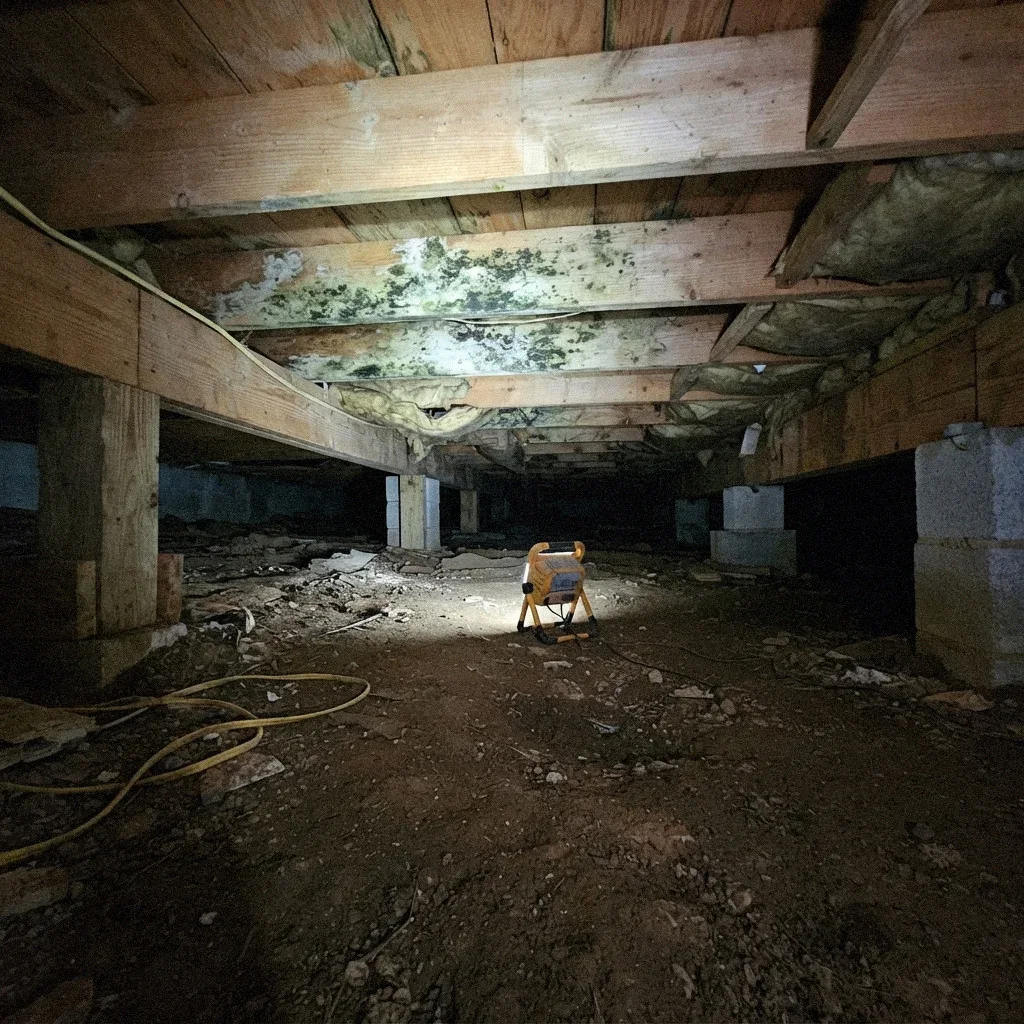
Occupied floors, shared air handlers, and a lease that decides who is responsible.
Office and retail mold work is priced by square footage affected and whether shared air handling is involved. Liability and notice depend on the lease, not a state posting rule.
An office in Kearny Mesa or a retail space along El Cajon Boulevard fails differently than a house. Nobody lives there to notice a smell at 2 a.m. The first sign is usually an employee complaint about headaches or a stuffy back room, filed before anyone has actually seen a stain. By the time facilities staff traces it to a leak, the growth has had weeks. Office and retail buildings hide water damage behind suspended ceilings and carpet tile longer than a house hides it behind drywall.
An office suite and a retail storefront fail the same way: a leak nobody reports until a tenant complains about a smell, or a maintenance request that sits for weeks because the property manager assumed it was the tenant's problem and the tenant assumed it was the landlord's. Shared HVAC systems in buildings along Convoy Street or Clairemont Mesa Boulevard can pull spores from one unit into the next, which turns a single leak into a multi-tenant question of who pays and who was told first.
None of this makes the mold itself different from what grows in a house. It is the same handful of common indoor genera, responding to the same moisture. What changes is who finds out, how fast, and who is supposed to do something about it. That question sits underneath everything else on this page, from the lease to the lights staying on during the work.
In a leased office or retail space, liability usually splits along the line the lease already drew for other repairs. Landlords typically hold responsibility for the building envelope and shared systems, roof, exterior walls, plumbing risers, and rooftop equipment. Tenants typically hold responsibility for what happens inside their own demised space once handed over. A leak from a rooftop unit that grows mold in the ceiling tile below is a landlord problem. A tenant's own leaking break-room sink is usually theirs.
The trouble is that mold does not respect the line on the lease. Water travels along ductwork and structural framing before it shows up as a stain, and by the time it is visible it may be inside both parties' space. Most disputes here are not about whether mold exists but about whose system caused it and who pays to fix the source, not just clean the result. Getting a straight answer to where the water is coming from is what actually settles the liability question, not who owns which square footage.
| Question | Landlord | Tenant |
|---|---|---|
| Affected area | One storefront wall | Shared ductwork or rooftop unit |
| Likely shutdown | Sealed area only | Multiple tenant spaces |
| Who's notified | One tenant, one landlord | All tenants sharing the system |
| Responsibility source | Individual lease terms | Building-wide lease and common areas |
| Documentation needed | Scope and moisture readings | Scope, readings, per-tenant notice records |
| Lease says who pays | Landlord if HVAC or building envelope | Tenant if a spill or leak inside the suite |
| Notify before or after | Before, if shared air handling is affected | After, if it stays inside one suite |
| What stays open | Rest of the floor, other tenants | The affected suite, usually closed |
Occupied floors change the notification question. A landlord who discovers mold behind a shared wall generally has an obligation to tell tenants who could be affected, and a tenant who finds it in their own space usually has to tell the landlord before opening up anything the lease says belongs to the building. Multi-tenant buildings around downtown San Diego or Kearny Mesa often have several businesses sharing HVAC returns or a common ceiling plenum, which means one unit's problem can reasonably concern its neighbors.
Employees are the other audience. Complaints about smell, irritation, or a visibly stained ceiling tile tend to reach a property manager or HR contact before they reach anyone who understands moisture. Passing that complaint along promptly, in writing, and getting someone qualified to look at the source rather than just repainting the tile is what keeps a minor cleanup from becoming a bigger argument about how long the company knew and did nothing.
None of this requires a fear response. Visible mold in a break room or a stained ceiling tile in a retail stockroom is a maintenance problem with a known cause, almost always water. Treating the notification step as routine paperwork, rather than an admission of fault, is what keeps it from turning into one.
What stays open during the work depends entirely on where the growth is and how it got there. Contained work behind a single ceiling grid or inside one storeroom in a strip mall along Convoy Street rarely requires closing the whole unit; the affected area gets sealed off with containment while the rest of the floor operates normally. A widespread problem tracing back to a building-wide HVAC issue is a different scope, and may mean closing more than one tenant space at once.
Retail is more exposed than office space here because customers walk through it. A landlord or manager has to weigh containment against foot traffic, and a visibly torn-open ceiling or a chemical smell in a sales floor is its own kind of business problem even before the mold question is settled. Coordinating remediation hours around closing time, or phasing work section by section, is often what keeps a retail space from losing a full day of sales over a repair to one corner of it.
An owner or manager needs a written scope of what was found, where, and what caused it, not just an invoice for cleaning. That means documentation of the moisture source, whether it was a roof leak, a condensate line, or a plumbing failure, and confirmation that the source was fixed before the growth was addressed. Photographs of the affected area before and after, and a description of the materials removed, matter more here than they do in a house, because commercial insurance and lease disputes both run on paper.
This documentation also protects against the same problem recurring. A ceiling tile that gets replaced without anyone writing down that the cause was a rooftop condensate pan overflowing near Genesee Avenue or Miramar Road is a problem that will come back in a year, minus the paper trail explaining why. The industry standard referenced for how the work itself should be scoped and verified is IICRC S520, a voluntary consensus standard rather than a legal requirement, but it is what a written report should be measured against.
San Diego's office and retail buildings do not need a storm to grow mold. Marine layer humidity settles into a poorly ventilated stockroom the same way it settles into a house, and a rooftop HVAC unit condenses water on a dry afternoon regardless of the season. The building science is not different from residential work. What is different is the paperwork trail, the number of people who need to be told, and the fact that two parties usually think the other one is supposed to call someone.
Once the work is done, the paper trail matters more than it did during the job. A property manager overseeing several units near Mission Valley or Kearny Mesa needs the same file for each: what area was affected, what got removed versus cleaned in place, and a moisture reading taken after the work closed out. That file is what settles a dispute with a tenant or an insurer later, and it is worth more than a verbal assurance that everything looks fine now.
After the work, ask for a written scope of what was removed, what was treated, and moisture readings taken before the space was closed back up and before it was opened again. A landlord in Kearny Mesa or a tenant near Convoy Street both need this on file — for insurance, for the next lease negotiation, and for the next person who asks whether the problem actually got fixed or just got painted over.
San Diego mold rarely traces back to a storm. It traces back to marine air off the Pacific meeting a cool interior surface, or a condensate line quietly dripping near Mission Valley or Clairemont for months. Moisture is the limit, not rain. Find the water source before anyone touches the growth, or the same patch returns.Linda Vista, Mission Valley and Old Town. Color does not identify a mold species, and a bleach wipe-down treats the color, not the growth underneath. A quote written before anyone asks where the water is coming from is a quote for half the job. The other half is finding and stopping the moisture that let it start in San Diego.
Mold needs moisture, not rain. A house in San Diego can grow it through a dry summer if humid air keeps meeting a cool surface somewhere. That is the mechanism worth understanding before anyone talks about cleaning it off. Ask where the water or the condensation is coming from first; the answer usually points straight at the fix.Commercial quotes in San Diego vary with occupied hours, not just square footage. A Kearny Mesa office or Convoy Street kitchen that cannot close for remediation costs more to treat than an empty unit near Miramar, because containment has to work around people, not around a schedule. pricing guide, and the commercial overview covers how a scheduled program works.
Condo & HOA
Hotels & Hospitality
Food Service
In most San Diego office and retail leases, the landlord is responsible for the building envelope and shared HVAC, while the tenant is responsible for what happens inside their unit. A leak through a flat roof or a failed window flashing near Miramar Road usually falls on the landlord; a spill or a broken fixture inside a leased space usually falls on the tenant. The lease language decides, not assumption.
Nothing in California requires a landlord to post a notice for mold the way some jurisdictions require lead paint disclosure. In practice, most commercial leases in San Diego require written notice to tenants once a moisture problem is confirmed, particularly if remediation will affect shared air handling or common areas near an entrance on El Cajon Boulevard or similar retail corridors.
It depends on where the mold is and what the fix requires. A patch behind a single storefront near Convoy Street can often stay open with the affected area sealed off. Work inside shared ductwork or a ceiling plenum serving several units in a Kearny Mesa office building usually means shutting down that section until air handling is confirmed clear.
Ask for a written scope of the affected area, what was removed versus cleaned, and post-work moisture readings. For a multi-tenant building near Mission Valley or Clairemont Mesa Boulevard, get documentation split by unit so each tenant and the landlord have a clear record of what was done where, useful for insurance and for the next lease renewal.
Call for a scope of the affected space and what stays open while the work happens.
Call (619) 833-1053