Multifamily & Apartment Complexes
Commercial Property
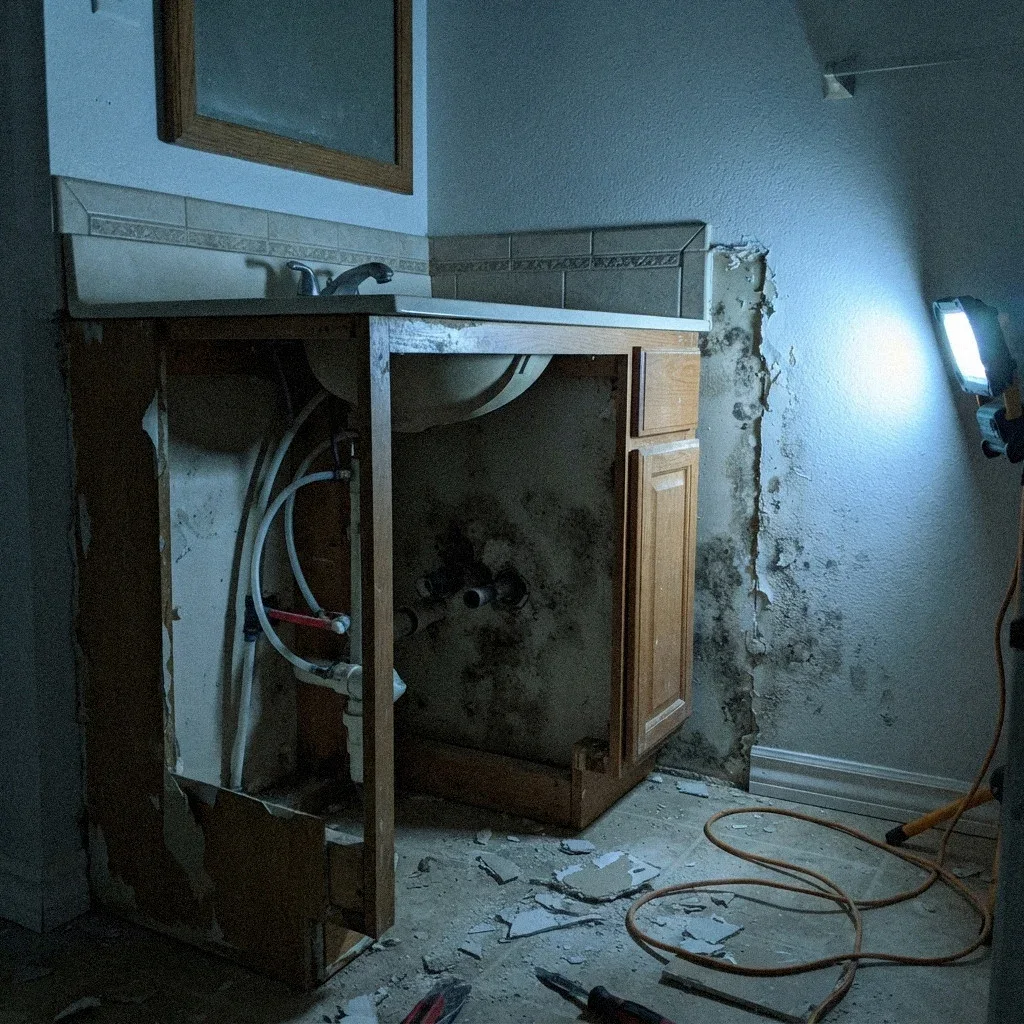
Where the association's liability ends and the unit owner's begins.
In a condo or HOA property, the association is liable for mold in common elements like roofs, exterior walls, and shared plumbing, while the unit owner is liable for mold starting inside their own walls. Board approval is usually required before work begins.
A condo or HOA property in San Diego has a boundary that a single-family house never has to argue about: where the association's common elements end and the owner's unit begins. Mold behind a shared exterior wall in a Hillcrest mid-rise or a Mission Valley complex can sit squarely on the association's side of that line, or squarely on the owner's, depending on what the governing documents say a unit includes. That line, not the mold itself, decides who pays and who calls the pros.
Most CC&Rs treat the roof, exterior walls, and common plumbing as association responsibility, and the interior finishes of a unit as the owner's. A leak from a shared flat roof over a Kearny Mesa condo building that shows up as a ceiling stain inside one unit can involve both: the association fixing the source, the owner handling the drywall it ruined. Reading the governing documents before assigning blame matters more here than in almost any other property type this site covers.
Because the line is contractual rather than obvious, disputes are common. A board may argue a plumbing stack is common element up to the wall and the owner's problem past it. An owner may argue the association let a known leak run for months. Neither side is automatically right. The governing documents, not the mold, settle it, and a written scope of work that states which side of the wall the remediation covers protects both parties later.
Notification runs in more than one direction. An owner who finds mold typically has to tell the board or management company, especially if the source might be a common element like a shared roof, a common wall, or building-wide plumbing. The board, in turn, often has a duty under its own governing documents to tell owners in adjoining units if shared systems are involved, since a leak behind one wall in a North Park building rarely respects unit lines cleanly.
Tenants inside a rented unit add another layer. An owner who leases a condo near Balboa Park or in Golden Hill has to notify that tenant of known mold and of any work that will require access, and the timing of that notice is often separate from whatever the board requires of the owner. Three parties, three sets of obligations, and no single one of them covers the others.
| Location | Likely Responsibility | Typical Path |
|---|---|---|
| Roof leak into ceiling | Association's responsibility | Owner's responsibility |
| Shared plumbing riser leak | Association's responsibility | Not applicable here |
| Washing machine overflow | Not association's problem | Owner's responsibility |
| Exterior wall intrusion | Association's responsibility | Owner's responsibility |
| Bathroom fixture leak | Not association's problem | Owner's responsibility |
| Board approval needed first | Yes, before work starts | Board approval, then owner |
| Elevator or lobby mold | Association, common element | Board handles directly |
| Shared HVAC or roof leak | Association, common system | Reserve fund or special assessment |
What stays open during remediation depends entirely on where the work happens and what it touches. Work confined to one owner's interior, say a bathroom in a Clairemont condo, usually leaves the building's common areas untouched. Work on a shared wall, a common corridor, or a building's central plumbing is a different matter, and an association may need to restrict access to a hallway or a mechanical room for the duration.
Containment inside a multi-unit building has to account for shared air paths that a detached house does not have: a corridor HVAC return, a shared attic space, a plumbing chase that runs through several units. The licensed pros we connect you with will typically seal the work area at the unit boundary, but the board should ask specifically how containment addresses anything the unit shares with its neighbors, not just what happens inside the unit itself.
None of this needs to shut down a building. Lobbies, pools, and other amenities in a complex near University City or Mission Valley generally stay in use unless the specific system being opened up serves them directly. The question worth asking before work starts is narrower: which shared spaces does this particular repair touch, and for how long, not whether the building as a whole needs to close.
A board rarely approves remediation work on the strength of a phone call. Most want a written scope of work, a description of what was found and where, and confirmation of licensing before authorizing anything chargeable to association funds or affecting common elements. California's Contractors State License Board maintains a license lookup, and a board is within reason to check it before a contract is signed on the building's behalf.
That documentation requirement exists because the association's decision affects every owner's assessment, not just the unit where the mold was found. A board approving a repair to a shared wall or a common plumbing line is spending money the whole building funds, and it typically wants the same kind of paper trail an insurer or a future buyer's inspector would ask for, even when no claim or sale is currently in the works.
After the work is done, an owner or manager generally needs more than an invoice. A written record of what was tested or inspected, what was found, what was removed, and what repairs followed gives the board something to file and gives the owner something to hand a buyer's inspector or an insurer later, since San Diego's marine humidity means the same conditions can recur if the underlying moisture source was not fixed.
That record matters most at resale or refinancing, when a lender or a buyer's agent asks whether a unit has ever had a mold issue. A vague answer creates more suspicion than a clear one. Documentation that names the source, the scope of the fix, and who performed it, cross-checked against the CSLB license lookup, answers the question once instead of leaving it open for negotiation.
None of this changes what mold actually is inside a condo unit or a common hallway. It is still a moisture problem first, whether that moisture comes from condensation on a window in a Bankers Hill unit or a slow leak in a shared line under a Talmadge building. No safe exposure level exists, color does not identify what is growing, and testing is rarely necessary once growth is visible, same as in any other building type this site covers.
What is different here is entirely who has to sign off, who has to be told, and who ends up holding the paperwork afterward. A single-family homeowner in San Carlos answers to no one but themselves. An owner in an HOA-governed building answers to a board, a set of governing documents, and sometimes a tenant, all before the moisture problem itself gets solved.
A board that approves work without documentation carries that decision alone if an owner disputes it later. Ask for the scope of work, the containment plan, and a certificate of completion before authorizing payment from association funds. Keep a copy in the building's permanent record, not just the property manager's inbox. If the source of moisture sits on the owner's side of the wall, get that documented too, or the same spot reopens next season near Mission Valley or any older San Diego complex with shared plumbing walls.
Color does not identify what is growing on a wall, and it does not need to. Visible mold in a San Diego home rarely needs a lab test before someone can act on it; it needs the moisture source found and stopped, then the material cleaned or replaced. The licensed pros we connect you with can walk that sequence with you before anything is scheduled.Golden Hill, Normal Heights and University Heights. Bleach can lighten a dark patch and leave the growth underneath untouched, so a clean-looking wall is not proof of anything. Color says nothing about which mold is present either. What matters in San Diego is whether the moisture feeding it has been found and stopped, since a licensed pro can treat a surface and the smell can still come back in a season.
Bleach changes what a stain looks like. It does not reach what is growing beneath a painted surface or inside a wall cavity, and it does nothing to the moisture that let the growth start. Fix the wet source first. Cleaning without that step just buys a repeat performance a few weeks later.Commercial quotes in San Diego vary with occupied hours, not just square footage. A Kearny Mesa office or Convoy Street kitchen that cannot close for remediation costs more to treat than an empty unit near Miramar, because containment has to work around people, not around a schedule. pricing guide, and the commercial overview covers how a scheduled program works.
Commercial Property
Hotels & Hospitality
Usually the association, if the mold traces to a common element like a shared roof, exterior wall, or plumbing stack serving multiple units. If the water source is inside one unit's walls, from a dishwasher or a bathroom the owner alone uses, that owner typically carries it. Read the governing documents; San Diego HOAs assign responsibility differently building to building, and the CC&Rs control, not assumption.
Owners in the affected line and any unit sharing the wall, floor, or plumbing chase usually need written notice before work starts. Buildings near Kearny Mesa or Mission Valley with shared corridors often need broader notice since access and shared systems affect more units than the ones with visible damage. The board's management company typically handles notice, but the paper trail should exist regardless of who sends it.
Common areas like lobbies, elevators, and corridors usually stay open unless containment barriers block a specific path. Individual units not involved in the work are unaffected. The unit or units under remediation get sealed off with containment, and access is restricted to the licensed pros doing the work, not other residents or staff, for the duration.
A scope of work, a containment and clearance plan, and a written completion report naming what was found and what was done. Photos before and after help if the unit sells or the owner disputes the association's decision later. Keep this with the building's permanent records, since a San Diego property manager turnover shouldn't mean the documentation disappears with the outgoing company.
A board needs a written scope before it votes. Call (619) 833-1053 for a condo or HOA inspection report that separates common-element from unit work.
Call (619) 833-1053